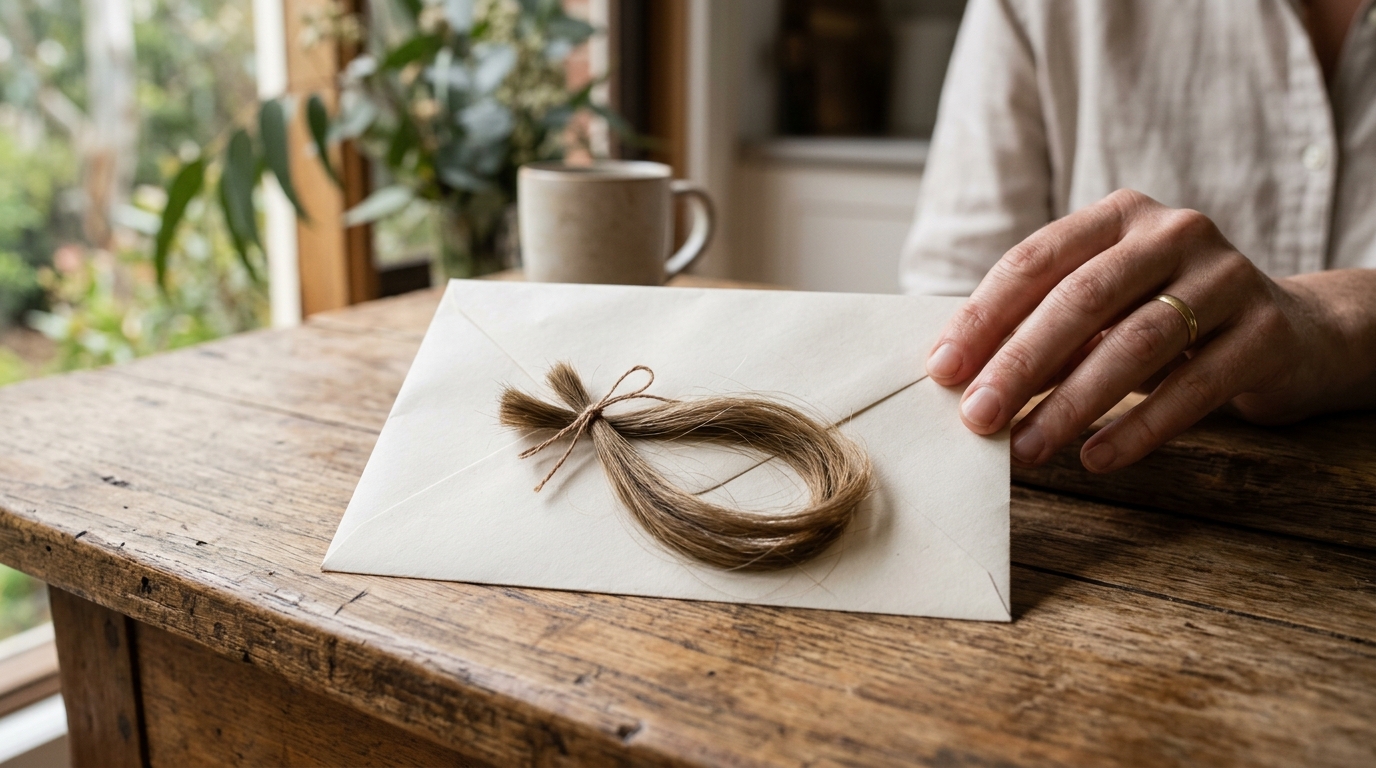
A love spell with hair is one of the most commonly searched forms of folk magic, and one of the most ethically tangled. The idea is old and widespread: something that was once part of a person keeps a link to them, so a strand of hair, a fingernail clipping or a worn item can be used to direct a ritual toward them. People reach for it when they want a particular person, and when they feel there’s nothing else left to try.
Before you collect anything, it’s worth slowing down. A love spell with hair usually means taking something from another person without their knowledge, in order to influence their feelings. Whether or not you believe it works, that raises serious questions about consent, privacy and how you want to treat someone you care about. It also raises practical questions, because hair can carry personal information, and because the desire to hold a piece of someone is often a sign of how much pain you’re in.
This guide explains where the practice comes from, what the hair is supposed to do, what a ritual can and can’t achieve, why many practitioners advise against it, the privacy and legal points in Australia and Europe, what safer alternatives look like, and how to look after yourself while you wait or work through a loss. It’s written for readers in Australia first and Europe second.
Key takeaways
- Folk magic uses hair and personal items as a link to a person. There’s no evidence that this changes anyone’s feelings.
- Taking hair or belongings without permission to influence someone is a consent problem, and many practitioners decline to do it.
- A ritual focused on your own calm and conduct gives you the benefits of ritual without the ethical cost.
- Be wary of sellers who ask for hair, photographs or personal details as part of an expensive process.
Where the use of hair comes from
The belief that a part of a person stays connected to them is very old and found in many cultures. Anthropologists describe it as “contagious” or “sympathetic” magic: things that were once in contact remain linked, and things that resemble each other can affect one another. James Frazer’s early twentieth-century study The Golden Bough laid out this idea, and it still shapes how many people think about spells.
Folk traditions across Europe, Africa and elsewhere describe using hair, nail parings or worn clothing in love charms and in protection and harm magic alike. In modern practice, the item is sometimes called a “taglock,” a term used by many contemporary witches for something that links a ritual to a particular person. The practice carried into hoodoo and related folk traditions, and the page on hoodoo love spells gives more context on how those traditions approach it.
What people say the hair does
In the practice’s own terms, hair or a photograph acts as a pointer. It tells the ritual who it’s about, so the intention reaches them. Some people say it makes the work stronger or more reliable, and sellers often tell you it’s essential. Others say it’s optional, and that a name written on paper does the same job.
It helps to be plain about what can be shown. No study has found that hair or any personal item allows a ritual to change another person’s feelings. What rituals can do is change you. Michael Norton and Francesca Gino’s 2014 paper in the Journal of Experimental Psychology found that people who performed a ritual after a loss felt less grief and more sense of control. That effect doesn’t depend on the item. A calm, focused ritual works the same way whether it includes hair or not.
The consent problem with a love spell with hair
The central issue is simple. A ritual that uses someone’s hair aims to affect their feelings or choices, and they haven’t agreed to it. In ethical terms, that’s an attempt to bypass their will. Many traditions, and many practitioners, regard this as manipulation. Some decline to work with personal items for love spells at all.
Ask yourself the test question: would you be comfortable if they knew exactly what you were doing, and why? If the honest answer is no, that matters. It doesn’t mean you’re a bad person, because people in pain do things they later regret. It does mean you’re about to do something you wouldn’t want to defend, and that’s a good reason to stop and think. A relationship that exists because of hidden pressure is not the one most people really want, and it can leave you doubting every kind word.
The page on third party removal spells explains how related work is described on this site, and why consent and honesty about outcomes matter.
Privacy and legal points
There are practical issues beyond ethics. Hair with the root attached can contain DNA. Collecting someone’s hair, or any personal item, without permission treats their body and belongings as yours to use. In most places, simply picking up a hair from a hairbrush isn’t a crime in itself, but taking property, entering someone’s home without permission, going through their belongings or using their image can be offences, depending on how it happens. If you’re a former partner, going into someone’s home or office to collect items can lead to trespass, stalking or harassment allegations.
Photographs bring their own issues. Using a private photo of someone, particularly an intimate one, in a ritual or posting it online can raise privacy and image-based abuse concerns. In Australia, sharing intimate images without consent is an offence in most states and territories. If you’re unsure of the law where you live, treat the safe path as the right one and don’t take or use anything without the person’s knowledge. This is general information, not legal advice.
What a ritual with hair can’t do
It can’t make someone love you. It can’t bring back an ex who has decided to move on, make a partner more attentive, or change how someone feels about another person. It can’t repair broken trust, and it can’t replace an honest conversation. If you do a ritual and nothing changes, you haven’t failed. It was never in the power of a ritual to do those things.
It can’t replace professional help either. If you’re grieving a breakup, anxious about a relationship or feeling driven to hold on to someone who has left, a ritual is a support, not a treatment. Relationships Australia (1300 364 277) offers counselling, and Lifeline (13 11 14) is open at any hour. In the UK, Relate and Samaritans (116 123) offer similar support.

The pull toward holding a piece of someone
It’s worth being gentle about why this idea is so appealing. After a breakup, or when someone feels out of reach, there’s a strong urge to keep something of them close: a shirt, a photo, a lock of hair. Psychologists describe this as a way of managing separation, and it’s common. Keeping a memento isn’t a problem in itself.
The trouble starts when the urge turns into a plan to use the item to change the person’s mind. At that point, the item has become a lever, and it may be keeping you stuck. If you notice that you’re thinking about getting hold of something belonging to someone who has asked for distance, step back and talk to someone. That’s a signal that your own grief needs attention more than the relationship does.
What if they gave it to you?
Context matters. A lock of hair given freely years ago, or a photograph taken together and shared with permission, is different from something taken secretly. Even then, using it for a ritual aimed at changing their feelings is still an attempt to influence them without their knowledge. The question is the same: would they be comfortable if they knew?
In a current relationship, you can make it a shared act. A couple might each place an item in a small box, write what they want to bring to the relationship, and keep it somewhere safe. Both know, both agree, and nothing is hidden. That version removes the consent problem and is more likely to strengthen the relationship, because the ritual becomes a shared conversation.
Safer alternatives that still feel meaningful
If you want a ritual with an object, there are choices that don’t involve taking anything. Write your intention on paper, using your own words and, if you like, the other person’s name only if you’re comfortable with them knowing. Use an item of your own, such as a ring you wore or a letter you wrote but didn’t send. Use a candle, a plant or a stone that stands for what you hope for. Write a letter to the person that you’ll never send, and then burn or bury it safely.
What makes these better isn’t that they’re more powerful. It’s that they ask nothing of another person’s will, and they leave you free to act respectfully in the real world. They also give you the same psychological benefits of ritual: a pause, a focus and a sense of doing something meaningful. The guide to love spells at home versus a spell caster describes simple practices of this kind.
A simple ritual that needs no hair
Here’s an example. Choose a quiet evening and sit with a notebook. Write what you hope for in a relationship, and what you can do to prepare for it: speaking honestly, listening more, looking after your health. If there’s a particular person you care about, write what you’d say to them if you could, and what you’d accept if they said no.
Read it aloud, finishing with: “May I be honest, patient and open, and may I accept what comes.” If you’d like a candle, set it on a heatproof surface and never leave it unattended. Then put it out, and write one real action for the week, such as sending a kind, low-pressure message or seeing a friend. The ritual has done its job if it helps you do that action.
What if you’re trying to get someone back?
Most searches for this phrase come from people who’ve been left. The most helpful steps are human ones. Give the person space. Reflect honestly on what went wrong. If it feels right after some time, send one short, warm, low-pressure message. The guide to the no contact rule explains how long to wait, and the page on whether reconciliation spells work goes through what rituals can and can’t do after a breakup.
Respect their answer. Persistent unwanted contact can amount to harassment or stalking in Australia, the UK and most of Europe, and going through someone’s belongings to find a “link” for a ritual can be part of that picture. If they’ve asked you to stop, stop.

How many practitioners handle personal items
Attitudes among practitioners vary. Some traditional workers use personal items routinely and see nothing wrong with it. A growing number of modern practitioners, particularly those who write about ethics, say they won’t use anything belonging to a person who hasn’t agreed. They point out that a ritual based on your own intention can do everything a ritual is able to do, and that taking an item adds an ethical cost without adding any proven benefit.
If you speak with a practitioner, ask how they handle consent. A good answer explains the choice clearly and offers alternatives. A poor answer insists that you must supply something belonging to the other person, and brushes aside your questions. You’re entitled to say no, and a fair practitioner will respect it.
A worked example: from impulse to a better plan
Take a familiar case. A woman’s partner of three years has moved out and isn’t returning her calls. She finds herself thinking about the hairbrush he left behind and what she might do with the strands in it. She’s hurting, and the idea feels like action in a situation where she has none.
She pauses and asks the test question: would he be comfortable if he knew? The answer is no. So she does something different. She writes him a letter she won’t send, listing what she misses and what she regrets. She reads it aloud, burns it safely in a sink with a window open, and writes down three things to do that week: see her sister, book a counselling session and go for a walk each morning. Two weeks later she sends one short, warm message. Whether he replies is up to him. She has kept her dignity and her options, and she has done things that help her whatever happens.
If you already have something of theirs
Many people hold items from a past relationship: clothes, a hairbrush, jewellery, photographs. You don’t need to throw everything away, and there’s no rule against keeping a memento. If something belongs to the other person and they’ve asked for it back, return it kindly, without using the handover to plead your case.
If you’ve collected something with the idea of using it in a ritual and now feel uneasy, you can simply put it away, or dispose of it respectfully. Some people write a short note of closure first, such as “I release this, and I let the situation go,” and then bin or bury it. That’s enough. You don’t need a special cleansing, and you shouldn’t pay anyone to remove “energy” from an object.
Talking to the person directly
All the energy that goes into planning a ritual with someone’s belongings could go into the simplest and most effective thing: a direct, respectful message or conversation. If you’re in a relationship, tell them what you’re feeling and what you’d like. If you’ve separated and some time has passed, a brief message such as “I’ve been thinking of you and I hope you’re well” can open a door without pressure.
Direct contact carries risk, because you might hear a no. But it’s honest, and it’s the only route that gives the other person a real say. A relationship that comes about because two people chose it is the kind that lasts. If you hear no, you can grieve and move on, instead of spending months waiting for a ritual to change someone’s mind.
What a consultation with Baba Ali involves
If you’d like to talk with a practitioner about your situation, you start by sending your story through the secure form on the contact page. Baba Ali reads it and talks with you about what is going on and what you hope for. He then advises whether spiritual work fits and what it would include. The how it works page sets out the stages: consultation, preparation of ritual materials, the ritual itself, then updates through a private client portal.
It’s fair to ask what each stage involves, how consent is handled and what it costs, and to be told plainly that no outcome can be promised. You should never be asked to take anything belonging to another person without their knowledge. The page on a love spell caster in Australia explains how remote sessions work.
Sellers who ask for hair and photos
Some online services ask you to send a photo, a name and sometimes a piece of hair as part of an expensive “personalised” ritual. Be careful. Handing over photographs and personal details of another person, and your own, to someone you can’t verify carries privacy risks. A seller who asks for a lot of personal data up front, or who uses it to build pressure, is a warning sign.
Other red flags include guarantees, fixed timeframes, large upfront fees, repeated requests for more money and claims that someone else is blocking you. In Australia, Scamwatch, run by the ACCC, publishes current scam information and takes reports. The guide to spell caster scams in Australia lists the warning signs in more detail.
Mistakes people make
A few errors come up again and again. Taking something from someone’s home, bag or hairbrush. Using a private photograph without their knowledge. Expecting a quick result and feeling worse when it doesn’t arrive. Paying a seller who promises more with each purchase. Using the ritual to avoid a hard conversation. Continuing to look for items or “signs” long after the person has said no. And keeping the whole thing secret, so nobody can check in with you.
The simple fix is to leave the other person out of the ritual and keep your actions respectful. If you want to reach someone, do it directly and kindly. If you want to feel steadier, do the ritual for yourself.
Looking after yourself
If you’re thinking about a hair spell, you’re probably hurting. Keep your routine: sleep, meals, movement and daylight. Stay in touch with friends and family. Avoid using alcohol to numb the pain. If you can’t stop thinking about someone, or if you feel driven to find ways to reach them, talk to a counsellor. Lifeline (13 11 14) is available at any hour, MensLine Australia (1300 78 99 78) offers counselling for men, and Beyond Blue (1300 224 636) provides mental health support. In the UK, Samaritans (116 123) is available at any hour. If you have thoughts of harming yourself, call Lifeline or 000 right away.
If you live in the UK or elsewhere in Europe
The same points apply. Privacy law in the UK and the EU, including data protection rules, treats personal information seriously, and persistent unwanted contact is an offence in most countries. Relate offers counselling in the UK, and Samaritans (116 123) is there at any hour. Many European folk traditions use hair and similar items in charms, and many modern practitioners now advise against using them without consent. Remote consultations work across time zones.
Frequently asked questions
Does a love spell with hair work?
No evidence shows that hair or any personal item changes another person’s feelings. A ritual can help you feel calmer and more focused, which may change how you act.
Is it okay to use someone’s hair without asking?
It raises a serious consent problem, because the aim is to influence their feelings without their knowledge. Many practitioners decline to do it.
Is it illegal?
Picking up a stray hair isn’t usually a crime on its own, but taking property, entering someone’s space or persistent unwanted contact can be. This is general information, not legal advice.
Can I do a love spell without hair or photos?
Yes. A ritual based on your own intention, written in your own words, works the same way psychologically and avoids the consent problem.
What can I use instead of hair?
Use something of your own, such as a letter, a candle or a stone, or write your intention on paper. A shared object, if both people agree, is also an option.
Should I send my hair or photos to a spell caster?
Be careful. Personal details and images carry privacy risks, and requests for them are a common feature of pressure sales. Share as little as you can.
What should I do if I can’t stop thinking about someone?
Talk to a friend or counsellor. Relationships Australia (1300 364 277) and Lifeline (13 11 14) can help. Strong preoccupation after a loss is common and treatable.
Why do so many spell pages ask for a personal item?
Partly tradition, and partly sales. In folk practice, a personal item is a link to the person. Online, a request for hair, photos or details also makes a service feel personalised and lets a seller charge more. If a page insists you must obtain something from another person, treat that as a reason to question the whole offer.
Can I use my own hair in a ritual?
Yes. A strand of your own hair, a note in your handwriting or a personal object is a common and harmless way to represent your own intention. It raises no consent issue, because it involves only you.
Your next step
If you’d like to talk through your situation in private, you can start a confidential consultation through the contact page. You can also browse the other services, or read how the site writes and checks its guides in the editorial standards. A love spell with hair raises questions of consent that a ritual for your own steadiness avoids. If you’re struggling, call Lifeline on 13 11 14 in Australia or Samaritans on 116 123 in the UK.