A spell to make husband love me again is usually searched by someone who still lives with him. There’s no moving truck and no legal paperwork, just a slow cooling: fewer conversations, separate screens at night, a kiss goodbye that has turned into a habit. It can feel lonelier than a separation, because you’re not sure whether the marriage is ending or simply tired.
Here’s the plain version. No ritual can make another adult feel love on command, and sellers who promise otherwise are describing control, not care. What rituals and spiritual work can do is help you come back to the marriage calmer, clearer and more open, which changes how you show up at the breakfast table. And how you show up is, in most cold marriages, where the thaw begins.
This guide is for readers in Australia first and Europe second. It explains why love cools, what spiritual work can and can’t offer, a 30-day plan that helps whether or not you choose a ritual, how to raise the conversation he’s been avoiding, and how to spot the moment when the kindest thing is to seek outside help.
Key takeaways
- Love responds to conditions: safety, appreciation, attention and shared experience. You can change the conditions, not the feeling itself.
- Spiritual work can support calm and intention. It can’t make a husband love you, and anyone who says it can is overselling.
- A steady 30-day routine of small, genuine changes often does more than any single act.
- If there’s fear, control or violence at home, the priority is safety, not reconciliation.
Why love cools in a marriage
Love rarely disappears in a single event. It wears down through accumulation. Work stress eats the evenings. Children take the attention that used to belong to each other. Small criticisms build into a habit of expecting the worst. A hurt goes unaddressed and hardens into distance. After a few years, two people who once couldn’t stop talking are running a household together and trading only logistics. For marriages close to ending, see the stop divorce spell consultation.
Some cooling has a specific cause. A health scare, a job loss, a bereavement or a long period of caring for a parent can drain the energy a marriage runs on. Sometimes one person quietly stopped feeling appreciated and stopped trying. Sometimes there’s an affair, emotional or physical, and the coldness you’re feeling is his guilt, his secrecy or his attachment to someone else.
It helps to ask which kind of cooling you’re in. If it’s fatigue and habit, the marriage often responds well to attention and novelty. If it’s resentment, it needs honest repair. If it’s a third person, pushing harder usually drives him further away, and the conversation has to change. A ritual with no understanding of the cause is a guess, so the first job is always to look clearly at what’s happening.
What “making” your husband love you again really means
The phrase is natural, and it hides a problem. You can’t make anyone feel love. Love is a response that shows up when a person feels safe, valued, interested and attracted, and it fades when those conditions are missing. So the honest version of the goal is to create the conditions in which his love has a chance to return, and to find out whether it’s still there under the coolness.
That reframing is liberating. It moves you from chasing a result you can’t control to working on things you can: how you speak to him, how you spend time together, how you handle conflict and how you look after yourself. It also fits how reputable spiritual practitioners describe their work. Reputable practitioners ask for healing, openness and reconciliation in the marriage, not for a person to be compelled, and this site’s editorial standards rule out work intended to control another person. A husband who feels pushed pulls away. A husband who feels welcomed sometimes steps closer.
What your husband may be feeling
From the inside, a cold marriage often looks different to him. A husband in this position may feel like he can’t get anything right, that every conversation turns into a list of complaints, or that he’s become a wage and a helper rather than a partner. He may feel shame about a failure he can’t name, or numbness he can’t explain.
That doesn’t excuse hurtful behaviour, and it doesn’t mean the problem is all yours. It does mean his withdrawal may be protective rather than personal. A man who expects criticism braces for it, and bracing looks like distance. When he starts to feel that home is safe, that he won’t be attacked and that small efforts are noticed, the bracing can ease. That’s why the plan above starts with cutting the negative and adding appreciation, long before any heavy conversation.
What a spell to make husband love me again can and can’t do
A ritual is a focused act of intention. It commonly combines prayer or invocation, candles, herbs or oils chosen for traditional meanings, and a clear statement of what you’re asking for. For a cold marriage, typical aims are to soften tension at home, to bring back warmth and affection, to help both partners speak honestly, and to clear a sense of stuckness.
People often say the effect they notice first is in themselves. They feel less anxious, stop rehearsing arguments and find it easier to be kind. That matters, because a calmer wife changes the mood in a home. Research on ritual gives a hint at why: Norton and Gino, in a 2014 paper in the Journal of Experimental Psychology, found that performing rituals helped people feel more in control and less anxious after a loss. That doesn’t show a spell changes another person’s heart. It does suggest that a structured act can steady the person doing it.
What a ritual can’t do is override his free will, repair a hurt that hasn’t been discussed or substitute for honest conversation. Treat any promise of “instant love” or “guaranteed devotion” as a sales line. The guide on whether love spells last forever explains why permanence can’t be promised and what actually helps love last.
Four habits that shut down closeness, and what to do instead
The relationship researcher John Gottman has described four patterns that tend to wear marriages down: criticism that attacks the person rather than the behaviour, contempt such as sarcasm and eye-rolling, defensiveness when a concern is raised, and stonewalling, which is shutting down and going silent. If one or two of these have taken hold, your husband may be withdrawing to protect himself.
The fixes are practical. Replace criticism with a specific request: “I’d love us to eat together on Sunday” lands very differently from “You never spend time with me.” Replace contempt with appreciation, even for small things. Replace defensiveness with a short acknowledgement, “I can see why that upset you”, before you explain anything. Replace stonewalling with a pause and a promise: “I’m too wound up to talk well right now, can we try again in an hour?”
Notice which habits are yours and which are his, and start with yours. You can’t change his patterns directly, but when you stop feeding the cycle, it often loses momentum. That isn’t blaming yourself. It’s choosing the part of the pattern you control.
A 30-day plan to warm a cold marriage
Plans work because they give worry a place to go. This one is deliberately small, because small changes get done.
In week one, watch and reduce the negative. Keep a mental tally of how often you criticise, sigh or bring up grievances, and cut it by half. Don’t announce a new you. Just be noticeably easier to be around. In week two, add daily appreciation. Each day, say one specific thing you noticed and valued: “Thanks for taking the bins out, I noticed”, “I liked how you talked to the kids tonight.” Keep it genuine and keep it brief.
In week three, add something new together. Psychologist Arthur Aron and colleagues, in a 2000 study in the Journal of Personality and Social Psychology, found that couples who shared novel and mildly exciting activities reported better relationship quality. You don’t need anything dramatic. Try a different walking route, a market you haven’t visited, a new café, or a drive to a beach you’ve never been to. In week four, open a real conversation, using the approach in the next section. Then review what has changed and what hasn’t.

How to start the conversation he has been avoiding
Choose a calm moment, not after a row and not when he’s tired or rushing out. Ask permission: “Could we talk for ten minutes this weekend about how we’re doing? Nothing heavy, I’d just like to hear how you feel.” That framing lowers the stakes and gives him time to prepare.
When you talk, start with yourself rather than an accusation. “I’ve felt distant from you lately, and I miss us” is easier to hear than “You’ve been ignoring me.” Ask open questions and listen for the whole answer: “What’s been hard for you?” “What would make home feel better?” Reflect back what you hear before you respond. If he says something that stings, resist the urge to defend. “Thank you for telling me” is often enough in the moment.
End with something small and concrete, like “Could we try a weekly walk together?” A single, agreed action beats a sweeping promise. If he isn’t ready to talk, say “That’s okay, the offer stays open”, and carry on with the daily changes. Some husbands take weeks to come around to a conversation they’ve been dreading.
Rebuilding physical and emotional closeness
When a marriage has gone cold, touch usually goes first, and pressure makes it worse. Start with low-stakes contact: a hand on his shoulder as you pass, sitting close on the couch, a hug that lasts a few seconds longer than a greeting. Don’t expect or ask for more, and don’t take a pulled-back response personally. Comfort comes back in stages.
Emotional closeness follows a similar path. It grows when you share small disclosures, such as something funny that happened, a worry about work or a memory from early in the relationship. Ask about his day and really listen. Protect time with no phones, even twenty minutes, so that attention can land somewhere. Over a few weeks, these small moments often add up to a noticeable shift.
If intimacy has been a painful subject, a counsellor can help you talk about it without blame. Raising it in a calm, private setting is usually better than trying to resolve it in the bedroom.
Small rituals that make a marriage feel warm
Couples who stay close often have small shared rituals: a coffee together before the kids wake, a Friday-night takeaway, a walk after dinner, a phrase they say when one of them leaves for work. These aren’t grand gestures. They signal, every day, that the relationship matters.
If you’re open to a spiritual element at home, there’s a gentle one you can try together, if he’s willing. Light a candle at dinner once a week, and each say one thing you’re grateful for in the other. There’s no need to call it a spell. It works because it’s consistent, specific and shared. If he rolls his eyes the first time, don’t push. Keep doing it yourself, and invite him again in a week or two.
The page on spells for a happy marriage goes further into rituals couples use to bring peace and better communication into the home, and the guide to love spells for married couples explains how renewal rituals can sit alongside counselling.

Looking after yourself while the marriage is cold
A cold marriage is exhausting, and it’s easy to put your own needs last. Keep your friendships going, even when you don’t feel like talking. Get outside most days. Sleep, eat properly and move your body. If the low mood or anxiety has lasted more than a couple of weeks, speak to your GP or call Lifeline on 13 11 14. Looking after yourself isn’t selfish. A steadier you is better for the marriage, for the children and for whatever decisions come next.
It also helps to have something that belongs only to you: a class, a walking group, a creative project, a volunteering role. When your whole sense of worth hangs on whether he warms up, every cold evening feels like a verdict. When you have other sources of meaning, you can be patient with the marriage without being consumed by it. It can also change how a husband responds, because it shows him a wife who isn’t waiting to be rescued.
What if there is someone else?
A sudden cooling, new secrecy about his phone, unexplained absences and a change in how he talks about you can all point to an affair, but they can also come from stress or depression. Don’t snoop through his messages or follow him. It erodes your own peace, and it can damage trust even if you’re wrong.
A direct, calm question is better: “I’ve noticed we’ve grown distant, and I want to ask honestly whether there’s something you aren’t telling me.” Then listen. If he admits to an affair, you have choices, including counselling, a separation or ending the marriage. None of these is decided in one conversation, and you don’t have to decide fast.
Be cautious about any spiritual work aimed at a third person. Sellers who offer to “remove” or target another person are asking you to take on risk and cost for an outcome they can’t control. Focus instead on what you can do: get support, look after your health and work out what you want.
When he says he doesn’t love you anymore
Hearing those words is devastating, and your first reaction may be to beg or argue. Take a breath. People say it in different ways. Sometimes it means “I feel no connection right now”, which can change. Sometimes it means “I’ve decided this is over”, which is different. Ask what he means, and ask what he’d need to see for things to feel different.
If he’s open to trying, propose something specific and time-limited, like six weeks of counselling or a month of the routines above, followed by a check-in. If he isn’t, you may need to accept that the marriage is changing, and focus on getting support and clarity about your options. You can’t generate love in someone who has closed the door, and trying tends to make the closing firmer.
What a consultation looks like for a cold marriage
You start by sending your story through the secure form on the contact page. Baba Ali reviews it and talks with you about the marriage, what has changed and what you’re hoping for. He advises whether spiritual work is appropriate, and what it would include. The steps are set out on the how it works page: consultation, preparation of ritual materials, the ritual itself, and updates through your private client portal.
In a cold-marriage case, the conversation usually covers practical matters as much as spiritual ones. Expect questions about communication habits, how each of you handles conflict and what has been tried. You should get a plain explanation of what’s proposed and what it costs, and you should be told that the result can’t be promised. For more on how remote sessions work for clients across the country, see the page on a love spell caster in Australia.
When love can’t be made, and safety comes first
Some marriages shouldn’t be repaired. If your husband controls your money, monitors your movements, threatens you or your children, or hurts you, the question isn’t how to make him love you. It’s how to be safe. Coercive control is now a criminal offence in some Australian states, and support is available. 1800RESPECT (1800 737 732) is free and confidential, and in an emergency you should call 000.
Also be honest if the cooling is mutual, if you’ve stopped loving him, or if you’re trying to rescue a marriage out of fear of being alone. Saying that out loud can be a relief. A counsellor or a trusted friend can help you look at it without pressure.
Couples counselling in Australia and what to expect
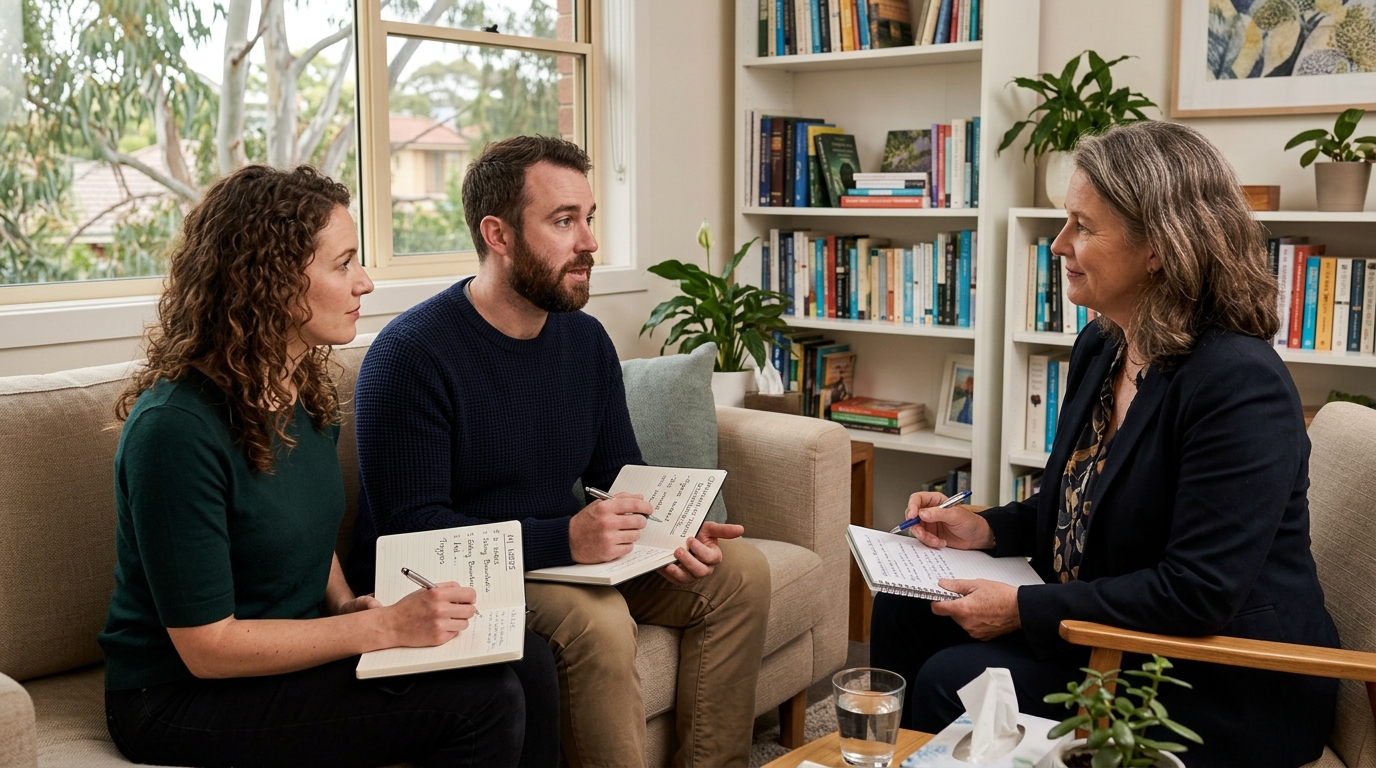
Counselling is one of the best-supported ways to warm a marriage, and it doesn’t conflict with spiritual practice. Relationships Australia (1300 364 277) offers counselling and family services, and the Family Relationship Advice Line (1800 050 321) gives free information and referrals. Your GP can also talk with you about mental health support, including whether a treatment plan might apply.
Expect the first session to be about listening, not fixing. A counsellor will usually ask what brought you in, what each of you wants and what’s been tried. Homework is common: a weekly check-in, a change in how you handle an argument, a planned date. If he refuses to come, go alone. Many husbands become curious once they see their wife changing how she handles things at home.
Mistakes that push a husband further away
A few habits reliably make things worse. Nagging, even about fair things, teaches him to tune you out. Testing him, such as asking “do you still love me?” repeatedly or setting small traps, makes him feel judged. Jealousy games, like pretending interest in someone else, backfire. So does silent punishment, where you withdraw to make a point and hope he chases you.
Love-bombing is another. A sudden burst of gifts, declarations and dramatic gestures feels like pressure, and he knows it may fade. Comparing him to other husbands, involving in-laws as referees or airing the marriage on social media will deepen his defensiveness.
What works is boring and consistent: be kind, be reliable, say thank you, take responsibility for your part and look after your own life. It’s less exciting than a dramatic act, and it’s far more likely to soften a guarded man.
How to spot a scam when you’re feeling vulnerable
When a marriage is hurting, anything that promises relief looks attractive, and scammers know it. Be wary of guaranteed results, fixed timeframes, large upfront payments, repeated requests for more money, claims that a curse or dark force is on you or your husband, and threats of bad luck if you stop paying. A genuine practitioner explains what a service includes, what it costs and what they can’t promise.
In Australia, Scamwatch, run by the ACCC, publishes current scam information and takes reports, and your bank can sometimes help if you contact them fast. Our guide to spell caster scams in Australia lists the warning signs and how to report them. Before you pay anyone, write down what you’ve been promised, what it costs and what happens if nothing changes.
If you live in the UK or elsewhere in Europe
The emotional ground is the same, but support and law differ. In the UK, Relate offers couples counselling, and many areas have free or low-cost relationship support. Divorce law varies widely across Europe, from no-fault routes in England and Wales to separation periods in other countries, so if separation is on the table, speak with a local solicitor. Remote consultations work across time zones, which suits clients in Europe as well as those in Western Australia.
Cultural context matters too. Expectations about in-laws, household roles and how couples talk about problems vary from country to country. A consultation that takes your background into account will be more useful than a script written for someone else.
Making the warmth last
If the coolness lifts, don’t assume the work is finished. The old patterns return when life gets busy, so keep a few habits going: a weekly check-in where each of you says one thing that’s going well and one thing that’s hard, regular time together without screens and a shared plan for money and household jobs. Keep appreciating each other, out loud, in small ways.
Agree early on what you’ll do if distance creeps back. Some couples book a counselling tune-up twice a year. Others agree on a phrase that means “I’m feeling disconnected, can we talk?” Having a plan makes it easier to act before resentment builds.

Frequently asked questions
Can a spell to make husband love me again really work?
A spell can’t force feelings in another person. Spiritual work can help you feel calmer and more open, and it can be one part of a plan to rebuild warmth. The outcome depends on your husband, on the reasons for the distance and on what changes at home.
How long does it take for a husband to love his wife again?
There’s no fixed timeline. Some couples notice warmer contact within a few weeks of changing daily habits. Others need months, often with counselling. Be wary of anyone who promises a date.
Should I tell my husband I’m doing spiritual work?
It’s your choice. Many people keep it private, because the ritual is for their own steadiness. If you share it, present it as something you’re doing for yourself, not something you’re doing to him.
What if my husband refuses counselling?
Go alone. Changing your own patterns often shifts how the two of you interact, and a counsellor can help you decide what you want. Keep the invitation open, and mention it again calmly after a few weeks.
Is it ethical to do a love spell on my husband?
It depends on what the work asks for. Healing, clarity and the chance of a voluntary reconnection respect his free will. Anything aimed at controlling, binding or frightening him doesn’t. Ask any practitioner exactly what they’d be doing and why. Our guide to the binding spell explains the main types.
What should I do if I suspect an affair?
Ask calmly and directly, without snooping. Whatever he says, you can take time before deciding what to do. Get support from a counsellor or a trusted friend, and avoid any service that offers to target the other person.
When should I accept the marriage may be over?
When he has clearly said so and hasn’t shifted after a fair period of effort and counselling, when there’s abuse, or when trying is costing your health. Accepting an ending can be the start of rebuilding your own life.
Your next step
If you’d like to talk through your situation in private, you can start a consultation through the contact page. You can also browse the other services, or read how the site writes and checks its guides in the editorial standards. A spell to make husband love me again is best understood as support for a hard stretch, not a guarantee. If you’re struggling, call Lifeline on 13 11 14 in Australia or Samaritans on 116 123 in the UK.