
A spell to convince parents for love marriage is searched by someone caught between two loyalties. You’ve found a person you want to marry, and your parents, for reasons of religion, culture, caste, class, age or plain worry, don’t agree. You love your family, and you love your partner, and the silence or the arguments at home are wearing you down. You want something that will make the disagreement go away.
The honest answer starts with what a spell can’t and shouldn’t do. It can’t reach into your parents’ minds and change them, and work that claims to “control” or “dominate” family members is both unreliable and ethically wrong. What does change parents’ views, often slowly, is being heard, being shown evidence of a good partner and a stable plan, and being given time. A ritual can help you stay patient and gentle while that happens, and it can give you a moment of prayer or intention, but the conversations are what matter.
This guide is written for readers in Australia first and Europe second, including the many families who live across two cultures. It explains why parents object, how to approach them with respect, how to prepare for each conversation, how to involve trusted relatives and faith leaders, what to do if a parent says no, what your legal position is as an adult, and how to recognise pressure or coercion. None helped with how to actually talk to them.
Key takeaways
- No ritual can or should control your parents. Understanding their concern and showing your partner’s character and your plan are what shift views over time.
- Go slowly: listen first, introduce your partner gradually, and use trusted relatives or community leaders as bridges.
- As an adult in Australia, you can marry a consenting adult partner without your parents’ approval. Forced marriage is a crime.
- If anyone threatens, pressures or restricts you over this, call 1800RESPECT on 1800 737 732, or 000 in an emergency.

Why parents object to a love marriage
Understanding the reasons won’t make them right, but it tells you what you’re dealing with. Many objections come from love expressed as fear. Parents may worry about their child’s security, about a partner they don’t know, about differences in religion, language or culture, about family reputation or about what relatives and the community will say. Some have seen marriages struggle, or have lived through hardship themselves and want to shield their child from it.
Other objections come from tradition. In some families, marriage is seen as a union of two families as well as two people, and arranged or family-guided marriages are the norm. A love marriage can feel to parents like a rejection of that world, or of them. Some worry about losing their place in their child’s life. Others have practical concerns about the partner’s age, job, finances, health or family background.
Listen for which it is. A parent who says “we don’t know him” is telling you something different from one who says “we’ll be shamed in front of our community.” The first is about familiarity, which time and contact can address. The second is about standing and fear, which may need a gentler, slower approach and sometimes the help of a respected elder. Naming the concern accurately is the first step to answering it.
What a spell to convince parents for love marriage can and can’t do
A ritual is a focused act of intention. Here, it might be a prayer for patience, for understanding on all sides and for a peaceful resolution, often lit with a candle or said at a place of worship. Some people include their partner, and some involve a faith leader. For herbs, candles and their meanings, read about reconciliation spell ingredients.
What it can do is steady you. Michael Norton and Francesca Gino, in a 2014 paper in the Journal of Experimental Psychology, found that rituals helped people feel less anxious and more in control after a loss. Family conflict can feel like a loss, and a steady, respectful you is far more persuasive than an anxious, defensive one. A ritual can also remind you to speak with love rather than anger.
What it can’t do is change your parents’ minds, and you should be wary of work that claims to. A spell to “control” or “hypnotise” parents is asking for something ethically troubling, and it tends to produce disappointment and, often, a bill. The guide to whether commitment spells work and the article on whether love spells can backfire explain why promises of control should make you cautious.
Get clear on your own reasons first
Before you speak to your parents, be honest with yourself. Why do you want to marry this person? What do you know about their character, values and plans? Have you talked about children, money, religion, where you’ll live and how you’ll handle your families? If you can explain in a few calm sentences who your partner is and why you’re sure, you’re in a much stronger position.
It also helps to think about what you’re willing to adjust. Would you have a ceremony that includes both traditions? Would you consider a longer engagement so your parents can get to know your partner? Would you live near them? Flexibility on form, where you can give it without betraying what matters, often makes it easier for parents to move on substance. Know your own limits as well, because being clear about what isn’t negotiable protects you from being talked out of your own life.
Seeing it from your parents’ side
Try to picture the situation as they see it. They’ve spent twenty or thirty years caring for you, and they may have had a picture in mind of who you’d marry, where and how. A love marriage to someone unfamiliar can feel like losing control of something they’ve guarded. They may fear you’ll be hurt, and may fear they’ll be judged for not protecting you.
That doesn’t mean you must give in. It means that if you approach them with empathy, acknowledging their love and concern even as you explain your choice, you’ll get a more useful response than if you arrive defensive. Saying “I know you want me to be safe and happy, and I want that too” is often the most powerful opening. It tells them you’re not rejecting them, and it makes it easier for them to hear what comes next.
Introduce your partner gradually
A sudden announcement tends to produce a sudden no. A gradual introduction gives parents time to adjust. Start by talking about your partner as a person: what they do, what they care about, how they treat you and others. Share photos or stories. Mention them casually in family conversation before making any big statement.
When the time is right, arrange a low-stakes meeting: a coffee, a short visit, a meal with other relatives present. Keep it brief and pleasant. Brief your partner beforehand on what matters to your family, such as greetings, language, food and how to address elders. Respect is noticed. A partner who is polite, humble and interested in the family makes a better impression than a long argument ever could.
Accept that first meetings may be stiff. One good encounter rarely settles everything, but several, over months, can change how a parent sees someone. Patience is one of the most underrated tools in this situation.
What to say in the big conversation
When you’re ready to tell your parents you want to marry, choose a calm, private time. Don’t do it in the middle of a festival, a row or a crisis. Begin with love and respect. Then say clearly what you want, and why, in your own words. “I’ve met someone I love and respect, and I’d like to marry him. I want you to know him, and I’d like your blessing.”
Then listen. Let them say what they feel, even if it’s hard. Don’t interrupt or argue. Reflect back what you hear: “So you’re worried about how different our backgrounds are.” That shows you’re taking them seriously. Answer concerns calmly and factually where you can, for example about your partner’s job, plans or character. If voices rise, take a break and come back to it.
Don’t expect a yes at the first conversation. Sometimes the best outcome is “we need time”, which is far better than a flat no. Thank them for listening, and suggest a next step: another conversation, a meeting, a talk with a relative. Patience, tone and repetition matter more than any single speech.

Using trusted relatives and community leaders
In many families, a respected aunt, uncle, grandparent, older cousin or community leader can influence parents in ways a child can’t. If you have such a person on your side, ask for their help, respectfully. They might speak to your parents privately, vouch for your partner or suggest a way forward.
Choose carefully. The person should be someone your parents respect, who is fair and will speak kindly. Brief them honestly and don’t ask them to deceive anyone. Avoid drawing in people who will gossip or escalate, because a dispute that spreads through the community gets harder to settle. A faith leader, celebrant or family counsellor can also help, particularly if religion is involved. The aim is to create a safe space for conversation, not to gang up on your parents. Our honest guide to a spell to make him miss you explains what really creates longing.
When religion or culture is the main issue
Marriages across faiths, castes, communities or nationalities raise particular questions. Parents may worry about how children will be raised, which traditions will be kept and how the community will respond. These aren’t trivial, and pretending they don’t matter usually backfires.
It helps to talk about concrete plans. How will you handle religious ceremonies? Will you have one, two or a blended ceremony? How will you approach festivals, food and language? What will you teach your children about each side? Plans that honour both families, where possible, show that you’ve thought about it and respect their world. Faith leaders and elders who’ve seen other couples navigate this can be valuable allies. Some religious traditions have processes for interfaith marriage, and finding out what they are can turn an abstract objection into a practical conversation.
If they say no, or say nothing
A no is hard to hear, and it isn’t always final. Many parents begin with a firm no and move over months or years as they get to know the partner, see the relationship last and watch their child stay calm and respectful. Others don’t change. You can’t know in advance which it will be.
In the meantime, keep the relationship with your parents open. Stay in touch, visit, include them in other parts of your life, and avoid cutting off contact in anger. Let your partner keep showing quiet respect. Avoid ultimatums and emotional blackmail, which tend to harden positions. If there’s long silence or hostility, a counsellor can help you work out how to cope and how to decide what you’ll do.
If, after a fair effort, they remain opposed, you’re left with a decision that only you can make. Many adults choose to marry with love and without approval, and keep the door open for reconciliation. Others choose to wait. Neither is wrong. What matters is that the decision is yours, and made with clear eyes.
Your legal position as an adult in Australia
In Australia, a person aged 18 or over can marry another consenting adult without their parents’ permission. A marriage requires the free and full consent of both people, and nobody can lawfully force someone into marriage. Forced marriage is a criminal offence in Australia, including when a person is taken overseas for that purpose.
That legal position is protective. If you’re being threatened, restricted, pressured or isolated to make you marry, or to stop you marrying, it’s serious. Contact 1800RESPECT (1800 737 732) for confidential advice, and call 000 in an emergency. If you’re worried about being taken overseas, contact the police or the Australian Federal Police. If you’re in another country, local authorities and your embassy can help. This is general information, not legal advice. For marriages close to ending, see the stop divorce spell consultation.

If you are being pressured or controlled
Most parents who object are acting out of love, however clumsy. Some situations cross into coercion. Warning signs include threats to cut you off, to harm you or your partner, to take your documents or phone, to restrict where you go, to pressure you to marry someone else or to punish you with violence. These are not acceptable, whatever the cultural context.
If you feel unsafe, your priority is safety. Tell someone you trust, such as a friend, teacher, doctor or colleague. 1800RESPECT (1800 737 732) provides free, confidential help and can advise about safety planning. In an emergency, call 000. A ritual is not an answer to coercion, and you shouldn’t be asked to keep a coercive situation secret. Support exists, and using it isn’t a betrayal of your family.
A ritual for patience, for yourself
If you’d like a ritual, consider one that asks for strength for you and peace for everyone, rather than a change in particular people. Find a quiet moment. Light a white candle and sit with a notebook. Write what you love about your family and about your partner. Write your fears and hopes. Write what you’re willing to do: listen, stay respectful, be patient.
Say aloud an intention such as “May I speak with love, listen with patience and act with integrity, and may our families find peace.” If you like, add a prayer from your own tradition. Let the candle burn for a short time under supervision. Then choose one small action for the coming week, such as inviting a parent for a walk or asking a relative for advice, and do it.
Because the ritual asks nothing of anyone else, it’s ethically clear, and it helps you approach your parents with calm. The guide to love spells at home versus a spell caster describes what simple home rituals involve and when to ask for help.
Counselling and family support in Australia
Family conflict over a marriage can be eased by a neutral third party. Relationships Australia (1300 364 277) offers counselling and family services, including for families with different cultural backgrounds, and the Family Relationship Advice Line (1800 050 321) provides free information and referrals. Your GP can discuss mental health support if the stress is affecting your sleep or mood, and Lifeline (13 11 14) is there at any hour.
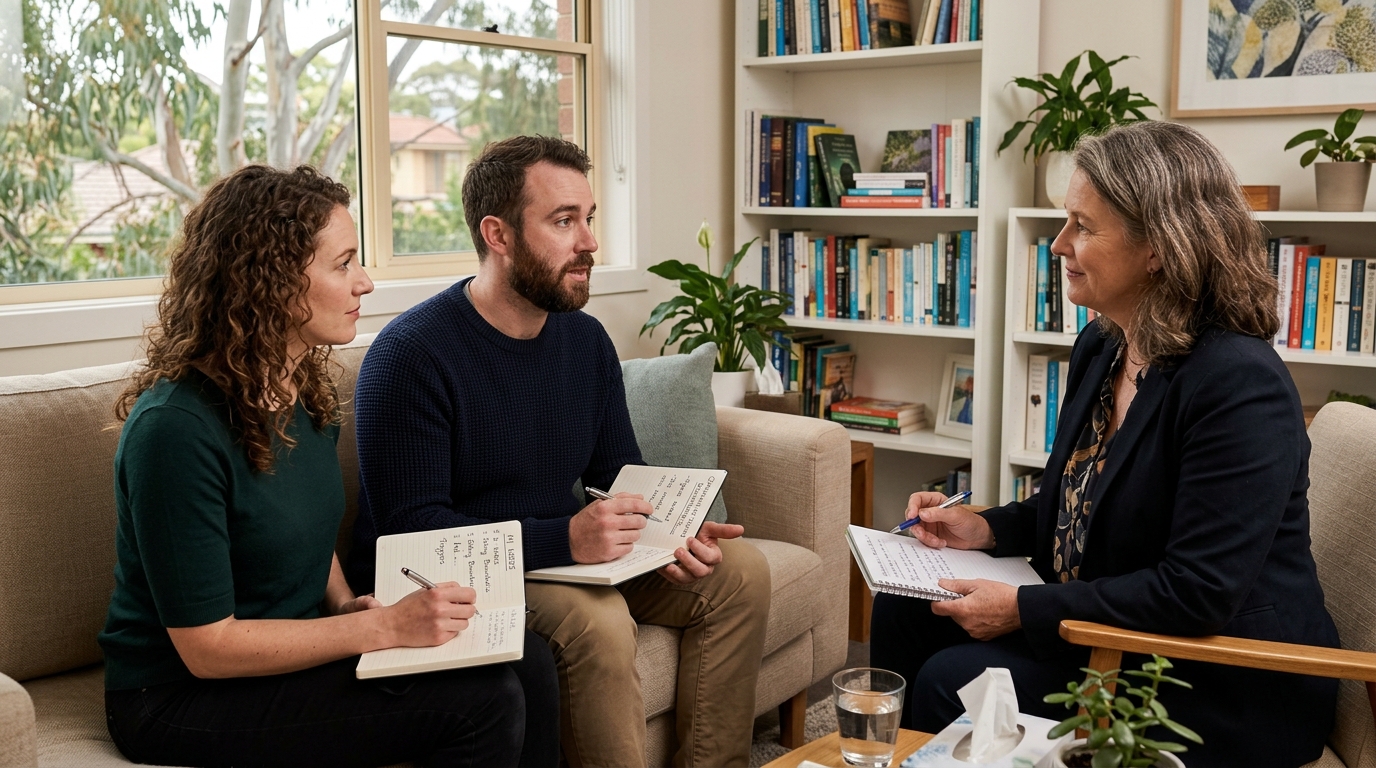
Some counsellors and community organisations specialise in working across cultures and faiths, and many offer interpreters. If your parents are open to it, a facilitated family conversation can be much less fraught than one at home. If they aren’t, individual counselling for you can still help you plan, cope and keep your balance.

What a consultation with Baba Ali involves
If you’d like a spiritual element, the first step is to describe your situation through the secure form on the contact page. Baba Ali reads it and talks with you about your family and what you hope for, then advises whether spiritual work is suitable and what it would include. The how it works page lays out the stages: consultation, preparation of ritual materials, the ritual itself, and updates through a private client portal.
You’re entitled to ask what each stage involves and what it costs, and to be told plainly that no outcome can be promised, including about your parents. Nobody should ask you to do something to your parents without their knowledge. The page on a love spell caster in Australia describes how remote sessions work for clients around the country.
Mistakes that make family resistance harder
Some approaches reliably make things worse. Springing the news at a major family event invites a public scene. Arguing every point in the heat of the moment hardens positions. Using ultimatums, such as “accept us or you’ll never see me again”, closes doors you may want open later.
Comparing your parents to others, dismissing their culture or faith, criticising their own marriage or involving younger siblings as messengers all deepen the divide. So does hiding the relationship for years and then presenting it as a fact. Doing a ritual to change your parents without their knowledge, or using their belongings, crosses an ethical line. The alternative is slow and respectful: listen, explain, stay connected and let time do some of the work.
Scam warning signs
People in family conflict over marriage are a target for sellers who promise to bend parents’ minds. Be wary of guaranteed results, fixed timeframes such as “your parents will agree in three days”, large upfront payments, repeated requests for more money to “strengthen” a mantra, claims that a curse or planetary influence is blocking your marriage and threats of misfortune if you stop. Be wary too of sellers who won’t state their prices or who pressure you to call a mobile number immediately.
In Australia, Scamwatch, run by the ACCC, publishes current scam information and takes reports, and your bank can sometimes help if you act quickly. The guide to spell caster scams in Australia lists the red flags. Before you pay anyone, write down what you’ve been promised, what it costs and what happens if nothing changes.
If you live in the UK or elsewhere in Europe
Families across Europe include many who navigate these questions across cultures and generations. In the UK, Relate offers relationship and family counselling, and forced marriage is a criminal offence, with specialist support available through the police and dedicated charities. Samaritans (116 123) is there for anyone struggling. Other European countries have similar protections, and local authorities, community organisations and embassies can point you to help.
Attitudes to love marriage and arranged marriage vary enormously, and so do legal requirements for marrying, including documents and waiting periods. Check with the relevant authority early. Remote consultations work across time zones, which suits clients in Europe as much as those in Australia, and a practitioner who understands your background will be more helpful than one who offers a generic script.
Looking after yourself in a divided family
Being caught between your family and your partner is exhausting. Keep your routines: sleep, food, movement, friends. Make time for your partner, and time away from the conflict. Don’t let every conversation become a debate. Talk to someone outside both sides, like a friend, counsellor or community elder, who can listen without taking sides.
If the stress is heavy, see your GP or call Lifeline on 13 11 14. Remember that you can love your family and choose your own partner, and that these aren’t always in conflict in the long run. Many families who resisted a marriage at first come to accept it, and some become close. Keeping your dignity and your kindness through the hard stretch leaves room for that.

Frequently asked questions
Can a spell convince my parents to accept my love marriage?
No ritual can change parents’ minds, and work that claims to control them is ethically troubling. A prayer or ritual can help you stay calm and patient, but acceptance usually comes from being heard, from time and from seeing your partner’s character.
How long does it take for parents to accept a love marriage?
It varies. Some parents move within months, others take years, and some don’t change. Be wary of anyone who promises a date.
What if my parents refuse completely?
Keep the relationship open, avoid ultimatums and get support. As an adult in Australia, you can marry a consenting adult partner without their permission, and many people do, leaving room for reconciliation later.
Is it wrong to marry without my parents’ blessing?
That’s a personal decision. Many people feel the weight of it. Try everything respectful first, and then decide what you can live with. Counselling can help.
What if I’m being forced or threatened?
Forced marriage and coercion are serious. Call 1800RESPECT on 1800 737 732, or 000 in an emergency, and tell someone you trust. Support is available and confidential.
Should I involve a faith leader or elder?
Often yes, if they’re respected by your parents and will speak fairly. Ask them to help create conversation, not to pressure anyone.
Are mantra and astrology services worth paying for?
Be very cautious. Many promise quick results and ask for repeated payments. Nothing can guarantee a change in your parents’ views, and free help from counsellors and community organisations is available.
Your next step
If you’d like to talk through your situation in private, you can start a confidential consultation through the contact page. You can also browse the other services, or read how the site writes and checks its guides in the editorial standards. A spell to convince parents for love marriage is best understood as support for your own patience and intention, not a way to control anyone. If you’re struggling, call Lifeline on 13 11 14 in Australia or Samaritans on 116 123 in the UK.