
Do love spells cause bad karma? It’s a fair question, and people usually ask it at the worst moment: just before doing a ritual, or just after, when a small voice says this might not have been a good idea. You wanted a person back, or wanted someone to notice you, and now you’re wondering whether you’ve set something in motion that will come back on you.
The honest answer depends on what you mean by karma, and on what kind of spell you’re talking about. In the traditions the word comes from, karma isn’t a cosmic bank balance where good and bad deeds are tallied and repaid. It’s about intention and action, and about the effect of both on the person who acts. Seen that way, a spell is not good or bad in itself. What matters is what you’re trying to do, whether another person has a say, and how you behave afterwards.
This guide explains what karma means in different traditions, what the “threefold law” says and where it comes from, why some love spells raise genuine ethical concerns and others don’t, how to check your own intention, what to do if you already feel guilty, and how to choose rituals you can feel at ease about. It’s written for readers in Australia first and Europe second.
Key takeaways
- Karma, in the traditions it comes from, is about intention and action, not a scoreboard. Spells that try to override another person’s will are the ones most traditions treat as ethically fraught.
- A ritual aimed at your own calm, clarity and conduct raises few ethical concerns. One aimed at forcing a specific person’s feelings raises many.
- If you feel guilty about something you’ve done, you can respond with honesty, repair and change, which is what most traditions recommend.
- No honest practitioner promises outcomes, and none should ask you to act against someone’s wishes.

Do love spells cause bad karma? What karma actually means
Karma is a Sanskrit word meaning action. In Hindu, Buddhist and Jain thought it refers to the idea that actions, and the intentions behind them, shape what happens to a person, now and in future lives. The details differ widely between traditions. In some, karma is closely tied to rebirth. In others, it’s mostly about how your choices shape your character and your experience in this life.
In everyday English, karma has become a loose idea of cosmic payback: do something bad and something bad will happen to you. That’s a popular simplification, and it isn’t how most of the traditions describe it. Buddhist teaching, for example, puts weight on intention. A harmful act done knowingly carries a different weight from an accident. That’s a useful point for spell work, because it moves the question from “will something bad happen to me?” to “what am I intending, and how will it affect other people and me?” Our guide to how love spells work explains what research says and where the limits are.
What the threefold law says
Many pages that answer this question mention the “threefold law,” the idea that whatever you send out returns to you three times over. It’s often attributed to witchcraft in general, but it belongs to modern Wicca, which took shape in the twentieth century. Not all witches or practitioners of folk magic follow it, and traditions such as hoodoo or many family folk practices have no such rule. For the roots of this tradition, read about hoodoo love spells.
Within Wicca, the related principle is often summarised as “harm none.” The idea is that you shouldn’t use magic to harm other people, and many Wiccans include manipulation of another person’s will under harm. So the threefold law and the harm-none principle both point toward the same practical conclusion: be cautious about work that tries to control someone. Whether you believe it returns threefold, or simply that it’s wrong, the ethical flag is the same.
The ethical divide: self-focused versus other-focused spells
Almost every tradition draws a line in roughly the same place. On one side are rituals that work on you: calming anxiety, clarifying what you want, building patience, opening yourself to meeting someone, or asking for a conversation to go well. On the other side are rituals that work on someone else: making a specific person fall in love, return, stay, stop seeing another person, or lose interest in anyone else.
The first group sits comfortably with most ethical traditions, because it involves only you. The second group raises the problem of consent. The target hasn’t agreed, and the aim is to change their feelings or choices. Many practitioners regard that as manipulation, and many traditions warn against it. Even if you don’t believe the ritual works, the intention to override someone’s will says something about how you’re relating to them, and that can affect how you behave toward them in real life.
Which love spells are most often flagged
Certain types draw the most concern. Binding spells that aim to tie a person to you. Obsession or “make him think of me constantly” spells. Spells that aim to break up a couple or push a third person away. Work that uses someone’s hair, photograph or belongings without their knowledge. Anything that aims to make a person act against their own stated wishes. These are the ones most traditions treat as ethically fraught, and many practitioners decline them.
By contrast, rituals of self-clarity, attraction in general (“may I be open to love”), healing after a breakup, or asking for a calm conversation are rarely flagged. The page on third party removal spells explains how that work is described on this site and why consent and honesty about outcomes matter, and the page on love spells with hair and photos looks at the consent issue in more depth.
A better question than “will I get bad karma?”
Fear of karmic payback keeps attention on yourself and what might happen to you. A better question is: “Would I be comfortable if the other person knew exactly what I was doing and why?” If the answer is yes, you’re probably in safe territory. If the answer is no, take that seriously. It doesn’t mean you’re a bad person. It means the action involves something you wouldn’t want to defend.
A few other questions help. Am I trying to help a conversation go well, or to avoid having one? Am I hoping to be more open and patient, or to control how someone else behaves? If it works, will I be able to respect the person’s choices? Could I accept it if nothing changes? Honest answers to those questions tell you more about the ethics of a ritual than any rule of cosmic reward.
The psychology: why guilt shows up
Feeling uneasy before or after a spell is common, and it’s often your conscience doing its job. Research on guilt, including work by June Tangney and others, suggests that guilt, the feeling that you’ve done something wrong, can motivate repair and better behaviour, while shame, the feeling that you are bad, tends to lead to hiding and avoidance. If you feel guilty about a ritual, that signal can be useful. It points at a specific thing you can do something about.
It also helps to know that people in emotional distress often make choices they wouldn’t make when calm. Michael Norton and Francesca Gino’s 2014 research found that rituals reduce grief and increase a sense of control, which explains why distress sends people toward them. There’s nothing shameful about reaching for a ritual when you’re hurting. What matters is the direction in which you point it.

Three scenarios, and how they look ethically
Examples make this clearer. In the first, a woman lights a candle each evening for a week and asks to feel calmer about a breakup and to be able to speak kindly if her ex gets in touch. She asks nothing of him. Most traditions would see little to worry about here, and the practical effect is likely to be that she copes better.
In the second, a man writes his ex’s name on a petition and asks that she “come back to me and want no one else.” She doesn’t know, and she has told him she wants space. This is the kind of work many traditions warn about, because it aims at her will against her stated wishes. Even if nothing happens in the spirit world, it can affect how he behaves, because a person who believes he’s “working on” someone may find it harder to respect her no.
In the third, a couple who are both struggling make a ritual together, each writing what they want to bring to the relationship. Both know and agree. There’s no consent problem, and the main effect is a shared act of intention. Comparing the three shows the pattern: karma worries track consent, honesty and respect, and those are things you can check in advance.
How to keep your own intention clean
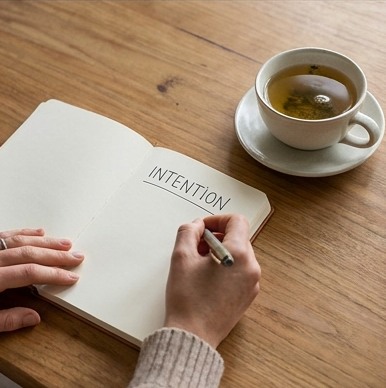
A short routine helps. Before any ritual, write down in one sentence what you want. Check it for words that describe someone else’s feelings or choices, such as “love me,” “come back,” “leave her” or “obey.” Rewrite those parts so they describe your own conduct and your openness: “I will speak honestly,” “I will give her space,” “I am ready for love.” Then ask whether anyone would be harmed or deceived if the ritual succeeded. If so, rethink it.
Finally, set a limit. Decide that you’ll do the ritual once, or for a set number of evenings, and then stop. Endless repetition is usually a sign that the ritual has become a way of avoiding grief or action. If you notice that, step back and talk to someone. The aim is to feel steadier, not to build a habit that keeps you stuck.
If you’ve already cast a spell and feel uneasy
Start by being kind to yourself. You acted out of hope, fear or pain, and that’s human. Then ask what, specifically, you’re uneasy about. If it’s a belief that something terrible will happen to you, remember that no evidence shows rituals cause harm in that way, and most traditions emphasise repair over punishment. If it’s a feeling that you tried to control someone, that’s a more useful signal.
The practical response is simple. Stop. Don’t repeat or escalate the work. If it involved another person, consider whether you owe them honesty, and whether it would help or harm to tell them. Change your behaviour toward them so that you respect their choices. Then spend time on something constructive, such as a conversation with a friend or counsellor, a ritual aimed at your own calm, or an act of kindness. Most traditions treat sincere repair as the answer to wrongdoing, far more than any elaborate cleansing.
Cleansing rituals and what they can do
Many pages recommend “karma cleansing” or “spell reversal” rituals, often at a price. People find them reassuring, and a simple version can help you feel you’ve closed a chapter. You might light a candle, write what you intended and what you regret, thank the experience and let the candle burn down safely. Some people bury or dispose of items from the earlier ritual respectfully.
Be wary of anyone who says you need a paid cleansing, or who uses fear to sell one. A message such as “dark energy is attached to you and only I can remove it” is a classic upsell. A cleansing is a personal act of closure, and it needs nothing more than your own sincerity. If you feel genuinely distressed, talk to a counsellor. Lifeline (13 11 14) is available in Australia at any hour, and Samaritans (116 123) in the UK.
Do other people’s spells on you cause karma?
People also ask whether a spell cast on them can cause harm. There’s no evidence that it can, and worrying about it can make you more anxious than any ritual could. If you’re afraid someone has “cursed” you, look at what’s actually happening in your life: stress, sleep, health, money, relationships. These explain most bad patches. If the fear is persistent, speak to your GP or a counsellor.
Be careful with anyone who tells you that you’re under a curse and offers to remove it for a fee. This is one of the most common patterns in spell-related scams. The guide to spell caster scams in Australia lists the warning signs, and Scamwatch, run by the ACCC, takes reports.

How different traditions see it
It helps to remember that “karma” and spell ethics mean different things in different places. Buddhist ethics focus on intention and harm: an action driven by greed, hatred or delusion has different consequences from one driven by compassion. Hindu traditions have a variety of views, often connecting action to duty and consequence. Modern Wicca includes harm-none and the threefold law. Hoodoo and many folk traditions are practical and pragmatic, with a strong tradition of “sweetening” and softening situations, and a long history of caution about doing harm. Many Christian and Muslim communities regard magic of any kind as forbidden, which is a point worth respecting if it matters to you or your family.
Put simply, there is no single rulebook. If you hold a faith or cultural tradition, its guidance matters more than anything you read online. If you don’t, the common ground is easy to see: respect other people’s will, don’t aim to harm, and take responsibility for what you do.
What this means for a love spell in practice
A sensible approach is to design the ritual around yourself. Instead of “make him love me,” try “may I be calm, open and honest.” Instead of “bring her back,” try “may I speak with patience and may I accept what comes.” Instead of “stop him seeing her,” try “may I find peace and make good choices.” These versions ask nothing of another person’s will, and they’re easier to follow with a clear conscience. If you’re hoping to win back a former girlfriend, read how to get your ex girlfriend back.
If your goal involves another person, treat the ritual as a support for your own behaviour, and let the real work happen in the real world: honest conversations, respect for their answer, time and space. The guide to whether reconciliation spells work goes through how that looks after a breakup.

A short ritual for a clear conscience
If you’d like a ritual that suits any ethical tradition, try this. Choose a quiet evening. Sit with a notebook and a candle on a heatproof surface. Write what you want, plainly, and then write how you’d feel if the other person read it. If anything makes you uncomfortable, cross it out or rewrite it. Then write what you can do in the real world to move toward what you want: a message, a conversation, a change in your habits.
Read the final version aloud, finishing with: “May I act with honesty, patience and respect, and may I accept what comes.” Let the candle burn briefly under watch and put it out. Do the first real-world action within the week. The ritual is only a way of focusing you, and the action is what counts. For more ideas, the guide to love spells at home versus a spell caster explains simple practices.
What a consultation with Baba Ali involves
If you’d like to talk about the ethics of your situation with a practitioner, you start by sending your story through the secure form on the contact page. Baba Ali reads it and talks with you about what you hope for. He then advises whether spiritual work fits and what it would include. The how it works page sets out the stages: consultation, preparation of ritual materials, the ritual itself, then updates through a private client portal.
It’s reasonable to ask what each stage involves, how consent and honesty are handled, and what it costs, and to be told plainly that no outcome can be promised. If a practitioner is uncomfortable with those questions, that tells you something. The page on a love spell caster in Australia explains how remote sessions work.

Mistakes people make when worrying about karma
A few traps are common. Treating karma as a scoreboard and trying to “balance” it with expensive rituals. Using fear of payback as a reason to avoid honest conversations. Assuming that a pure intention excuses a controlling action. Paying for cleansings from people who profit from your fear. Ignoring a real ethical concern because you’re sure the spell “won’t work anyway.” And ruminating for weeks instead of taking one concrete step to put something right.
The cure is practical. Name the specific thing you’re uneasy about, decide what you can do, and do it. Talk to someone you trust. Move on with a clearer sense of how you want to act next time.
Looking after yourself
Guilt and fear can wear you down. Keep your routine, with sleep, meals, movement and time outdoors. Talk to a friend or counsellor. If you can’t stop worrying, if you’re losing sleep or if you feel hopeless, reach out. Lifeline (13 11 14) is available at any hour in Australia, Beyond Blue (1300 224 636) offers mental health support, and Relationships Australia (1300 364 277) provides counselling. In the UK, Samaritans (116 123) is there at any hour. If you have thoughts of harming yourself, call Lifeline or 000 right away.
Scam warning signs
Fear of bad karma is a favourite lever for sellers. Be wary of anyone who says you’re cursed, carrying “dark energy” or in danger unless you buy a cleansing. Be wary of guarantees, fixed timeframes, large upfront fees, repeated requests for more money and threats of bad luck if you stop. A genuine practitioner explains what they do, what it costs and what they can’t promise, and respects a no.
In Australia, Scamwatch publishes current scam information and takes reports, and your bank may help if you act quickly. Before you pay anyone, write down what you’ve been promised and what happens if nothing changes.
If you live in the UK or elsewhere in Europe
Ethical and religious views on magic vary widely across Europe, from secular and pagan communities to strongly religious ones. If your faith or family has a position, it deserves weight. The same practical points apply: respect other people’s will, avoid harm and be careful with sellers who use fear. Relate offers counselling in the UK, and Samaritans (116 123) is there at any hour. Remote consultations work across time zones.
Frequently asked questions
Do love spells cause bad karma?
It depends on the spell and the tradition. Rituals aimed at your own calm and clarity raise few concerns. Rituals aimed at overriding another person’s will are the ones most traditions treat as ethically fraught.
What is the threefold law?
It’s a principle in modern Wicca that what you send out returns to you three times over. Not all practitioners follow it, and many folk traditions have no such rule.
Will something bad happen to me if I cast a love spell?
No evidence shows that rituals cause harm to the person who performs them. The more realistic risks are damaged trust, regret and money lost to unfair sellers.
How do I know if my intention is clean?
Ask whether you’d be comfortable if the other person knew exactly what you were doing, and whether you could accept it if nothing changed. If either answer is no, rethink the ritual.
What should I do if I feel guilty about a spell?
Stop, don’t repeat it, and consider whether you owe anyone honesty. Respect the person’s choices, and take a constructive step such as talking to a counsellor.
Do I need a cleansing ritual?
You don’t need to pay for one. A simple act of closure, such as writing what you regret and letting a candle burn down safely, is enough for many people.
Is a spell on someone without their knowledge ethical?
Most traditions regard it as problematic, because the person hasn’t consented. Rituals focused on your own conduct avoid the issue.
Your next step
If you’d like to talk through your situation in private, you can start a confidential consultation through the contact page. You can also browse the other services, or read how the site writes and checks its guides in the editorial standards. Karma is best understood as a question about your intentions and actions, not a debt to fear. If you’re struggling, call Lifeline on 13 11 14 in Australia or Samaritans on 116 123 in the UK.