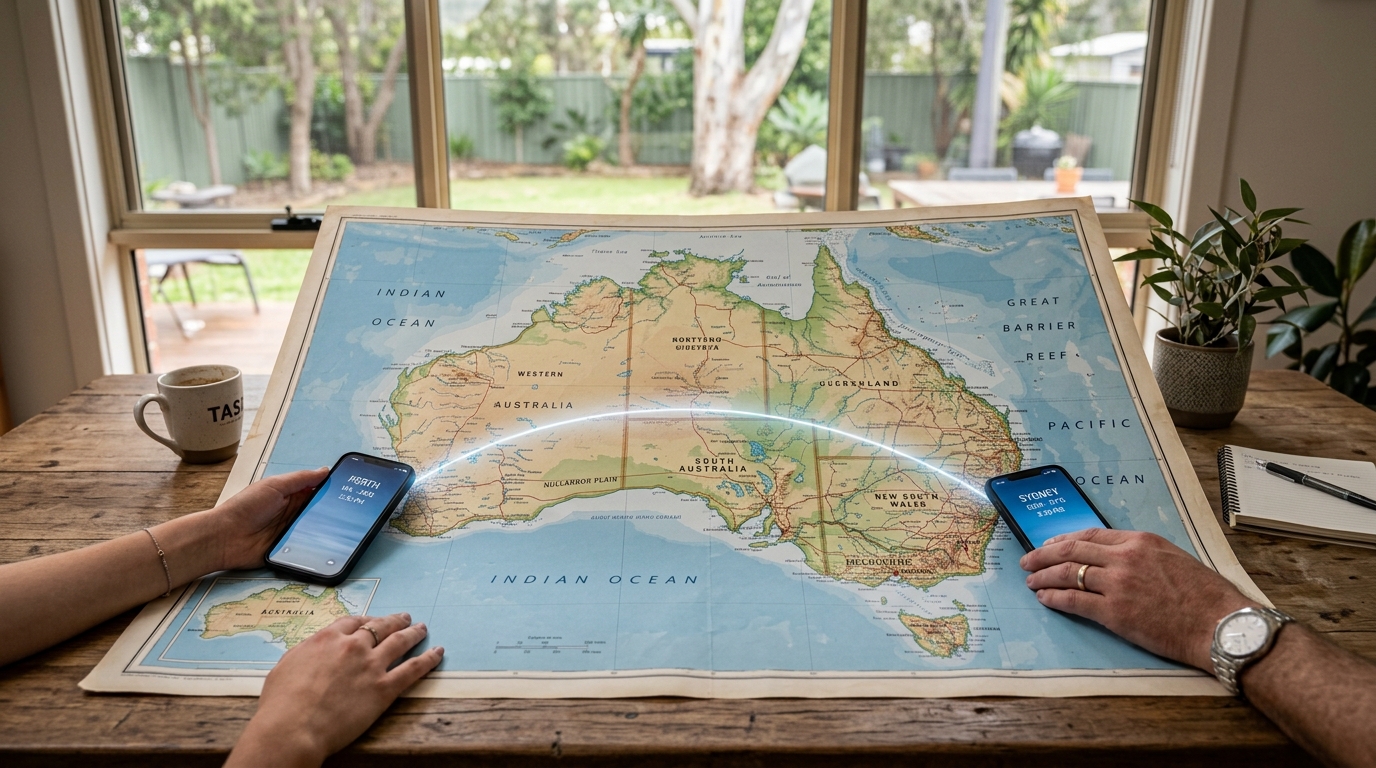
Do love spells work long distance? People ask it when someone they love is on another continent, on a mine site, in another city or simply out of reach. Maybe a partner has moved overseas for work. Maybe you met online and live eight time zones apart. Maybe you’re in Perth and the person you want to reach is in Sydney, London or Lagos. Distance makes everything feel more urgent and harder to fix, and a ritual that claims to ignore distance sounds like exactly what you need.
The honest answer has two parts. First, distance isn’t the thing that decides whether a love spell works. A ritual either reaches a person’s feelings or it doesn’t, and no evidence shows that any ritual does, near or far. Second, distance changes a lot about the relationship itself, and most of that can be worked on in ordinary ways. A ritual may help you feel calm and connected while you do that work. It can’t carry a message across an ocean and change someone’s mind.
This guide is written for readers in Australia first and Europe second. It looks at what practitioners say about distance, what the evidence on long-distance relationships shows, what a ritual can still offer, how to keep a long-distance relationship healthy, how to approach a former partner who lives far away, special cases such as FIFO work and time zones, and how to avoid scams that exploit the gap.
Key takeaways
- Distance doesn’t make a spell stronger or weaker, because no spell can control another person’s feelings in the first place.
- A ritual can steady you while you wait or work through the distance. It can’t deliver a message or change another person’s mind.
- Long-distance couples often report satisfaction similar to couples who live together, when they communicate well and have a plan to close the gap.
- Be wary of anyone who charges more because of the distance, or says a spell works faster remotely.
What practitioners say about distance
Most pages that answer this question say yes, spells work across any distance. The explanation is that energy, intention or spirit isn’t limited by geography, so a ritual performed in one place can reach a person anywhere. Some say the person’s name, photograph or a personal item creates a link that makes the distance irrelevant. Our guide to how love spells work explains what research says and where the limits are.
That’s a statement of belief, and many people hold it sincerely. It isn’t something that can be tested, and no study has shown that rituals change a distant person’s feelings. It’s fair to say what a practitioner believes, and equally fair to say that belief isn’t evidence. What can be said with confidence is the narrower claim: if a ritual has value, it’s mainly in what it does for the person performing it, and that doesn’t depend on where the other person is.
Do love spells work long distance? What the research says
Long-distance relationships are common, and they’re not doomed. Research on long-distance couples, including work by Laura Stafford and others, has often found that people in these relationships report satisfaction and commitment similar to those living together. The couples who do well tend to communicate regularly, share small daily details, trust each other and have a clear idea of when and how they’ll be in the same place.
Studies have also noted that long-distance partners can idealise one another. With less everyday contact, it’s easier to see the best side and miss the friction. When couples finally live together, that idealised picture can crack. That doesn’t mean distance is bad. It means honesty matters, and that a plan to be together should include time for the real, ordinary parts of each other.
None of this requires a ritual. It requires effort, honesty and a shared direction. If you’re wondering whether the relationship can survive the distance, those are the factors that decide it.

What a ritual can still do
If you find comfort in ritual, it can still play a role. Michael Norton and Francesca Gino, in a 2014 paper in the Journal of Experimental Psychology, found that people who performed a ritual after a loss felt less grief and more control. Distance can feel like a loss, even when the relationship continues, and a quiet ritual can help you feel connected and calmer.
Many long-distance couples already have small rituals. They send a message at the same time each night. They watch the same show together on a call. They light a candle at a set hour, or write each other letters. These work because both people take part. A ritual that two people share is a way of saying “I’m here” across the gap, and that’s worth more than one done secretly on the other person’s behalf.
Why a secret ritual is a poor idea
Many remote-casting offers ask for the other person’s full name, photo or a detail such as a birth date. Whether or not you believe it works, the idea is to affect someone who hasn’t agreed to it. That raises consent questions, and it can also set you up for disappointment.
Think about the best-case scenario. Suppose a distant partner starts calling more. Would you know it was because of a ritual, or because they missed you, or because it was a quiet week? You’d never be sure, and that uncertainty can undermine the relationship. A relationship built on honest contact is steadier than one you secretly believe you engineered. The page on love spells with hair and photos explains the consent issues in more detail.
Keeping a long-distance relationship healthy
If the relationship is current, the most useful work is practical. Agree on how often you’ll talk, and be consistent. Share ordinary details as well as the highlights. Be honest about worries, jealousy and loneliness, and say them before they become resentments. Plan visits, and plan the next one before the last ends. Most of all, agree on where this is going: how long the distance will last and what the plan is to close it.
Gottman’s research on couples found that the ratio of positive to negative interactions strongly predicts how a relationship fares, and that couples who handle conflict respectfully do better. Distance makes conflict harder, because it’s easy to hang up or go quiet. Agree on how you’ll handle arguments: no ending calls in anger without saying when you’ll talk again, and no long silences after a disagreement.
Look after the relationship’s rhythm too. Time zones can make daily contact tricky, so find a window that works for both of you and protect it. If one person does all the adjusting, resentment grows. Share the inconvenience.

If you’re trying to reach an ex who lives far away
This is the other common reason for the search. A former partner has moved, or you have, and you want to reconnect. The same principles apply as for any reconciliation, and distance adds a few wrinkles.
Give space first, and be honest with yourself about why it ended. If you reach out, keep it short, warm and low-pressure. A message that says you’ve been thinking of them and would be glad to hear from them gives them a way to respond without obligation. Don’t flood them with messages, and don’t use mutual friends to pass notes. If they don’t reply, take it as an answer for now.
Distance can make it tempting to over-message, because there’s no chance of a chance meeting to relieve the tension. Resist it. Persistent unwanted contact can amount to harassment or stalking in Australia, the UK and most of Europe, even when it happens only online. The guide to the no contact rule explains how long to wait and what to do in the meantime, and the page on whether reconciliation spells work covers the limits of ritual in these situations.
FIFO work, deployment and other built-in distance
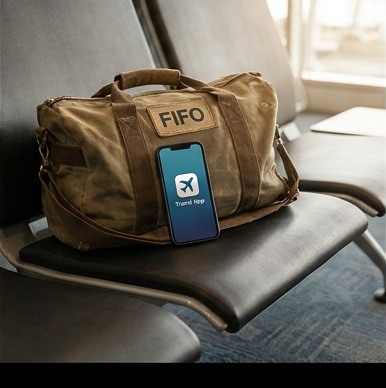
In Australia, many couples live with planned separation. Fly-in fly-out workers spend weeks away on rosters, and defence, shipping and remote work have similar patterns. Here the distance isn’t a failure of the relationship. It’s a structure, and the question is how to live with it.
Couples who manage it well tend to be practical. They agree on contact rules for the roster, such as a daily check-in during the swing and a longer call on days off. They plan the first days at home carefully, because the re-entry can be rough. One partner has been running things alone, the other has been working long shifts, and both need time to adjust. They talk about household decisions, money and children, and they make sure the partner at home has support. If strain builds, Relationships Australia (1300 364 277) offers counselling, and Lifeline (13 11 14) is available at any hour.
A ritual can fit into this rhythm, as a shared habit or a personal moment of calm. It can’t replace the conversations that keep the relationship working.

Time zones, language and culture
When partners live in different countries, practical things multiply. A seven-hour time difference means one person’s evening is the other’s early morning. Language, culture and family expectations may differ, and these can be strong sources of strain or enrichment. The couples who handle them best are open about the differences and curious rather than defensive.
If you live in Europe, contact with a partner in Australia means a big gap, but it’s workable with some planning. Choose fixed call times and accept that some will be inconvenient for each of you. Be honest if the pace becomes too much. And if a relationship is built on a partner you’ve never met in person, take extra care, because that’s the situation romance scammers exploit.
Romance scams and “long-distance love” fraud
Distance makes it easier for fraudsters to pose as someone they’re not. A common pattern in Australia is a person who appears online, builds a close relationship quickly, claims to be working overseas, and then asks for money for a flight, a medical bill, a customs fee or an emergency. Scamwatch, run by the ACCC, publishes current information on romance scams and takes reports. If you’ve sent money, contact your bank straight away.
A separate pattern targets people who want help with a distant partner. A seller promises that a spell will work “faster” or “more strongly” across long distance and charges extra for it. Distance doesn’t make a ritual cost more or work better. Be wary of any upsell tied to it. The guide to spell caster scams in Australia lists the warning signs, and the page on free love spell casters explains how “free” offers often turn into paid ones.
Moving, visas and making a plan to close the gap
For many long-distance couples, the real question is how to end the distance. That’s a practical plan. Talk about who might move, what each person would have to give up, what the timing looks like and what the fall-back is if things change. Be honest about money, work, family and visas. If one of you needs to travel or relocate between countries, the Australian Department of Home Affairs and the equivalent authority in your country publish the requirements, and a registered migration agent can advise on your situation.
A plan doesn’t have to be perfect, but it needs to exist. Couples who don’t know when the distance will end often drift. Couples with even a rough timeline tend to feel more secure and more willing to put up with the strain.
A realistic first month if you’re far apart
If distance has just opened up, whether you’ve split or one of you has moved, the first month tends to set the pattern. Here’s a realistic outline. In week one, avoid big decisions. Let the shock settle, keep contact calm and talk only about what needs talking about. In week two, agree on a rhythm: how often you’ll speak, which days, and what’s off limits when one of you is tired or upset. In week three, plan something concrete, such as a visit date or a shared activity online. In week four, review honestly: is the rhythm working, is anyone doing more than their share, and what needs adjusting?
That kind of structure sounds unromantic, and it works. Couples who set a rhythm early are less likely to drift, and a person who is trying to reconnect with an ex shows respect by proposing something small and clear rather than something big and vague. If you aren’t in a relationship at all and are hoping to start contact again, the same logic applies: one short message, one clear invitation, and then patience.
Signs the distance is hurting the relationship
Distance itself isn’t the problem, but it can magnify problems that are already there. Watch for contact that has become one-sided, with one person always initiating. Watch for conversations that have shrunk to logistics, for frequent arguments that end with a hung-up call, for secrecy about daily life, or for long periods with no plan to meet. Another sign is a growing sense that you’re managing the relationship rather than enjoying it.
If you notice these, talk about them early and kindly. Name what you’ve seen, ask how the other person feels and work out one change you can both make. If the pattern doesn’t shift, a counsellor can help even over video. Relationships Australia (1300 364 277) offers counselling by phone and online, which suits couples in different places. None of this needs a ritual, though a shared one can help you both feel that you’re still on the same side.
How to decide whether to keep going
Every long-distance relationship reaches a point where the question comes up: is this worth continuing? Weigh it honestly. Do both of you want to be together, and want it enough to change something? Is there a realistic path to living in the same place? Do you trust each other? Are you both investing, or is it mostly one person? And how does the relationship make you feel most of the time: supported or anxious?
Rusbult’s investment model suggests that commitment grows with satisfaction, investment and a lack of better alternatives. In plain terms, people stay when the relationship is good, when they’ve put a lot in and when leaving would cost more than staying. If your answers lean toward doubt, it may be time for an honest conversation about the future, with or without a counsellor. Ending a long-distance relationship is painful, and so is dragging one on without a plan. Clarity, even when it hurts, is a kindness to both of you.
A ritual you can share across the distance
If you’d like a ritual, make it shared. Agree on a time, for example Sunday evening. Each of you lights a candle where you are, and you spend ten minutes on a call or message exchange. Take turns saying one thing you appreciate about the other and one thing you’re looking forward to. Finish by naming the next time you’ll see each other.
That small ritual does what a secret one can’t: both people take part, both feel it, and it builds the thing that holds a long-distance relationship together, regular, honest connection. Light the candle with care, on a heatproof surface, and never leave it unattended.
If you’d like a ritual for your own steadiness, write what you miss, what you’re grateful for and what you’ll do this week to move the relationship forward. The guide to love spells at home versus a spell caster explains simple home practices.
What a consultation with Baba Ali involves
If you want to speak with a practitioner about a long-distance situation, you start by sending your story through the secure form on the contact page. Baba Ali reads it and talks with you about the relationship, the distance and what you hope for. He then advises whether spiritual work fits and what it would include. The how it works page sets out the stages: consultation, preparation of ritual materials, the ritual itself, then updates through a private client portal. Because every stage is remote, geography makes no difference to how the service runs.
It’s reasonable to ask what each stage involves and costs before agreeing, and to be told that no outcome can be promised. The page on a love spell caster in Australia explains how remote sessions work for clients across the country and overseas.

Mistakes long-distance couples and seekers make
A few habits cause trouble. Letting contact lapse and assuming the other person understands. Hiding worries until they explode. Comparing your relationship to couples who live together. Idealising the other person and avoiding hard topics. Spending money on remote spells in the hope of a shortcut. Over-messaging a partner or ex who hasn’t replied. Putting life on hold, so that everything depends on a future reunion.
The alternative is steady and a little dull: consistent contact, honest talk, a shared plan and a full life where you are. That’s what keeps a long-distance relationship alive, and it’s also what gives a former partner a reason to reply.
Looking after yourself when someone is far away
Loneliness is the hard part of distance. Keep a routine. Sleep, eat and move. See friends and family. Keep up hobbies and work. Don’t pour all your emotional energy into one phone screen. If you feel low or anxious, talk to someone. Lifeline (13 11 14) is available at any hour in Australia, Beyond Blue (1300 224 636) provides mental health support, and in the UK, Samaritans (116 123) is there at any hour. A steady you is better for every relationship you have, near or far.
If you live in the UK or elsewhere in Europe
The same points apply. Europe has its own version of long-distance love, with short flights between countries and different rules on residence and work. Relate offers counselling in the UK. Romance scams are as common in Europe as in Australia, so apply the same caution to online contacts. Remote consultations work across time zones, which suits clients in Europe as much as in Australia.
Frequently asked questions
Do love spells work long distance?
No evidence shows that any love spell changes another person’s feelings, near or far. Distance doesn’t make a ritual stronger or weaker. A ritual may help you feel calmer while you handle the distance in practical ways.
Can a spell bring back an ex who lives overseas?
No spell can force a person to return. Respectful contact, honest reflection and patience are what give a reconnection a chance.
Does distance make a spell cost more?
It shouldn’t. Be wary of any seller who charges extra for distance or claims that remote work is faster or stronger.
Do I need the other person’s photo or name?
No. Many practitioners advise against it because it raises consent issues. A ritual based on your own intention is simpler and avoids the problem.
Can long-distance relationships last?
Yes. Research on long-distance couples has often found satisfaction similar to couples who live together, especially when they communicate regularly and have a plan to close the gap.
How do I know if a long-distance partner is a scammer?
Warning signs include moving quickly to declarations of love, refusing video calls, always having a reason they can’t meet and asking for money. Scamwatch has current guidance.
What if my partner is FIFO?
Plan contact around the roster, handle the re-entry period carefully and get support if strain builds. Relationships Australia (1300 364 277) offers counselling.
How often should long-distance partners talk?
There’s no fixed number. What matters is that both people are happy with the rhythm and that it’s steady. Many couples like a short daily check-in and one longer call each week. Agree it together and adjust when life changes.
Is it worth waiting for someone who lives far away?
It depends on whether you both want the same future and have a realistic plan to be in the same place. Waiting with no plan and no contact tends to wear people down. Waiting with a shared timeline and honest contact can work well.
Your next step
If you want to talk through your situation in private, you can start a confidential consultation through the contact page. You can also browse the other services, or read how the site writes and checks its guides in the editorial standards. Distance is a practical challenge first, and a ritual is best used for your own steadiness, not as a promise. If you’re struggling, call Lifeline on 13 11 14 in Australia or Samaritans on 116 123 in the UK.