
Love spell reviews are the first place many people look before they spend money on a practitioner. It’s a sensible instinct. You’re about to trust a stranger with something personal, and you want to know whether others were treated well. So you search, scroll through a list of five-star comments and wonder whether any of it is real.
Spell reviews are harder to trust than reviews of almost anything else. With a restaurant, you can check whether the food was good. With a love spell, the outcome is a change in another person’s feelings, which can’t be measured, and which has many causes. That makes reviews easy to fake, easy to misread and easy to use as a sales tool. This guide explains why, how to read reviews critically, how to check a practitioner in other ways, what Australian law says about fake reviews, and what to do if you’ve been misled.
It’s written for readers in Australia first and Europe second. This guide fills that gap, drawing on published research on rituals and persuasion and on Australian consumer-protection information.
Key takeaways
- Reviews of spell services can’t prove that a spell worked. A change in someone’s feelings has many possible causes.
- Fake and incentivised reviews are common. A page full of similar five-star comments is a warning sign.
- Judge a practitioner by how they treat you before you pay: clear information, honest limits and no pressure.
- If you’ve been misled, contact your bank quickly and report to Scamwatch (ACCC).
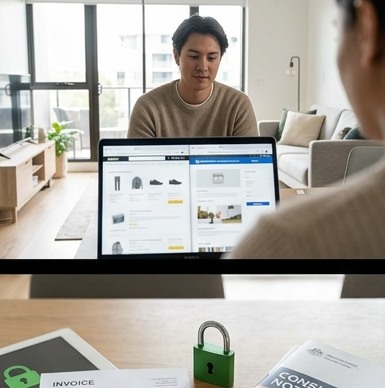
Why love spell reviews are different
When you read a review of a product, you’re usually learning something checkable: did it arrive, did it work, was it as described? With love spells, the thing being claimed is that a distant person’s feelings changed because of a ritual. That claim has problems before any review is read. Our guide to how love spells work explains what research says and where the limits are.
First, outcomes can’t be verified. A reviewer says “he called me two days later,” and you have no way to know whether he’d have called anyway. Second, relationships change on their own. People who consult a practitioner are usually at a low point, and many situations improve with time, a phenomenon statisticians call regression to the mean. Third, people want to believe it worked, especially after paying, and they’re likely to credit the ritual for good news and forget it for bad. These are well-known features of human psychology, and they apply to reviews of any service whose results are hard to measure.
What the research says about believing testimonials
Psychologists describe several biases that make testimonials persuasive and unreliable. Confirmation bias leads us to notice evidence that matches our hopes. Survivorship bias means we hear from people who were satisfied and not from those who gave up and stayed quiet. Social proof, our habit of copying what others seem to be doing, makes a wall of positive comments feel like evidence.
Robert Cialdini’s work on persuasion describes social proof as one of the strongest levers in marketing, which is why sellers cultivate reviews. This doesn’t mean every review is false. It means the number and enthusiasm of reviews tell you less than they seem to, especially for services with no way to check the claim.
How fake and incentivised reviews work
Fake reviews come in several forms. Some are written by the seller or by paid writers, often in bulk, with similar phrasing and stock details. Some are copied from other sites or other services. Some are offered in exchange for a discount or a free extra. Some are posted on “review” sites that are owned by the sellers themselves or earn commission from referrals.
Signs to look for include many reviews posted on the same day, similar wording across reviews, vague stories with no specific details, a lack of any negative or mixed reviews, reviewers with no other history, and a site that ranks services in a way that always favours a particular seller. A page that calls itself an independent review but links every recommendation to a paid service is an advertisement.
What Australian rules say about reviews
In Australia, the Australian Consumer Law prohibits misleading or deceptive conduct in trade, and the ACCC has taken action against businesses that published fake or misleading reviews. Businesses are generally responsible for reviews they write, pay for or selectively present. If you find a business using fake testimonials, you can report it to the ACCC.
The UK’s Competition and Markets Authority has similar rules, and the EU has consumer-protection rules about reviews. These laws are useful background, and they don’t make every review you read trustworthy. Many fake reviews are posted by operators outside any jurisdiction that can act on them. This is general information, not legal advice.
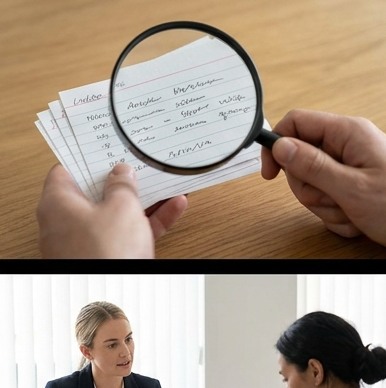
How to read a review critically
A few habits help. Look at the pattern, not the highlights: how many reviews are there, how are they spread over time, and are they all positive? Read the negative and middle reviews first, since they usually contain more detail. Look for specifics, such as what was done, what it cost and what happened, over general praise like “amazing, life-changing.” Check whether the reviewer’s account looks real and has other activity.
Ask what the review actually claims. “The practitioner was polite and explained everything” is something a reviewer can know. “My ex came back because of the spell” is a claim about cause that no reviewer can know. Give more weight to reviews about how someone was treated, how clear the pricing was and whether promises were kept, than to claims that a ritual changed someone else’s mind.
Red flags in the reviews themselves
Some patterns are worth walking away from. Reviews that promise dramatic results within days. Reviews that mention the same unusual phrases. Testimonials that all describe the same sequence: despair, a single ritual, a miracle. Reviews that name a price lower than the seller later quotes. A lack of any complaints about cost or follow-up. Reviews posted mainly on the seller’s own site.
Also be careful of reviews that read like instructions: “contact this caster on WhatsApp now.” Genuine reviewers rarely include contact details for a seller, and such comments are often posted by the seller or an affiliate. If a review pushes you to leave the platform and talk privately, treat it with suspicion.

Better ways to check a practitioner
Reviews are only one source. Other checks tell you more. Look for clear information on what the practitioner does, how it works and what it costs, before you contact them. See whether they say plainly that no outcome can be guaranteed. Notice how they answer questions: do they explain, or deflect and push? See whether they pressure you with deadlines or fear. Search the name with the word “scam” and read the results critically. Check whether they have a physical or business presence you can verify.
The best test is behaviour in the first conversation. A fair practitioner listens, asks about your situation and tells you honestly what they can and can’t do. They give you time to decide, and they don’t ask you to hand over large sums at once. If you feel rushed, frightened or flattered into paying, that’s your answer. The guide to spell caster scams in Australia lists the warning signs in more detail.
Questions to ask before you pay
Write down a few questions and ask them. What exactly will you do, and in what stages? What is the total cost, and are there any extras? How long will it take, and how will I be updated? What happens if nothing changes? Is there any refund or cancellation option? Do you ever ask for personal items or details of another person, and why? Will you tell me plainly what you can’t do?
The answers matter, and so does the way they’re given. Vague, defensive or inconsistent answers are a warning. Clear, calm and honest ones are encouraging. You’re allowed to say you’ll think about it, and a practitioner worth your time will accept that.
Free and “guaranteed” offers
Many sellers lead with a free spell or a “guaranteed result.” Both are marketing hooks. Free offers often lead to paid upsells, and guarantees are claims no one can honour. The page on free love spell casters explains how those offers work, and the guide to how long a love spell takes to work explains why fixed timeframes are red flags.
Why genuine happy reviews exist
It would be unfair to say every positive review is fake. Some are written by real people who felt better after a consultation, and that’s plausible. A conversation with someone who listened, a ritual that gave them calm, or simply the passage of time can leave a person feeling improved, and gratitude follows. Psychologists also describe cognitive dissonance: after we’ve spent money or effort on something, we tend to feel better about it, which makes us more likely to write a warm review.
The useful distinction is between what a reviewer can know and what they can’t. They can know whether they felt respected, whether the information was clear and whether the cost matched what was quoted. They can’t know whether a ritual changed another person’s mind. Reading reviews with that distinction in mind lets you take the genuine parts seriously and discount the claims about cause.
Where reviews appear, and how much to trust each
Reviews turn up in different places, and each has its own weaknesses. Reviews on a seller’s own site are the easiest to curate, since the seller chooses what to show. Third-party review platforms are harder to control but can still be flooded with fake posts, and some platforms let businesses pay for features that influence how reviews appear. Social media comments can be bought or posted by affiliates, and they disappear easily. Forums and community threads offer more candid discussion, but they’re also targeted by sellers posing as customers.
No source is perfectly reliable. The best approach is to look across several, notice where they agree and treat the overall picture as a clue. If every source says the same glowing things in the same words, be suspicious. If a seller appears only on their own site, with no independent trace, that’s a point to weigh too.
A worked example: reading a set of reviews
Suppose you find a practitioner with forty reviews, all five stars, mostly posted within a fortnight. Several use the same phrases: “I was skeptical but within three days he called.” Two include a WhatsApp number. None mention price. The site’s own page says “100% guaranteed.” Each of those is a flag, and together they suggest manipulation.
Now suppose you find another with twelve reviews over two years, a mix of ratings. One says the practitioner was kind but the ritual didn’t change anything. One says the price was clear and the process was explained. One complains about a slow reply. A few are warm and specific about how the consultation felt. There are no guarantees, no phone numbers in the comments and no claims of dramatic results. That pattern is more believable, though it still doesn’t prove anything about outcomes.
The point is not that the second is safe and the first is not. It’s that the second gives you information you can use: how the practitioner behaves. That’s the thing worth checking in a first conversation before you pay anything.
Recovery scams and other follow-ups
People who’ve been misled by one seller are often targeted again. Some operators pose as “recovery services” that promise to get your money back for a fee, and some contact victims directly after reading their complaints. Others offer to “fix” a failed spell. Be careful of anyone who approaches you unprompted after a bad experience, or who asks for payment before they do anything.
The right route for recovery is official: your bank or card provider, Scamwatch and, if your identity may be at risk, IDCARE (1800 595 160). None of those will ask you for an upfront fee. If you want emotional support, Lifeline (13 11 14) and your GP are good places to start. It helps to remember that being targeted twice says nothing about your intelligence. These schemes rely on exploiting stress, and recovering from one is a matter of stopping, documenting and seeking real help.
How to leave an honest review yourself
If you do decide to review a practitioner, describe what you experienced and keep it factual. Say what you were told before you paid, what you paid, how you were treated, how clear the process was and whether anything was promised. If the ritual didn’t change anything, say so. Avoid claiming that a spell caused a specific outcome, because you can’t know that, and such claims mislead other readers. Don’t accept payment or a discount in return for a review, and if you did, say so.
An honest review of this kind helps the next person, and it supports the small number of practitioners who deal fairly. It also protects you from the pull of cognitive dissonance, since writing a plain account of what happened is a good way to see it clearly.
How this site handles reviews and claims
You’re entitled to ask how any site you’re considering handles evidence. The editorial standards page explains how this site writes and checks its guides, including its approach to claims about what rituals can do. The guides here don’t promise outcomes, and they say plainly that no spell can control another person’s feelings. If you’re comparing sources, look for that kind of honesty about limits.
What a consultation with Baba Ali involves
If you’d like to talk to a practitioner before deciding anything, you start by sending your situation through the secure form on the contact page. Baba Ali reads it and talks with you about what is going on and what you hope for. He then advises whether spiritual work fits and what it would include. The how it works page sets out the stages: consultation, preparation of ritual materials, the ritual itself, then updates through a private client portal.
It’s reasonable to ask what each stage covers and costs, and to be told plainly that no outcome can be promised. Whatever you decide, treat it as you would any purchase: ask questions, take your time and don’t be rushed. The page on a love spell caster in Australia explains how remote sessions work.
A short checklist to use before you trust any review
Keep this list handy. Is the review about something the writer could actually know, such as how they were treated and what it cost? Does it include specific details instead of general praise? Are there mixed or negative reviews as well as positive ones? Are the reviews spread over a realistic period, and not clustered on a few days? Does the writing vary, or do many reviews use the same phrases? Does the reviewer have other activity that looks real? Does the page behind the review give honest information about limits and costs?
If most of the answers are yes, the reviews may be a fair clue. If most are no, treat them as advertising. Either way, check the practitioner directly before you pay, ask your questions and give yourself a day to think. Reviews can point you toward a conversation, and the conversation is what tells you whether to proceed.
If you’ve already been misled
If you’ve paid someone and feel misled, act quickly. Stop any further payments, however urgent the messages sound. Contact your bank or card provider as soon as possible, tell them what happened and ask whether the payment can be disputed. Keep records: screenshots of the offer, the reviews you relied on, messages, receipts and account details.
Report it to Scamwatch, run by the ACCC, which publishes scam information and takes reports. If you’ve shared personal details, consider changing passwords and watching for suspicious activity, and IDCARE (1800 595 160), Australia’s national identity and cyber support service, offers free help. If you’ve been misled by a fake review, you can also report the review on the platform where you found it. Don’t be embarrassed. These schemes are designed to work on people in distress.
In the UK, Action Fraud takes reports of fraud, and Samaritans (116 123) is there if you need to talk.
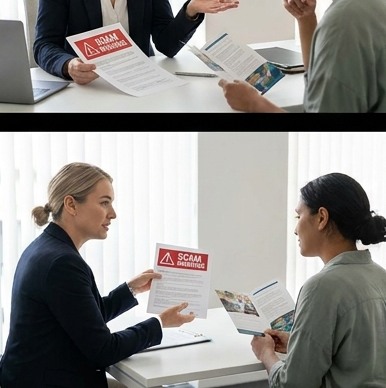
Mistakes people make when reading reviews
A few habits cause trouble. Treating a high star rating as proof. Trusting a page because it looks professional. Ignoring the lack of negative reviews. Believing a review that promises a specific result. Clicking a contact link inside a review. Paying a deposit before asking questions. Assuming that because many people have paid, it must work. And leaving a review of your own that credits a ritual for something that may have had other causes.
The alternative is to slow down. Treat reviews as one clue among several, check the practitioner’s behaviour and be honest with yourself about what you’re hoping for. If a decision feels rushed, step back.
Looking after yourself
People who search for spell reviews are often hurting. Keep the basics going: sleep, meals, movement and daylight. See friends and family. Avoid using alcohol to numb the pain. If you can’t stop thinking about someone, if you feel low most days or if you’re under financial pressure, talk to someone. Lifeline (13 11 14) is open at any hour, Relationships Australia (1300 364 277) offers counselling, and the National Debt Helpline (1800 007 007) offers free financial counselling. In the UK, Samaritans (116 123) is available at any hour. If you have thoughts of harming yourself, call Lifeline or 000 right away.

If you live in the UK or elsewhere in Europe
The same points apply. The UK’s Competition and Markets Authority and EU consumer rules both restrict fake reviews, though enforcement against overseas operators is limited. Action Fraud takes reports in the UK, and Relate offers counselling. Samaritans (116 123) is there at any hour. Check any site you use for a clear business name, address and terms. Remote consultations work across time zones, so geography shouldn’t be a reason to skip your checks.
Frequently asked questions
Are love spell reviews reliable?
Often not. Outcomes can’t be verified, and fake or incentivised reviews are common. Treat reviews as one clue, and focus on how a practitioner treats you before you pay.
How can I spot a fake review?
Look for similar wording, many reviews posted at once, vague stories, no negative reviews and reviewers with no other history. Be wary of reviews that include contact details.
Do spells really work, according to reviews?
Reviews can’t prove that a spell changed someone’s feelings. Relationships change for many reasons, and people tend to credit a ritual for good news.
Is it legal to post fake reviews?
In Australia, fake or misleading reviews can breach the Australian Consumer Law, and the ACCC has taken action. Similar rules exist in the UK and EU. This is general information, not legal advice.
What should I check besides reviews?
Look at the clarity of the information, honesty about limits, pricing, how questions are answered and whether you’re pressured. Ask the questions in this guide before paying.
What if I’ve already paid and feel misled?
Stop paying, contact your bank, keep records and report to Scamwatch. IDCARE (1800 595 160) offers free help if your identity may be at risk.
Should I write a review of my own?
If you do, describe what you experienced: how you were treated, what was explained and what it cost. Avoid claiming that a ritual caused a particular outcome, since you can’t know that.
Should I trust a review site that ranks the best love spell casters?
Be sceptical. Many “best of” lists are paid placements or affiliate pages that earn money when you click. Look for a clear statement of how the list was made and whether the site is paid by the services it ranks. If you can’t find one, treat it as an advertisement.
Why do reviews sound so similar?
Sometimes because they were written by the same person or copied from a template. Real reviewers usually differ in tone, length and detail. Strong similarity is a reason to doubt the whole set.
Your next step
If you’d like to talk through your situation in private, you can start a confidential consultation through the contact page. You can also browse the other services, or read how the site writes and checks its guides in the editorial standards. When you read love spell reviews, treat them as one clue and judge a practitioner by how they treat you. If you’re struggling, call Lifeline on 13 11 14 in Australia or Samaritans on 116 123 in the UK.