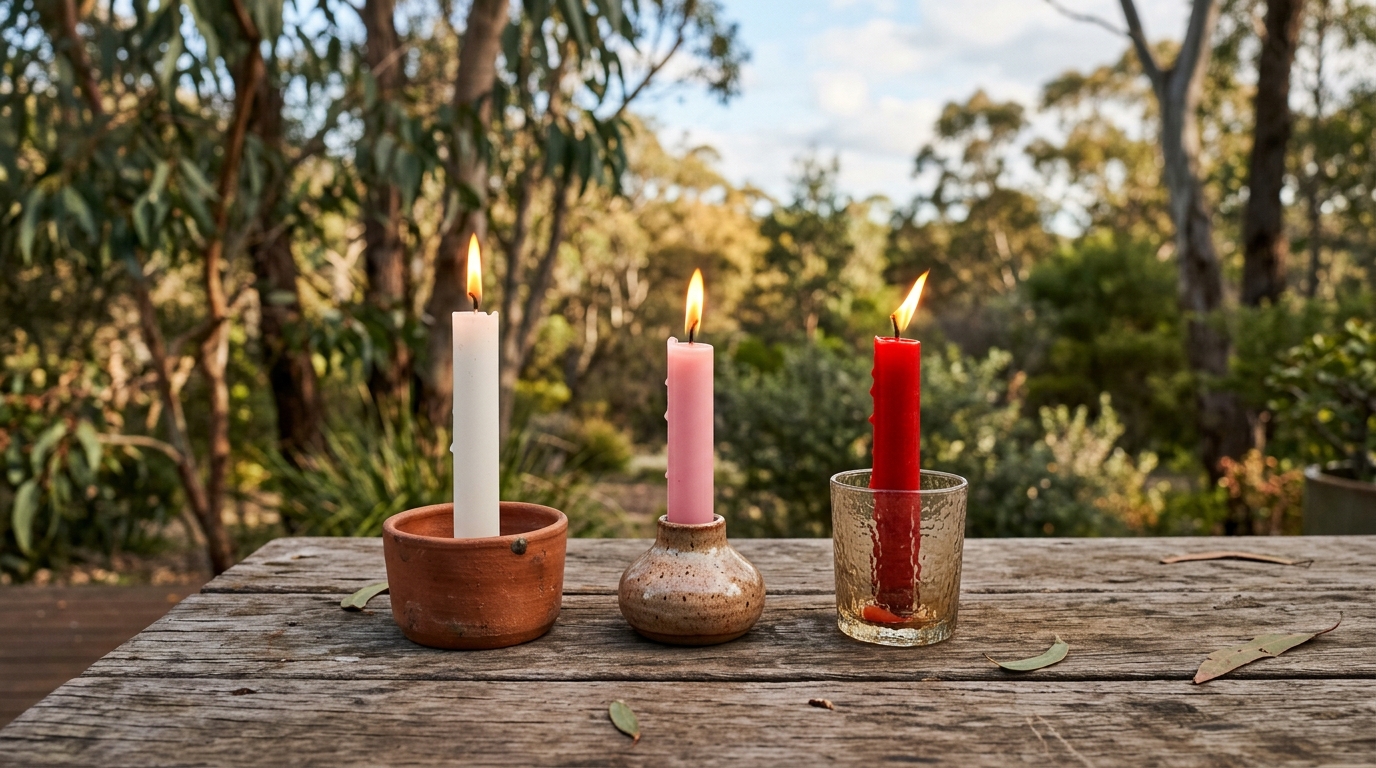
A candle spell to get ex back is probably the most common ritual people try after a breakup. It’s easy to understand why. A candle is cheap, familiar and quietly beautiful. Lighting one in a dark room, with your wish written on paper beside it, feels like doing something when there’s nothing else you can do. The flame gives your longing a shape.
Before you light anything, it’s worth being clear about what a candle can and can’t do. A candle can steady you, mark a moment and help you focus. It can’t make a former partner think of you, call you or change their mind. And a lit flame is a real fire hazard, which many online guides forget to mention. This guide covers how candle rituals work, the usual colours and meanings, how to stay safe, the ethics of aiming a ritual at an ex, what actually helps after a breakup, and when to look for support rather than another candle.
It’s written for readers in Australia first and Europe second.
Key takeaways
- A candle ritual can calm you and help you focus. It can’t make an ex return or change how they feel.
- Candles are a real fire risk. Use a heatproof holder, keep flames away from anything flammable and never leave them unattended.
- Keep the ritual about your own intention. Using an ex’s name, photo or belongings without their knowledge raises consent problems.
- What helps after a breakup is space, honest reflection and, if it feels right, one warm, low-pressure message.
How candle rituals work
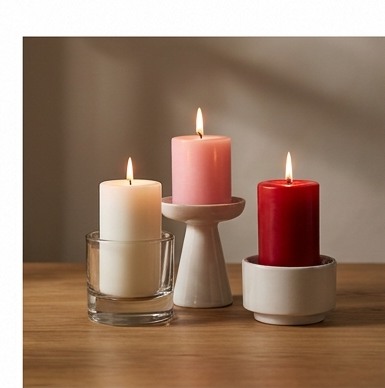
Candle work is among the oldest and most widespread forms of folk ritual. The basic idea is simple: you choose a candle, decide on an intention, write it down or speak it, light the candle with focus and let it burn for a set time. The flame is a symbol of your intention rising and being released. Many people also anoint the candle with oil, carve words into it or place herbs around it.
The same structure is found in religious ceremonies, memorials and meditation practices, which suggests that something about lighting a candle suits human attention. Michael Norton and Francesca Gino, in a 2014 paper in the Journal of Experimental Psychology, found that people who performed a ritual after a loss felt less grief and more control. A breakup is a loss, and a candle ritual is a small, structured way of acting on it.
What the usual colours are said to mean
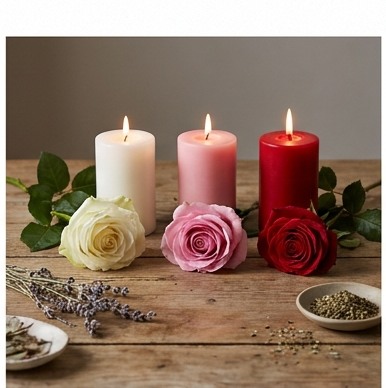
Candle colours carry traditional meanings in folk practice. Pink is often linked with affection and gentleness, red with passion and strength, white with peace and clarity, and green with healing and growth. Blue is associated with calm and honest communication, and black with protection or release. Different traditions assign different meanings, and none is a rule.
These meanings are symbols, not chemistry. Choosing a colour is a way of giving the ritual texture and focusing your mind on a quality you want, such as calm or honesty. If a particular colour helps you feel prepared, use it. If you can’t get one, a plain white candle does the same job. Be wary of sellers who say you need a specific, expensive candle for a ritual to work.
Fire safety comes first
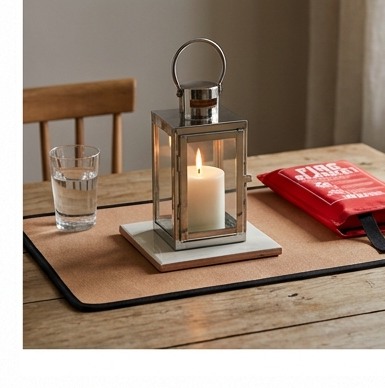
An unattended candle is a real hazard. Fire services in Australia and the UK warn that candles are a common cause of house fires, so treat the ritual like cooking: stay present. Use a stable, heatproof holder on a hard, level surface. Keep the flame away from curtains, paper, bedding, dried herbs and anything else that can catch. Keep candles out of reach of children and pets, and never place them on a surface that can crack or melt.
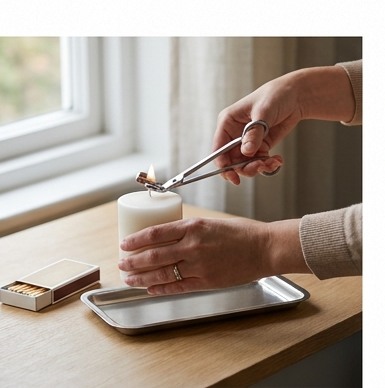
Never leave a burning candle in a room you’ve left, and never sleep with one burning. Don’t leave a candle burning “overnight” because a recipe says to. Use a snuffer or a lid to put it out, not your breath, which can spray hot wax. If you want a ritual that runs for several hours, use a battery candle or a sealed, purpose-made lantern. Keep a glass of water or a damp cloth nearby, and make sure your smoke alarm works.
Check the conditions, too. If you’re outdoors, look up fire bans first. On total fire ban days in Australia, open flames are prohibited, and even a small candle can be a risk in dry, windy weather. Indoors, avoid drafts, and be careful around anything with oils, since some are flammable.
Herbs, oils and what’s safe
Many recipes tell you to rub oil on a candle or sprinkle herbs around it. Used sparingly and kept away from the flame, these are generally fine as symbols. But dried herbs burn easily, and some essential oils are flammable, irritating to skin or harmful to pets, especially cats. Keep herbs well clear of the flame, and don’t apply oils with bare hands if you have sensitive skin. If you’re pregnant, have asthma or share your home with animals, check what’s safe, or skip them. A candle and a piece of paper are enough.
Don’t ingest anything you’ve used in a ritual, and don’t burn unfamiliar plants. If you feel unwell, put the candle out and get fresh air.
The consent question
Many candle recipes for an ex involve carving his or her name into the wax, using a photo or lock of hair, or asking for the person to “return” or “think of you.” Whether or not you believe it works, the aim is to influence someone who hasn’t agreed to it. If they’ve asked for space, the ritual runs directly against what they said.
Ask yourself: would you be comfortable if they knew what you were doing? If not, take it seriously. Many practitioners advise keeping the ritual focused on your own intention and leaving the other person’s name out. The guide on love spells with hair and photos goes through the consent issues in more detail, and the page on whether love spells cause bad karma looks at the ethical traditions.
A candle spell to get ex back, rewritten for your own steadiness
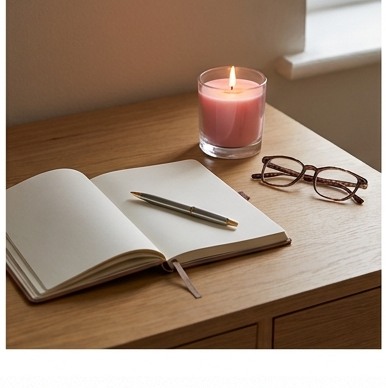
Here’s a version that is safe and asks nothing of your ex. Choose a quiet evening and clear a table. Place a candle in a heatproof holder on a hard surface, away from anything flammable. Sit with a notebook and write what you miss, what you regret and what you want to change. Don’t edit.
When you’ve finished, light the candle and read what you wrote slowly. Then write what you wish for yourself: calm, patience, honesty. If you wish to include your ex, write something kind and neutral, such as “I wish them well.” Say aloud, “May I be calm, honest and kind to myself, and may I accept what comes.” Let the candle burn for a short time while you stay in the room, then put it out with a snuffer.
Finish by writing one action for the next week, such as seeing a friend, going for a walk or booking a counselling session. Do it. The candle has done its work if it helps you do that. The guide to love spells at home versus a spell caster explains other simple practices.
Choosing and preparing a candle
You don’t need anything fancy. A plain candle in a glass or metal holder is safest, because the container catches dripping wax and keeps the flame stable. Tealights in a heatproof dish are another option. If you prefer a taper, use a proper holder that grips the base firmly. Check that the candle is sound, with no cracks, and trim the wick to about half a centimetre before lighting, which reduces smoking and flaring.
Think about scent too. Strongly scented candles can trigger headaches and asthma, and some scents irritate pets. Unscented or lightly scented candles are a safer choice for a ritual. If you want to add meaning, write a word on a small piece of paper and place it beside the candle, away from the flame, rather than carving or taping anything to it.
What it means when a candle burns oddly
Many candle guides read meaning into the flame. A high flame is said to show strong energy, a flickering one resistance, black soot a blockage, and a candle that keeps going out a sign the work is “blocked.” These readings are part of some traditions, and people find them meaningful.
Most of what you see has a plain physical cause. A long wick makes a tall, smoky flame. A draught from a window or fan makes it flicker and dance. Cheap paraffin and strong dyes leave more soot. A wick that drowns in melted wax goes out. Trimming the wick to about half a centimetre and moving the candle away from moving air fixes most of it.
So be careful with anyone who reads a sooty jar as proof that more work, and more money, is needed. If you want to take meaning from a flame, let it be a prompt to reflect, not a verdict on your relationship.
A worked example: Mia’s evening
Mia’s partner of two years moved out three weeks ago. She can’t sleep and keeps checking her phone. One evening she decides to try a candle ritual. She sets a white candle in a glass holder on her kitchen table, well away from the curtains, and puts a glass of water beside it. She sits with a notebook and writes for ten minutes about what she misses and what went wrong, including a few things she’s not proud of.
She lights the candle and reads it aloud. Then she writes: “I want to be kinder to myself and clearer about what I need.” She sits quietly for a few minutes, snuffs the candle and writes one action: call her sister tomorrow. She does. Over the next fortnight she repeats a shorter version twice, keeps seeing friends, and starts a walking routine. She doesn’t contact her ex. A month later she sends a short, warm message. He replies a few days after, politely, and they exchange a couple of friendly messages. It doesn’t turn into a reconciliation, and Mia finds she’s more settled than she expected.
What changed wasn’t the candle. It was that Mia had a way of making her feelings less overwhelming, and used the calm to act with care. That’s the realistic best case for a candle ritual: it helps you steady yourself, and the steadiness helps you do what’s in your power.
Candle rituals and timing
Many recipes tie candle work to moon phases, days of the week or planetary hours. A waxing moon is said to suit attraction, a full moon to completion and a waning moon to release. If those cycles give you a sense of occasion, that’s fine. The moon doesn’t affect another person’s feelings, and waiting for the right night can become one more way of putting off a decision.
Choose a time that suits you: a quiet evening when you won’t be interrupted and can stay with the candle. The page on how long a love spell takes to work explains why no honest source gives a date for results.
Disposing of candle remains respectfully
After the ritual, let the candle cool completely. If it’s burned down, you can discard the remains. If you plan to reuse it, store it safely. Paper you’ve used can be burned carefully in a sink or metal bowl with a window open, or torn and recycled. Herbs can go into the garden or compost. If you used a jar, wash it.
Some people like to close the ritual with a short statement of thanks or release, such as “I let this go.” That can help mark an ending. It doesn’t need to be elaborate. The point is to treat the end of the ritual as an end, and return to ordinary life.
What a candle can’t do
It can’t make an ex call, return or want you again. It can’t undo the reasons the relationship ended, and it can’t repair trust. If you do a candle ritual and nothing changes, you haven’t failed. It was never able to do those things. It also can’t replace professional help, and if you’re grieving, anxious or low, a counsellor can offer more than a candle can.
Relationships Australia (1300 364 277) offers counselling, and Lifeline (13 11 14) is open at any hour. In the UK, Relate and Samaritans (116 123) provide similar support.
Repeating rituals: when it stops helping
Many recipes say to burn candles for seven or nine nights, or to repeat the ritual each moon phase. A short series can give structure to a hard stretch. The risk is that the ritual becomes a way of staying stuck: lighting a candle every night for months, checking for signs and delaying grief.
If you notice that, set a limit. Decide that you’ll do the ritual for a set number of evenings, then stop and review. If you’re still thinking about your ex constantly, or if the ritual is making you more anxious, talk to someone. That’s not a failure. It means your grief needs more than a candle can offer.
What actually helps after a breakup
The things that make a difference are human. Give space, so both of you can settle. Reflect honestly on what went wrong, including your own part. Look after your health, with sleep, meals and exercise. Talk to people you trust. If, after some time, it feels right, send one short, warm, low-pressure message, such as “I’ve been thinking of you and hope you’re well.”
The guide to the no contact rule explains how long to wait and what to do in the meantime, and the page on whether reconciliation spells work covers what rituals can and can’t do. Respect the answer you get. Persistent unwanted contact can amount to harassment or stalking in Australia, the UK and most of Europe.
If you want to try for a reconciliation
If the relationship ended for reasons that can be addressed, such as poor communication, bad timing or a mistake you’ve owned, a reconciliation may be possible. It requires honesty about what went wrong, visible change and her or his willingness. Rushing, pressuring or making grand gestures tends to push people away. A conversation in which you listen more than you speak, take responsibility and don’t demand an answer gives the best chance.
If the relationship involved harm, control or fear, the question changes. Safety comes first, and you should respect their space. 1800RESPECT (1800 737 732) is available in Australia at any hour, and the Men’s Referral Service (1300 766 491) offers support for people who want to change harmful behaviour.
Candle spells in a relationship that isn’t over
Not everyone searching for this has been left. Some people are in a relationship that has gone cold and wonder whether a candle might warm it. In that case, the most meaningful version is a shared one. A couple might light a candle at the table once a week, put phones away and each say one thing they appreciated and one thing they’d like more of. That’s a ritual, and it also builds the habit of paying attention to each other.
The candle becomes a signal that this is time set aside for the relationship. Many couples find that the structure makes hard conversations easier. If the relationship is in serious trouble, counselling gives more support than a candle can. The Family Relationship Advice Line (1800 050 321) offers free information and referrals, and Relationships Australia (1300 364 277) provides counselling for couples.
Fire safety if you live in shared housing or rent
If you rent or share a home, check the rules before you light anything. Some leases limit open flames, and shared houses may have smoke alarms that are sensitive to candle smoke. Tell the people you live with when you plan to burn a candle, and keep your door open if the alarm is nearby. If you live in a unit or apartment, avoid balconies with dry plants or wooden surfaces.
A battery candle is a good alternative here. It gives you light and a symbol without any fire risk, and it lasts as long as you need it. Many people find the ritual works just as well, because the action of sitting down, focusing and writing is what matters. If you’re ever unsure, choose the safer option.
What a consultation with Baba Ali involves
If you want to talk with a practitioner, you start by sending your situation through the secure form on the contact page. Baba Ali reads it and talks with you about the breakup and what you hope for. He then advises whether spiritual work fits and what it would include. The how it works page sets out the stages: consultation, preparation of ritual materials, the ritual itself, then updates through a private client portal.
It’s reasonable to ask what each stage covers and costs, and to be told plainly that no outcome can be promised. You should never be asked to pursue someone who has asked for distance. The page on a love spell caster in Australia explains how remote sessions work.
Mistakes people make with candle spells
A few errors come up again and again. Leaving a candle unattended. Using herbs or paper near the flame. Burning candles overnight. Carving an ex’s name without thinking about consent. Expecting a quick result. Repeating the ritual endlessly. Paying for a “special” candle or a seller’s repeated “boosts.” And keeping it all secret, so nobody can check in on you.
The fix is simple. Keep the ritual safe and small, keep it about you and pair it with a real action. If you’re struggling, talk to someone.
Looking after yourself
After a breakup, the basics matter. Keep regular sleep and meals. Move your body. See friends and family. Avoid using alcohol to numb the pain. If you can’t stop thinking about your ex, if you feel low most days or if you’re thinking of harming yourself, talk to someone. Lifeline (13 11 14) is open at any hour, Beyond Blue (1300 224 636) offers mental health support, and MensLine Australia (1300 78 99 78) supports men. In the UK, Samaritans (116 123) is available at any hour. If you have thoughts of harming yourself, call Lifeline or 000 right away.
Scam warning signs
People who’ve just been left are easy targets. Be wary of guarantees such as “he’ll be back in nine days,” large upfront fees, repeated requests for more money to “strengthen” the candle work, claims that someone has cursed you and threats of bad luck if you stop. A genuine practitioner explains what they do and what they can’t promise.
In Australia, Scamwatch, run by the ACCC, publishes current scam information and takes reports. The guide to spell caster scams in Australia lists the warning signs. A candle ritual costs a few dollars in materials, and anyone charging hundreds for one deserves questions.

If you live in the UK or elsewhere in Europe
The same points apply. Fire safety guidance from your local fire service is worth reading, and many countries have rules about open flames outdoors. Relate offers counselling in the UK, and Samaritans (116 123) is there at any hour. Persistent unwanted contact is an offence in the UK and most of Europe. Remote consultations work across time zones.
Frequently asked questions
Does a candle spell to get an ex back work?
A candle ritual can help you feel calmer and more focused. No evidence shows it can make an ex return or change their feelings.
What colour candle should I use?
Traditions vary. Pink is linked with affection, white with peace and red with passion. The colour is a symbol, and a plain white candle works as well.
How long should a candle burn?
Only as long as you can stay in the room. A short burn, under supervision, is safest. Never leave a candle burning overnight or unattended.
Is it safe to use herbs and oils?
Used sparingly and kept away from the flame, they’re generally fine as symbols. Dried herbs burn easily, and some oils are flammable or harmful to pets. A candle and paper are enough.
Can I use my ex’s name?
It raises consent questions, especially if they’ve asked for space. A ritual based on your own intention avoids the problem.
How long should I wait for results?
There’s no reliable timeline. Be wary of anyone who gives a fixed number of days.
What if I feel worse after the ritual?
Stop, look after yourself and talk to someone. Lifeline (13 11 14) is available at any hour. Strong feelings can come up, and support helps.
Can I use a battery candle instead of a real one?
Yes. It gives you the light and the sense of occasion without the fire risk, and it’s a good choice in shared homes, on days of high fire danger, or around children and pets.
Should I tell my ex I did a candle ritual?
There’s no need. A ritual focused on your own calm is private. If you’d like to reach out, do it in an ordinary, honest way, without mentioning the ritual.
Your next step
If you want to talk through your situation in private, you can start a confidential consultation through the contact page. You can also browse the other services, or read how the site writes and checks its guides in the editorial standards. A candle spell to get ex back is best treated as a safe ritual for your own steadiness, not a promise. If you’re struggling, call Lifeline on 13 11 14 in Australia or Samaritans on 116 123 in the UK.