Many people search for love spells without ingredients hoping for a simple DIY solution — this article explains what drives real spell power and what you truly need for results.
Love Spells Without Ingredients: Do They Actually Work?
Vodou at a Glance
Vodou is an African-derived spiritual religion and healing tradition that originated among the Fon and Ewe peoples of present-day Benin and Togo in West Africa. It has an estimated 60 million practitioners worldwide — the large majority in West Africa and Haiti. It is practiced in the United States, Brazil, Cuba, Dominican Republic, and throughout the African diaspora.
Key facts that distinguish authentic Vodou from its Hollywood caricature:
- Vodou is monotheistic — there is one supreme creator, Bondye (from the French “Bon Dieu,” good God).
- Spiritual intermediaries called Lwas (or Loa) serve as the primary point of contact for practitioners — not because Bondye is inaccessible, but because the Lwas are the “hands” through which divine power works in specific domains of human experience.
- Vodou has a strong ethical framework emphasizing community, reciprocity, and healing.
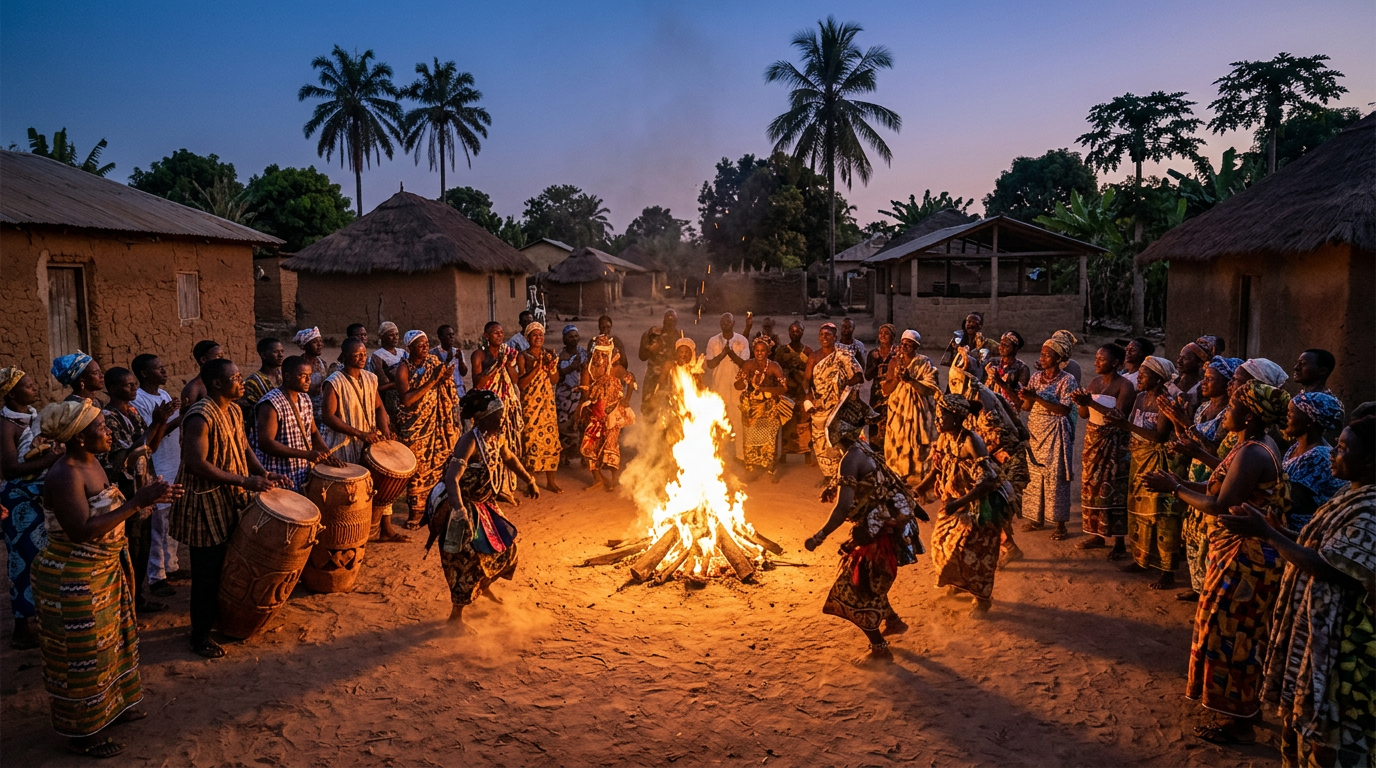
- Vodou ceremonies are fundamentally communal — they are gatherings of the living and the spiritual in mutual recognition and celebration.
The Geographic Origins — West Africa
The tradition I practice has its roots in Dahomey — the kingdom that occupied present-day Benin — where Vodou developed as the spiritual backbone of one of West Africa’s most sophisticated civilizations. The Fon word “Vodou” (also spelled Vodu, Vodun) means “spirit” or “deity” — referring to the spiritual forces that animate the natural and human world.
Dahomean spiritual practice was extraordinarily sophisticated — with a complex pantheon of Lwas governing specific domains, an elaborate cosmology mapping the relationship between the visible and invisible worlds, and centuries of accumulated knowledge about how to work with spiritual forces for healing, protection, and the deepening of human connection.
The Core Spiritual Concepts
Bondye (The Supreme Creator): The ultimate divine force — unknowable, omnipresent, the source of all existence. Not directly invoked in practice because too vast and abstract for direct human relationship.
The Lwas: Spiritual intermediaries who govern specific aspects of reality — love, healing, justice, agriculture, death, wealth, storms. Each Lwa has specific colors, symbols, sacred days, offerings, and domains of influence. Working with the Lwas is the heart of Vodou practice.
The Ancestors (Les Morts): The spirits of those who have died remain accessible and active in Vodou tradition. Ancestor veneration is a core practice — connecting the living to the accumulated wisdom and spiritual power of those who came before.
Ashe: The divine energy that flows through all things — both the raw material of spiritual power and the result of spiritual practice. Skilled practitioners both work with and generate ashe.
The Lwas Most Relevant to Love Work
In my love spell practice, I work primarily with:
- Erzulie Freda: The Lwa of love, beauty, and romantic attraction. Governs matters of the heart — love gained, love lost, love deepened. She is the primary Lwa in love magic.
- Erzulie Dantor: The Lwa of fierce love and deep commitment. Governs long-term partnership, marriage, and passionate devotion.
- Ogou: The Lwa of strength, determination, and the removal of obstacles. Essential in work that requires clearing the path to love.
- Marasa: The sacred twins who govern sacred partnership and the bond between souls. Relevant in binding work and marriage spell casting.
How Vodou Traveled to Haiti, Louisiana, and the Americas
The transatlantic slave trade forcibly transported millions of West Africans — including Dahomean Vodou practitioners — to the Americas. In Haiti, these practitioners preserved and developed Vodou as a living tradition, creating the form of Haitian Vodou that became internationally known. In Louisiana, similar processes produced Louisiana Voodoo, a related but distinct tradition.
The Haitian Revolution of 1791–1804 — the only successful slave revolution in history — was significantly inspired and organized through Vodou ceremony, particularly the legendary Bois Caïman ceremony of August 1791. This history demonstrates Vodou’s role not just as spiritual practice but as a force of human liberation.
Vodou as Living Community Practice
Vodou is not a private, individual practice in its traditional form. It is deeply communal — maintained by families, initiated societies, and community structures that transmit the tradition across generations. The role of the practitioner (Houngan for men, Mambo for women) is to serve the community — conducting ceremonies, performing healing work, providing spiritual guidance, and maintaining the relationship between the living community and the spiritual forces that support it.
My practice, while adapted for individual consultations in the American context, maintains this service orientation. I am not selling a product — I am serving a community of individuals who need genuine spiritual help.
Speak Directly with Baba Ali — Free Consultation
Curious to experience authentic Vodou spiritual practice for yourself? Contact Baba Ali for a free, no-obligation consultation.
Get Your Free Consultation →📞 (210) 651-2737 | 💬 WhatsApp | Available 24/7
For relationship advice and support, Psychology Today’s Relationships section offers expert guidance from licensed therapists worldwide.