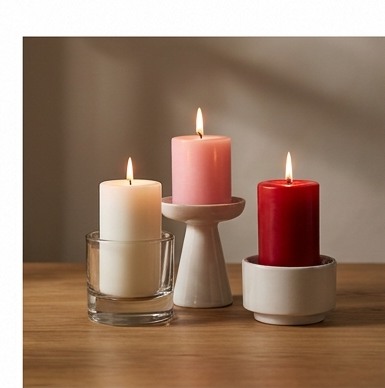
A marriage spell candle is probably the most approachable piece of ritual there is. You don’t need a practitioner, a rare herb or special knowledge. You need a candle, a quiet room and something you want to say about your marriage. That’s why candle work shows up in almost every tradition that marks weddings, anniversaries, blessings and new beginnings, and why it’s often the first thing people try when they want to give a marriage a little more care.
What’s less clear, from most of what’s online, is what a candle actually does. The honest answer is modest and useful. The flame gives you something to watch while you think. The colour and the ritual give the moment a shape. Saying your hopes aloud with someone you love, or alone with intention, tends to change how you behave afterwards. A candle can’t make another person feel something, but it can be a good way to begin paying attention.
This guide is written for readers in Australia first and Europe second. It covers where marriage candles come from, what common colours traditionally stand for, which candles and holders to choose, a ritual to do with your spouse and one to do alone, how to burn candles safely in an Australian home, and how to avoid people who sell “blessed” candles at inflated prices. They didn’t discuss safety, couples doing it together, or what candles can realistically do.
Key takeaways
- A candle works as a focus and a marker. Colour meanings are traditional, and they vary between sources, so choose what speaks to you.
- Candle rituals are best done together, or at least with your spouse’s knowledge, and paired with real conversation.
- Burn candles safely: never leave them unattended, keep them on heatproof surfaces, and follow fire-ban rules outdoors.
- Expensive “blessed” or “powered” candles are a common upsell. A plain candle you choose yourself works just as well.
Why candles are part of so many marriage traditions
Flame has been associated with love and commitment for a very long time. In many Christian weddings, couples light a unity candle, taking two separate flames and lighting one together. In Hindu weddings, the sacred fire is central to the ceremony. Jewish families light candles at the start of Shabbat, marking the week’s rest in the home. In many cultures, candles are lit for blessings, anniversaries, new homes and moments of prayer.
What those customs share is the idea that light marks something worth noticing. A candle in a dark room draws the eye and quiets the mind. A shared flame says “we’re here together”. That’s a plain human effect and a powerful one, and it explains why candle rituals feel meaningful even to people who don’t think of themselves as spiritual.
It also means you can borrow from tradition without adopting any one belief. A couple who light a candle on their anniversary are taking part in something old, whatever their own reasons.
What a marriage spell candle can and can’t do
A candle ritual for a marriage is a focused act of intention. You light a flame, name what you hope for, such as peace, honesty, affection or renewal, and let the candle burn while you reflect or talk. It may involve a prayer, a spoken wish or written words.
What it can do is steady you and mark a moment. Research by Michael Norton and Francesca Gino, published in 2014 in the Journal of Experimental Psychology, found that performing a ritual after a loss helped people feel less anxious and more in control. A couple who carry out a candle ritual together also get a rare moment of shared attention, which many marriages need more of.
What it can’t do is change your spouse’s feelings, resolve an argument or heal a hurt that hasn’t been talked about. It can’t make a person stay, and it can’t guarantee a marriage will be happy. Treat a claim that a candle will “force” love, “bind” a spouse or “end” an affair as a sales line. The guide to binding spells for marriage explains where candle and cord rituals move from blessing into control, which is the line to avoid.
A colour guide for marriage candles
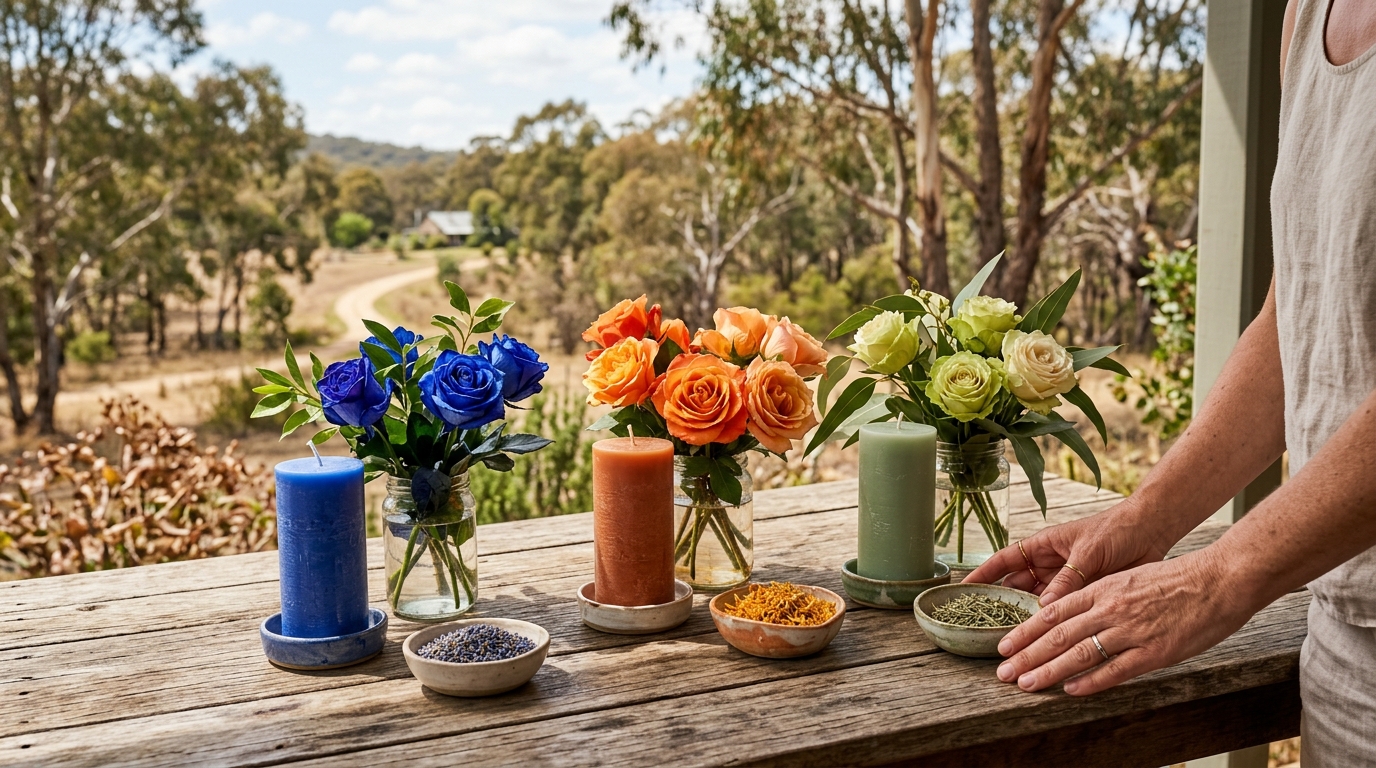
Colour meanings come from tradition, folklore and modern practice, and sources disagree, so treat the list below as a starting point and adjust it to your own associations. White is the most versatile: it’s linked with peace, clarity and fresh starts, and it suits almost any marriage ritual. Pink is associated with tenderness, affection and friendship, and is a good choice when a marriage needs softness. Red stands for passion, commitment and strong feeling, and is used when a couple want to renew their closeness.
Green is associated with healing, growth and steady renewal, which suits a marriage coming through a hard time. Blue is linked with calm and honest communication, useful when talk has become difficult. Yellow or gold stand for warmth, joy and optimism. Purple is sometimes chosen for spiritual depth or for marking a significant anniversary. Some sources suggest black for clearing away old pain, though many people prefer to use white for that purpose.
If you want to combine colours, pairs are common: white and pink for gentle peace, red and white for passion grounded in calm, green and blue for healing with honest talk. One candle is enough, though, and it’s better to use a single colour with intention than several without thought. The guide to reconciliation spell ingredients describes related herbs and oils and their traditional meanings.
Choosing the candle itself
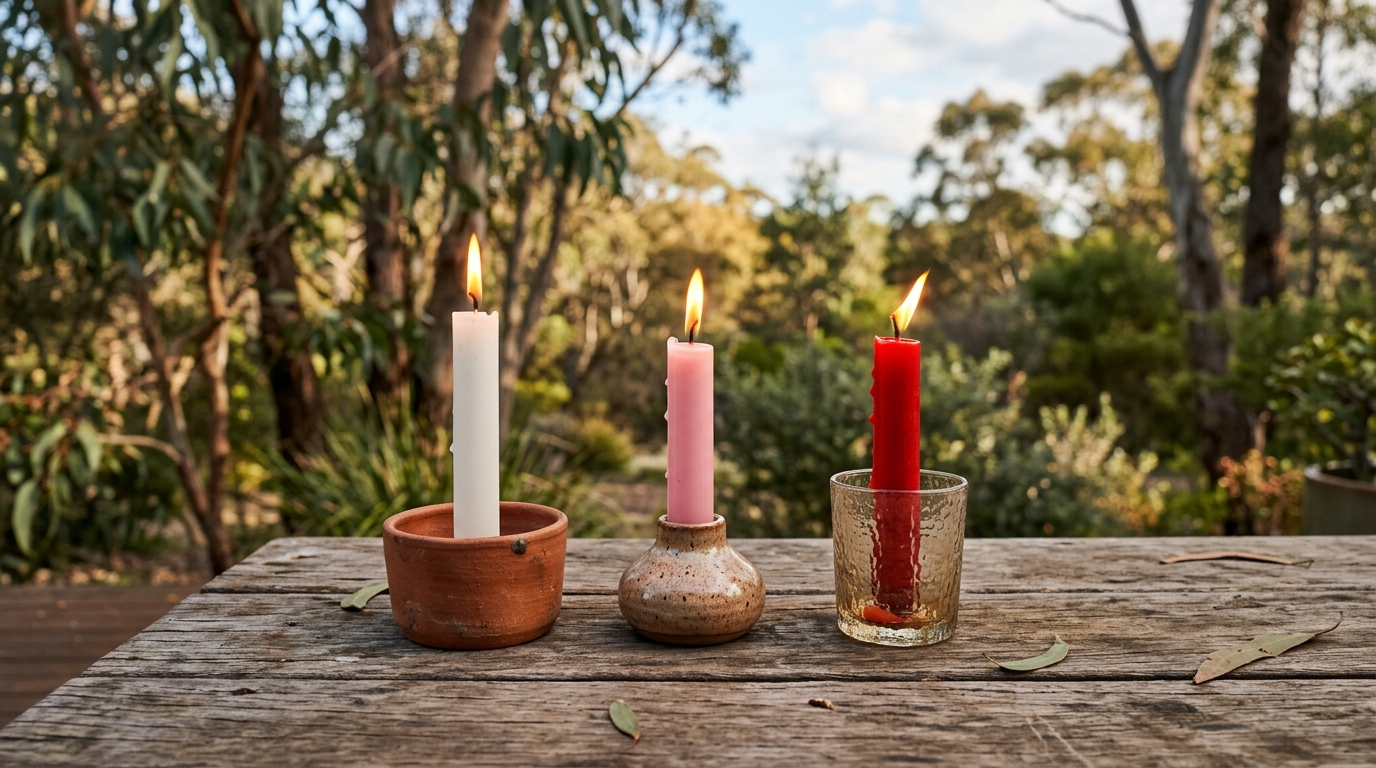
There are several practical choices. Pillar candles are sturdy and burn for a long time, which suits a ritual you want to stretch over an evening. Taper candles look elegant and work well for a dinner-table ritual but need stable holders. Tea lights are cheap and safe in small glass containers, and work for a short ritual. Jar candles are contained and easy, though the glass can get hot.
The material matters a little. Beeswax burns cleanly and has a warm, natural scent. Soy is also clean and usually affordable. Paraffin is the most common and cheapest, and it may produce more soot. Unscented or lightly scented candles are better for most people, especially if anyone at home has asthma or allergies. Choose a holder that’s stable, heatproof and suited to the candle’s size, and put it on a tray or plate if you’re worried about wax.
Price has little to do with effectiveness. A plain candle from a supermarket works as well as an expensive one. If a seller tells you that a particular candle has been “blessed” or “charged” and charges accordingly, that’s marketing. What matters is that you pick one that means something to you.
A marriage candle ritual to do together
This is a simple version you can do at home. Choose an evening when neither of you is rushed, and put phones away. Set a table with two candles, one for each of you, and a third, larger candle in the middle, preferably white. Sit facing each other.
Each of you lights your own candle, and says one thing you appreciate about the other and one thing you’d like more of in the marriage. Listen without replying. Then, together, use your two candles to light the middle candle, the way a unity candle works at a wedding. As you do, say a simple intention, such as “May we be kind to each other and keep choosing this marriage.”
Let the middle candle burn while you eat or talk, and snuff it out when you finish. You can blow out your own candles or let them burn down if that’s safe. Afterwards, pick one small habit to try together in the coming week, such as a walk after dinner. The ritual matters because it starts a conversation, and the habit keeps it going.
A solo candle ritual for when your spouse won’t take part
Sometimes a spouse isn’t interested, and that’s fine. A quiet ritual for your own steadiness is a legitimate choice. Choose a private moment, light a white or pink candle and sit with a notebook.
Write what you’re hoping for in your marriage and what you’re willing to do to help, for example to listen more, to say thank you daily or to let small irritations pass. Read it slowly. Take a few deep breaths, and say aloud a simple intention, such as “May I be patient and kind, and may our home be peaceful.” Let the candle burn while you reflect, supervised, then extinguish it.
Because it asks nothing of your spouse and doesn’t involve their belongings, there are no ethical complications. The point is to settle you and to prompt a real step, like raising a gentle conversation or planning time together. The page on love spells at home versus a spell caster describes what simple home rituals involve and when to ask a practitioner for help.
Candle safety in an Australian home
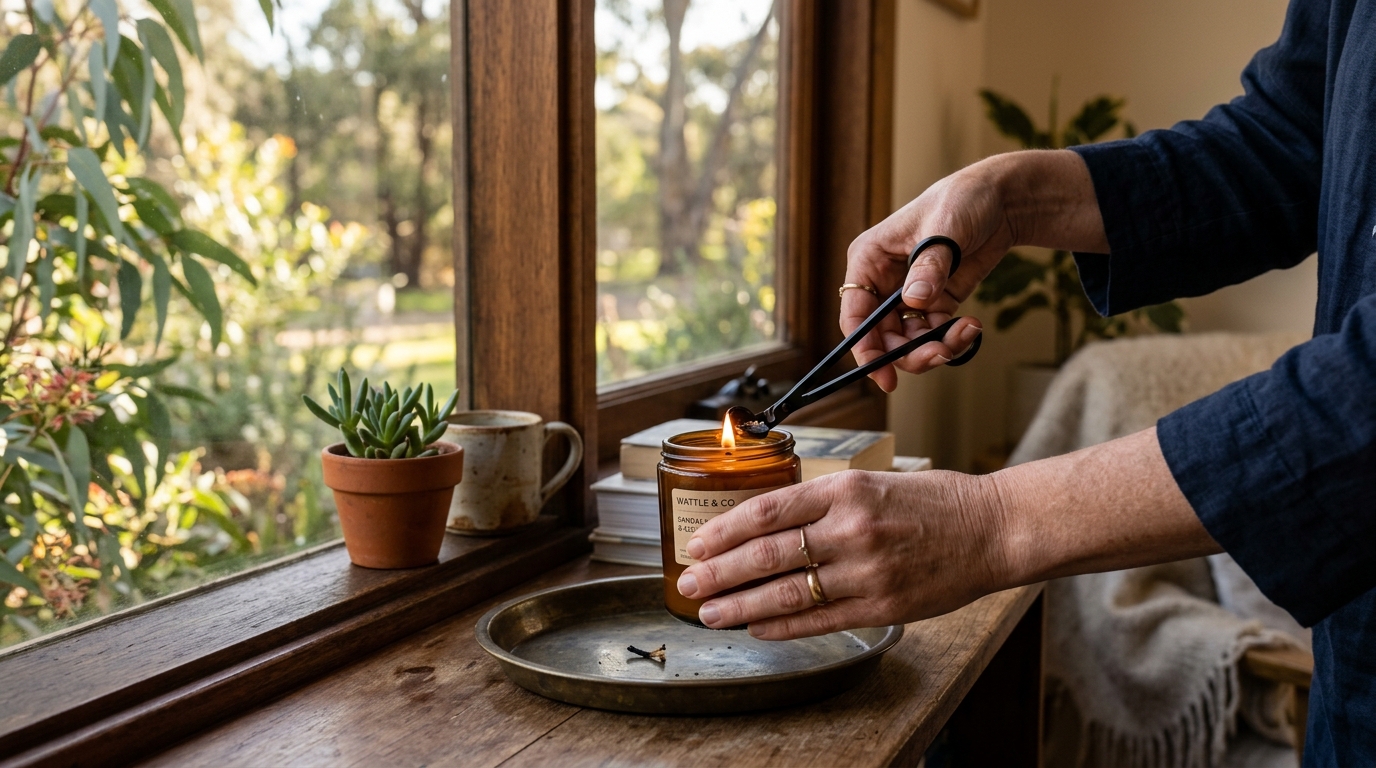
A ritual isn’t worth a fire. Follow a few basic rules. Never leave a burning candle unattended, and don’t fall asleep with one lit. Keep candles on a stable, heatproof surface, away from curtains, paper, bedding and anything that could catch. Keep them out of reach of children and pets, and away from draughts.
Trim the wick to about five millimetres before each burn, which reduces smoking and flaring. Don’t burn a candle for more than a few hours at a time, and let it cool completely before relighting. Use a snuffer or a spoon to put it out, rather than blowing hard, which can spray hot wax. Make sure your smoke alarms work.
In Australia, total fire bans can apply on hot, dry and windy days, and they often cover open flames outdoors. If you’d like to do a ritual outside, such as on a balcony or in a garden, check your state fire authority’s advice first, and keep a bucket of water or a hose nearby. Indoors, a candle in a proper holder on a tray is usually the safest choice.
Dressing and carving candles: what to know
Some traditions “dress” a candle by rubbing a little oil on it, sometimes with herbs, or by carving words or names into the wax. If you do either, keep it simple and safe. Use a small amount of a skin-safe carrier oil, such as olive or sweet almond, rather than undiluted essential oils, which can irritate skin. Wash your hands afterwards. Don’t press dry herbs into a burning candle, because they can flare.
Carve your own intention, such as “peace” or “kindness”, if you like. Be careful about carving another person’s name to influence them. A ritual that’s aimed at another person without their knowledge raises the ethical problems covered above, and a candle shouldn’t become a way of trying to control anyone. A ritual for your own calm needs nothing more than your own words.
Watching the flame: what folklore says and what to believe
Many traditions interpret how a candle burns. A tall, steady flame is said to mean a clear path. A flickering one suggests unsettled energy. A candle that burns unevenly or goes out is sometimes read as a warning. Wax patterns and soot are given meanings too.
It can be fun to read these as folklore, but they have no reliable link to what will happen in a marriage. Draughts, wick thickness, wax quality and humidity explain most of the differences in how candles burn. If you’re anxious, reading too much into a flame can add to the worry. A more useful approach is to treat the flame as a focus and ignore the omens. If a candle goes out, relight it and carry on, or take it as a cue to end the ritual for the evening.
A candle to help you talk after an argument
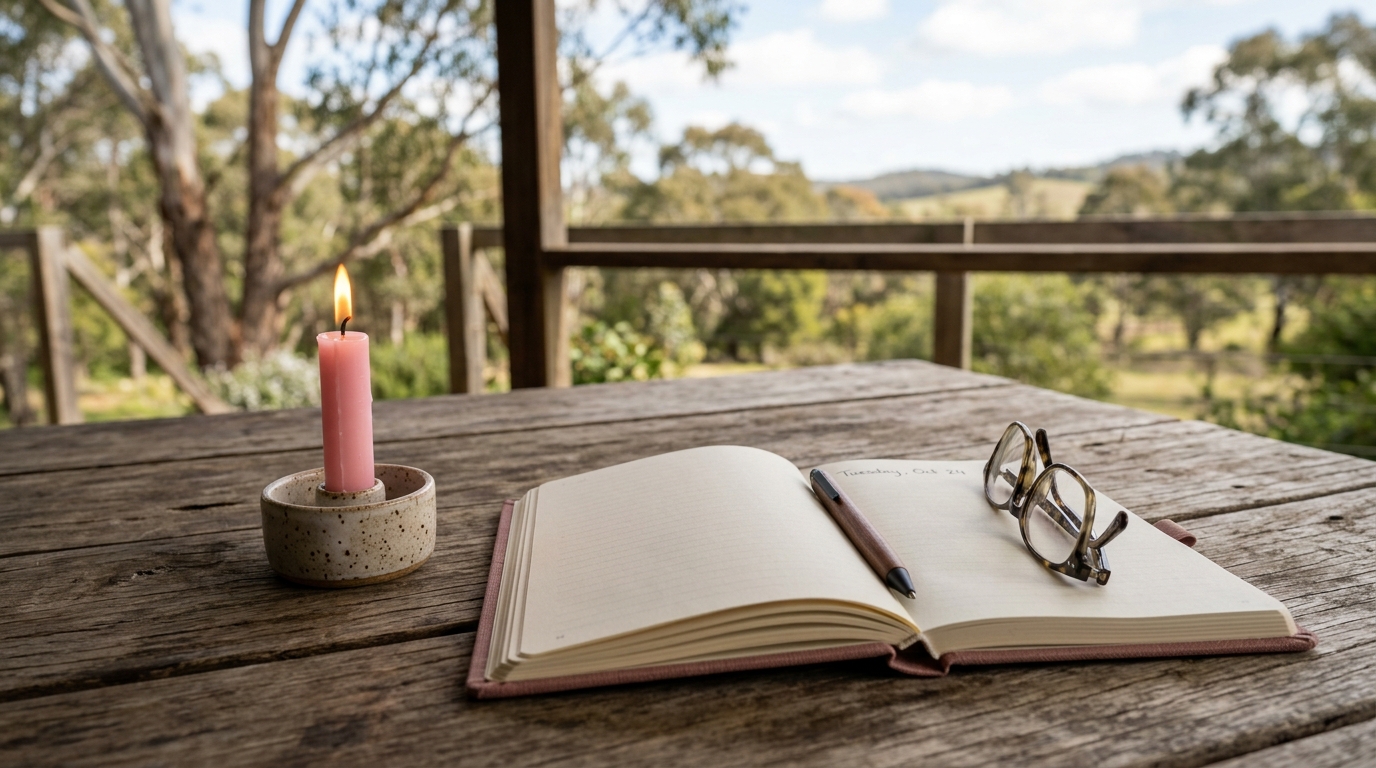
One of the most useful ways to use a candle is to soften the return to conversation after a row. When tempers have cooled, one of you can light a candle on the table and say, “I’d like us to talk, and I’d like to start by listening.” The flame acts as a signal that this is a different kind of conversation, calmer and slower than the argument. Our page on the sweetening spell covers softening anger after a fight.
Agree on a simple rule: the person holding a small object, such as a stone or a cup, speaks, and the other listens until they’ve finished. Swap after a few minutes. When each of you has said what you felt, name one thing you’ll do differently, and snuff out the candle together. It sounds almost too simple, and yet the small structure often stops a conversation from sliding back into the argument.
What to write and say with your candle
If you’re stuck for words, prompts help. You might complete sentences such as: “What I appreciate most about you right now is…”, “One thing I’d like us to do more of is…”, “One thing I’m sorry for is…”, “What I hope for us this year is…”. Write your answers on slips of paper, read them aloud, and keep them together in a box with your rings or photographs.
Short is better. A single honest sentence carries more weight than a long speech. Avoid using the moment to list grievances. If something difficult needs saying, choose another time, and use the candle ritual for appreciation and intention. Over months, a collection of these slips becomes a small record of the marriage’s good moments, which many couples treasure.
If you can’t or don’t want to use a real flame
Not everyone can burn candles safely or comfortably. You may live in a building that bans them, share a home with small children or pets, have asthma or breathing difficulties, or simply prefer not to. Battery-operated candles and LED tea lights give a warm glow with no flame, smoke or heat, and they work fine for the purpose of focusing attention.
The ritual doesn’t depend on fire. A shared cup of tea, a photo, a written note or a short walk can do the same work of marking a moment and naming what you hope for. If you like the symbolism of light, open a curtain at sunrise or sit by a window at dusk. The point is to pause, pay attention and say something true, and any of these does it.
Candles for different moments in a marriage
Different situations suit different approaches. For an anniversary, a pair of candles and a shared reading of your vows is a good choice. For a new home, a white candle in each main room, carried through together, marks a fresh start. After an argument, a blue or white candle and a calm conversation can help you return to each other.
For a marriage coming through hard times, a green or white candle with a written list of what each of you will do differently can be a helpful marker. After a breach of trust, a candle can mark a fresh start, but only if both people have agreed to try. It can’t stand in for accountability or counselling. For an ordinary week, a candle at dinner and a moment of thanks keeps the habit of appreciation alive. The page on spells for a happy marriage covers rituals for a calmer household.
If your marriage is going through something serious
A candle can be a comfort, but some situations need more. If there’s an affair, addiction, gambling, serious money trouble, depression or any kind of abuse, the right support is professional: a counsellor, a GP, a financial counsellor or a helpline. Candle work can sit beside that, but it shouldn’t replace it.
If there’s fear, intimidation or violence, safety comes first. Coercive control is a criminal offence in some Australian states. 1800RESPECT (1800 737 732) offers free, confidential support, and in an emergency you should call 000. No ritual should be used to keep someone in a situation where they feel unsafe.
Counselling and support in Australia
Counselling is one of the best-supported ways to strengthen a marriage, and it doesn’t conflict with spiritual practice. Relationships Australia (1300 364 277) offers counselling and family services, and the Family Relationship Advice Line (1800 050 321) gives free information and referrals. Your GP can also discuss mental health support.
In a first session, expect mostly listening. A counsellor will ask what brought you in, what each of you wants and what’s been tried, and will often suggest small tasks such as a weekly check-in. If your spouse isn’t ready, going alone can still help, because changing your own patterns changes the marriage.
Working with Baba Ali
If you’d like a spiritual practitioner involved, begin by describing your situation through the secure form on the contact page. Baba Ali reads it and speaks with you about your marriage, then advises whether spiritual work is suitable and what it would involve. The how it works page sets out the stages: consultation, preparation of ritual materials, the ritual itself, and updates through a private client portal.
It’s fair to ask what materials would be used, what each stage costs and what can’t be promised. Anything asking you to act behind your spouse’s back should be declined. The page on a love spell caster in Australia explains how remote sessions run for clients across the country.
Scam warning signs with candles
Candles are an easy product to sell with big claims, because buyers can’t test them. Be cautious of sellers who promise results, guarantee a date, charge large sums for a single candle, say a candle must be “charged” or “powered” at extra cost, claim a curse needs a special candle to lift or threaten bad luck if you stop buying. Also beware of pressure to buy a series of candles, each “stronger” than the last.
In Australia, Scamwatch, run by the ACCC, publishes current scam information and takes reports, and your bank may help if you contact them quickly. The guide to spell caster scams in Australia lists the warning signs. Before paying, write down what you’ve been promised, what it costs and what happens if nothing changes. A plain candle from a shop costs a few dollars, and that’s a useful benchmark.
If you live in the UK or elsewhere in Europe
Candles are woven into European marriage customs, from unity candles at church weddings to candles lit for blessings and anniversaries. The feast of Candlemas on 2 February, marking the presentation of Jesus, has long been a day for blessing candles in many Christian traditions, and some couples choose it for a quiet renewal.
The safety and ethics points apply wherever you live. In the UK, Relate offers couples counselling, and Samaritans (116 123) is there for anyone struggling. Fire rules vary, so check local guidance for outdoor flames. Remote consultations work across time zones, which suits clients in Europe as much as those in Australia.
Mistakes that spoil candle rituals
A few habits reliably spoil a candle ritual. Rushing it, with phones buzzing and children calling, turns it into a chore. Expecting the candle to do the work, and then dropping the real conversation, leaves the marriage where it was. Doing a ritual aimed at your spouse without their knowledge, or carving their name to influence them, crosses an ethical line.
Other mistakes include leaving flames unattended, using undiluted essential oils on skin, reading every flicker as an omen and spending heavily on “special” candles. The alternative is simple: choose a plain candle you like, do it with care and attention, and follow it with a small real-life action.
Keeping a candle ritual going
A single ritual is nice. A habit is better. Many couples light a candle at dinner once a week and each say one thing they’re grateful for. Others mark the start of each month with a short check-in by candlelight. Some keep their anniversary candle and burn a little of it each year, so it becomes a record of time together.
Keep the ritual short and light, and let it evolve. If one of you loses interest, pause it and try something else. The aim isn’t to keep a tradition for its own sake, but to keep the habit of paying attention to each other, which is what keeps marriages warm.
Frequently asked questions
Does a marriage spell candle really work?
A candle ritual can calm you, mark a moment and prompt a conversation. It can’t change your spouse’s feelings or guarantee a happy marriage. Results come from what you do afterwards.
What colour candle should I use for marriage?
White is the most versatile, linked with peace and new beginnings. Pink stands for affection, red for passion and commitment, green for healing and blue for calm communication. Pick the one that means something to you.
Can I do a candle ritual without my spouse?
Yes, a private ritual for your own calm is fine. Avoid anything aimed at your spouse without their knowledge or involving their belongings.
Are “blessed” candles better?
There’s no evidence they are. Claims that a candle has been charged or powered, sold at a premium, are a common upsell. A plain candle you choose yourself works as well.
How long should I burn the candle?
A few hours is usually enough, with supervision. Don’t leave it unattended or burn it overnight. You can burn a pillar candle over several short sessions if you want it to last.
What if the candle goes out?
Relight it or end the ritual. Draughts, wick thickness and wax quality explain most cases, and there’s no reliable link between a candle going out and what happens in your marriage.
Is it safe to use candles with kids and pets around?
Only with care. Keep candles out of reach, on stable surfaces, and never leave them unattended. Consider a battery-operated candle if you have small children or curious pets.
Your next step
If you’d like to talk through your marriage in private, you can start a confidential consultation through the contact page. You can also browse the other services, or read how the site writes and checks its guides in the editorial standards. A marriage spell candle is best understood as a way to focus attention and mark a moment, not a guarantee. If you’re struggling, call Lifeline on 13 11 14 in Australia or Samaritans on 116 123 in the UK.