A binding spell for marriage means two very different things depending on who is asking and who is selling. For one person it’s a ritual to strengthen a marriage both partners want, something like a blessing, a renewal of vows or a protective act for the home. For another it’s an attempt to tie a reluctant spouse to the relationship against his or her will. The first is an old and gentle practice. The second is control, and it tends to hurt the person who asks for it as much as the person it’s aimed at.
This guide explains the difference plainly. It covers where binding work comes from, what it can reasonably aim to do, where the ethical line sits, how to tell a responsible practitioner from a predatory one, and what you can do alongside any ritual to make a marriage hold. It’s written for readers in Australia first and Europe second, and it draws on a review of five practitioner sites that ranked for this phrase in Australian results on 30 September 2026, on historical scholarship and on Australian public-service information.
One thing before the detail. Nobody can bind another adult’s heart, and no ritual can guarantee a marriage will last. Anyone who says otherwise is selling certainty they don’t have.
Key takeaways
- A binding spell for marriage is best understood as a commitment or protection ritual for a marriage both people want, not a way to hold someone who wants to leave.
- The ethical test is consent and free will. Work that invites and protects is very different from work that compels.
- Rituals work best beside honest communication, shared plans and, where needed, counselling.
- In Australia, controlling behaviour toward a partner can be unlawful. If you feel afraid or controlled at home, call 1800RESPECT on 1800 737 732.
What people mean by a binding spell for marriage
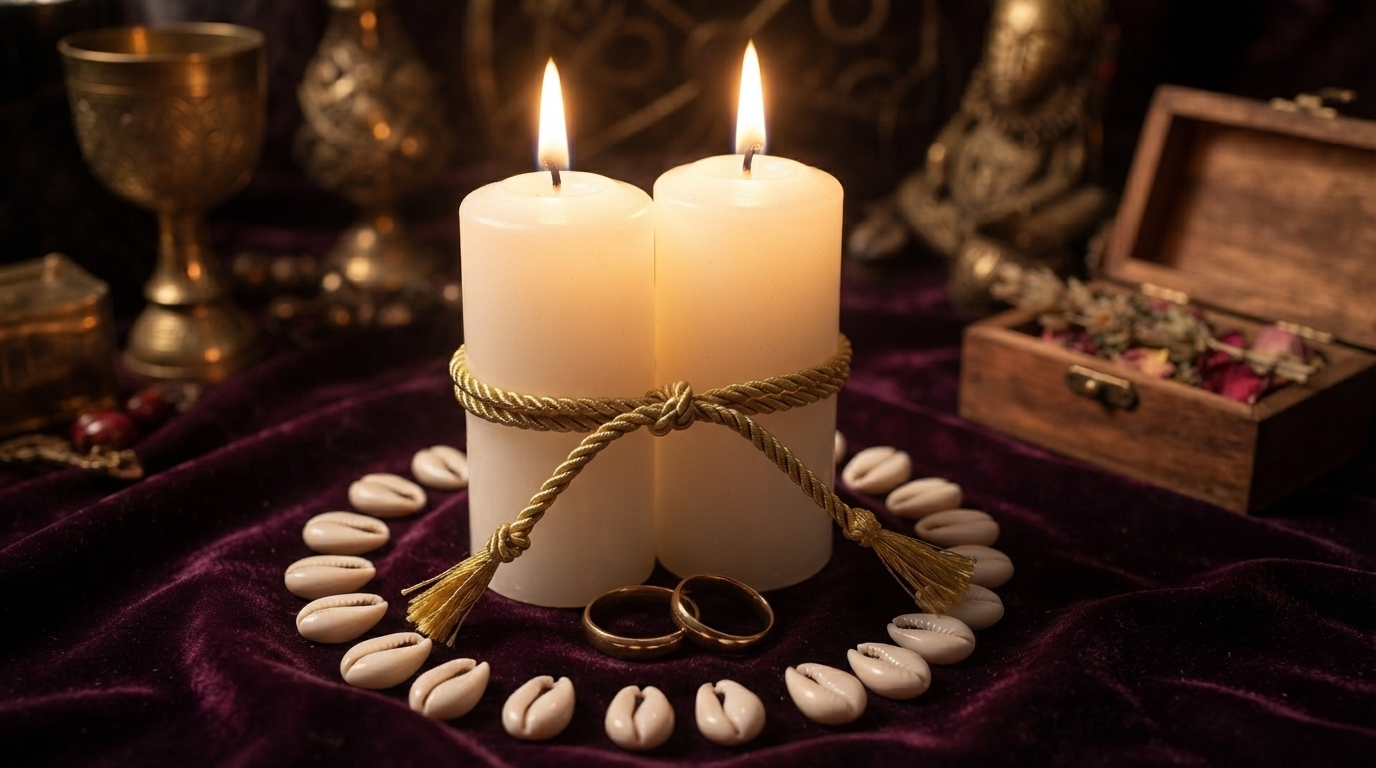
The word “binding” covers a wide range. At the gentle end are practices that join two people symbolically: tying a cord around joined hands, lighting two candles that burn down into one flame, saying vows over an object that’s then kept in the home. These are closer to a wedding ritual than to a charm, and they carry meaning because both partners choose them.
At the other end are spells that claim to stop a spouse from leaving, make them faithful, or stop them looking at anyone else. These are marketed with words like “unbreakable”, “permanent” and “no escape”. That language is a giveaway. It describes ownership, not love, and it’s the language of people selling fear to the anxious.
Between the two is a large grey area where most searchers live. You may love your husband or wife and feel the marriage slipping. You might be frightened of losing them to another person, to distance or to drift. Wanting a ritual that holds the marriage together is understandable. The question is whether that ritual asks for help and blessing, or tries to take away the other person’s choice. The responsible kind is the first, and this site’s editorial standards rule out work intended to control another person. There is a separate guide on getting your wife back.
Where binding work comes from
Binding is one of the oldest forms of ritual. Ancient Greek and Roman texts record lead tablets inscribed with spells that bound rivals, thieves and lovers. The scholar Christopher Faraone, in his 1999 book Ancient Greek Love Magic, distinguishes spells meant to compel a person, often aggressive and sometimes painful in their imagery, from those meant to win affection gently. That distinction, between compulsion and invitation, is still the most useful one.
Knot magic appears in many folk traditions. In parts of Britain and Ireland, a betrothal custom called handfasting joined a couple’s hands with a cord to mark their commitment, and the phrase “tying the knot” survives in everyday speech. West African, Caribbean and Mediterranean traditions use cords, cloth, candles and oils in rituals for unity, protection and loyalty. The details differ, but they share a belief that intention, symbol and ceremony can strengthen a bond.
That history matters for one reason. Much of what’s sold online as an ancient binding spell is a modern invention dressed up with old names. Real traditions put heavy emphasis on consent, community and the marriage itself. The promises of an “unbreakable” bond that work without the partner’s knowledge owe more to the marketing of the internet than to any tradition.
Where the ethical line sits
The clearest test is whether the work respects the other person’s free will. A ritual that asks for blessing, protection, patience and understanding in a marriage you both want respects it. A ritual that aims to stop someone leaving, to silence their doubts or to make them obey doesn’t. The second kind tends to fail, and when it doesn’t fail, it creates a marriage in which one person has lost their choice.
Practical signs of the wrong kind include promises like “he will never look at another woman”, “she will never leave you”, requests for hair, photos or other personal items taken without the person’s knowledge, and instructions to keep the ritual secret from the very person it targets. Responsible practitioners don’t offer this. They ask what the marriage needs and what you’re prepared to do, and they’re open about what they can’t promise.
There’s also a legal dimension. In Australia, behaviour that aims to control or frighten a partner can amount to family violence, and coercive control is now a criminal offence in some states. A spiritual framing doesn’t change that. If a ritual is being used as part of a pattern to control someone, it isn’t harmless.
Three situations where people ask about binding work
The first is distance. Fly-in-fly-out work, long overseas postings and partners who live in different cities strain a marriage, and the fear of drifting apart can be sharp. Here the useful moves are practical: a fixed time to talk each day, a calendar of visits, honest conversations about what each person needs. A ritual can mark the commitment, but it can’t stand in for contact.
The second is pressure from outside. Extended family conflict, money stress or a friend who’s openly critical of the marriage can wear at a couple. A protection ritual for the home is a common request here, and it’s a reasonable one. It gives the couple a shared act, and it reminds them which relationship comes first.
The third is the period after a breach of trust, such as an affair or a serious lie. People in this position often ask for something to hold the marriage together while they rebuild. The honest answer is that repair comes from accountability, time and, usually, counselling. A ritual can mark a fresh start once both people have agreed to try, but it can’t stand in for the hard conversations. If trust has been broken and only one person wants the marriage to continue, the question isn’t how to bind the other, it’s whether the marriage is what both of you want.
What a binding spell for marriage can reasonably aim to do
When binding work is done ethically, its aims are modest and meaningful. It can mark a renewed commitment after a rough patch. It can ask for protection from outside strain, such as family conflict, gossip or envy. It can help two people focus on what they share, and give a couple a concrete moment to recommit. It can also give the person requesting it a sense of calm and purpose, which shows up in how they behave at home.
It can’t prevent an affair, stop a partner changing, cure an addiction or keep a violent relationship together. It can’t replace honest conversation, and it can’t guarantee permanence. The page on love binding spells describes the approach on this site in more detail, and the guide to what love binding spells are explains the terminology and the limits.
Think of it the way you’d think about a wedding. A ceremony marks and blesses a commitment, and gives people a shared memory to return to. It doesn’t make the marriage work. The couple does, day after day, and a binding ritual is best seen as part of that effort rather than a replacement for it.
What the top practitioner sites cover, and what they leave out
The five practitioner pages that ranked highest for this phrase were between roughly 900 and 1,700 words. Most described a ritual, typically involving knots, wax figures, candles or herbs, and promised strengthened love or loyalty. A few offered marriage reconnection rather than binding. They did it well in places: they gave a sense of symbolism, described ritual steps and explained the history of knots in marriage ceremonies.
Where they fell short was on consent, on the partner’s role and on practical life. None discussed what to do if your spouse wants to leave, how a couple can do the work together, or what the law says about controlling behaviour. Few mentioned counselling, and none addressed scams. This guide fills those gaps, because they decide whether a ritual helps or harms.
Doing the work together: a better kind of binding
The healthiest version of this practice is done with your spouse, not to them. A couple can renew their vows in a private ceremony, light two candles and let them burn together, tie a cord around their joined hands and speak what they promise each other, or bless their home together. The ritual matters because both people choose it.
If your spouse isn’t interested in anything spiritual, that’s fine. Offer a secular version. You might plan an anniversary evening where you each write what you value in the other, and read it aloud. Or take a walk somewhere meaningful and renew your commitments in your own words. Many couples say a ritual like this gave them a shared memory that they go back to when things get hard.
In Australia, many couples choose a vow renewal with a celebrant, often outdoors on a beach, in a garden or at a winery. In the UK and Europe, civil ceremonies and blessings in churches or at home are common. What matters is that you both mean it.
Renewal ideas that don’t need a practitioner
You don’t need anyone else to mark a commitment. One simple idea is a private vow renewal: write your own vows, read them to each other at a place that matters, such as the beach where you got engaged or a favourite lookout, and keep the pages together. Another is a shared letter exchange, where each of you writes what you’ve appreciated in the past year and what you hope for in the next, then you swap and read them aloud.
Some couples choose a small home ritual: a pair of candles lit on each anniversary, a bowl of shells or stones collected on trips together, or a jar into which you both drop notes about good days. Others plan a weekend away with a single rule, no phones at meals. These are modest, but they do what a marriage ritual is meant to do, which is to give the two of you a shared moment that says “we chose this, and we’re still choosing it.”
If your spouse is pulling away
This is the situation in which people reach for binding spells most urgently, and it’s the situation in which they’re least likely to help. A partner who’s pulling away is making a choice, or working through doubt. Trying to tie them down tends to confirm their fear of being trapped, and it increases the distance.
What helps more is working out what’s behind the withdrawal. Is it stress, resentment, an unresolved hurt, another person or a wish to leave? Ask calmly and listen. Improve the daily climate at home by cutting criticism and adding appreciation. Offer counselling. If he or she says clearly that the marriage is over, the loving thing is to accept that, even though it hurts.
If you’re in that situation, the guides on stop divorce spells and commitment spells for an ex explain what spiritual support can and can’t offer when a partner is leaving, and how to approach it with respect. A consultation can also help you decide whether your goal is to save the marriage or to come through it with dignity.
When a request for binding is really about fear
Many people who ask for a binding spell for marriage are frightened, and the fear is real. They fear being abandoned, being replaced or losing the family they built. Jealousy and insecurity can make a ritual that promises certainty very attractive.
It helps to name the fear. Ask what specifically you’re afraid of, and whether you have evidence or only anxiety. If there is evidence, such as secrecy, lies or a known affair, the useful step is a direct conversation and possibly counselling. If it’s anxiety, talking to a counsellor or your GP can help more than a ritual, because the feeling will follow you whether or not the marriage holds. A ritual that calms you is useful. A ritual that feeds the belief that you can only be safe if your partner has no choice is not.
If you bring fear to a consultation, expect it to start with your story and the feeling, and only then turn to what spiritual work, if any, would be suitable.
What a consultation involves
You start by sending your story through the secure form on the contact page. Baba Ali reviews it and speaks with you about your marriage, what’s going well and what isn’t, and what you’re hoping for. He advises whether binding or blessing work is appropriate, and what it would include. The stages appear on the how it works page: consultation, preparation of ritual materials, the ritual itself, and updates through a private client portal.
You should be able to ask what each part involves and what it costs, and get a straight answer. You should be told that the outcome can’t be guaranteed. If you’re asked to take items from your spouse without their knowledge, to keep secrets from them or to pay repeatedly for the ritual to be “strengthened”, step away. For the wider picture of how remote sessions work for clients across the country, see the page on a love spell caster in Australia.
Protection and blessing rituals for a marriage you both want
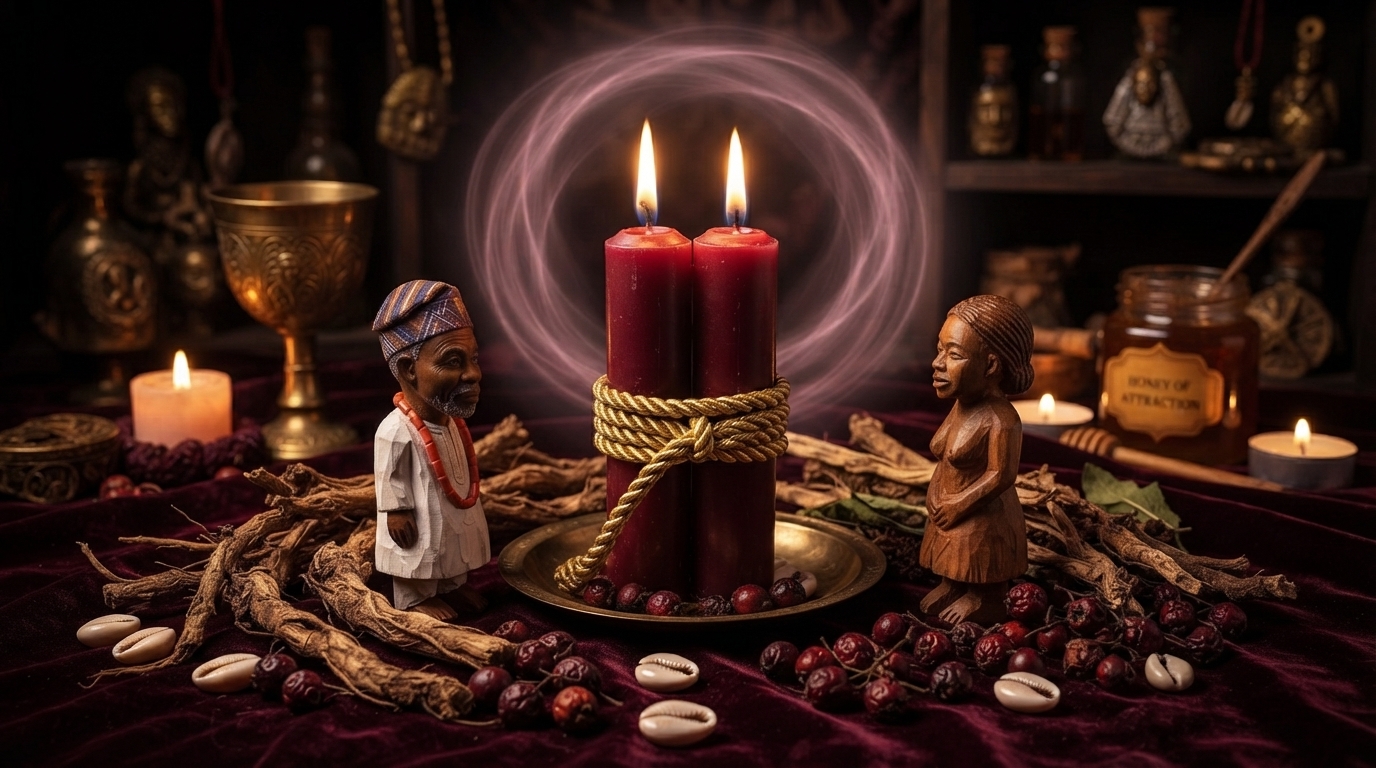
Much of the work people find helpful under this heading isn’t binding at all, it’s protection and blessing. Candle rituals, cleansing of the home with herbs or smoke, blessing of rings, and prayers for harmony in the household are common. They ask for peace, good communication and resilience against outside strain, and they suit couples who are fine but want to mark and protect what they have.
The guides on protection spells for your marriage and marriage spell candles describe the most common versions, including the meanings traditionally attached to candle colours. Treat colour charts as symbolism rather than science. What matters is that you choose a meaning that speaks to you and that you do it with intention.
Strengthening a marriage in practical ways
Whatever you decide about rituals, the things that hold marriages together are well known. Couples who stay close tend to talk about small things daily, say thank you out loud, handle arguments without contempt, and share decisions about money, children and time. They also keep making an effort after the wedding: date nights, holidays, shared projects and moments of play.
Try a weekly check-in. Sit down for twenty minutes and each share one thing that went well, one thing that was hard and one thing you need. Agree on a plan for money that neither person feels controlled by. Set boundaries with extended family so that the marriage comes first. If you find the same argument repeating, book some counselling before it hardens.
Relationships Australia (1300 364 277) offers counselling and family services, and the Family Relationship Advice Line (1800 050 321) gives free information and referrals. In the UK, Relate offers couples counselling. A ritual sits comfortably alongside any of these, and many people find the two support each other.
If you’ve already had a binding ritual and feel uneasy
Some readers arrive here after paying for a binding spell and now feel uncomfortable, either because nothing has changed or because the practitioner’s demands have grown. Start by stopping any further payments. Write down what you were promised, what you paid and what you were told to do. If you feel frightened by warnings of bad luck, it may help to know that these are a standard pressure tactic, and that stepping back has no spiritual penalty.
If the ritual involved taking items from your spouse or acting without their knowledge, consider telling them, gently, at the right moment. Secrets of that kind tend to come out, and it’s better that they come from you. If you’re struggling emotionally, speak to a counsellor or call Lifeline on 13 11 14. You can also ask for a refund in writing, and report misleading claims or pressure to Scamwatch. Nothing you’ve done makes you foolish. You acted out of love and fear, which is what these sellers rely on.
Red flags when you’re looking for a practitioner
Be careful with anyone who promises that a spouse will never leave, never stray or always obey. Be cautious if you’re asked for large sums upfront, then more money for “stronger” work, or if you’re told a curse or negative energy is on your marriage and only they can remove it. Be wary of pressure to decide today, of threats of bad luck if you stop and of any request to obtain personal items from your spouse secretly.
In Australia, Scamwatch, run by the ACCC, publishes current scam information and takes reports, and your bank may be able to help if you contact them quickly. Our guide to spell caster scams in Australia lists the warning signs and how to report them. Before you pay, write down what you’ve been promised, what it costs and what happens if nothing changes. A genuine practitioner will answer all three calmly.

If you live in the UK or elsewhere in Europe
Many of the traditions behind binding work have European roots, and handfasting ceremonies are still chosen by couples in Britain and Ireland. The legal and support context differs, though. In England and Wales, Relate offers counselling and mediation, and divorce now follows a no-fault process. Other European countries have their own rules, from required separation periods to faster routes, so speak with a local solicitor if separation is on the table.
Cultural expectations about marriage, family involvement and ceremony also vary. A practitioner who takes your background into account will give more useful guidance than one offering a generic script. Remote consultations work across time zones, which suits clients in Europe as much as those in Australia.
Making a commitment last
A ritual is a moment, and a marriage is years. After any ceremony, keep the intention alive with small, regular habits. Keep an object from the ritual somewhere you both see it. Return to your vows on anniversaries. Check in with each other when life gets hard, rather than waiting for a crisis. If an old pattern returns, name it kindly and address it early.
Some couples write a short “marriage agreement” listing what they’ll each do to keep the relationship strong: how they’ll handle disagreements, how often they’ll have time alone, how they’ll talk about money. It’s not a legal document. It’s a shared reminder of what you chose, and it can be revisited as life changes.
Frequently asked questions
Does a binding spell for marriage take away my spouse’s free will?
Ethical binding work doesn’t try to. It asks for blessing, protection and strength in a marriage both people want. Anything that claims to compel, control or trap another person crosses a line, and it tends to produce an unstable, unhappy relationship.
Can a binding spell stop my husband or wife from leaving?
No, and you shouldn’t want to bind someone who wants to go. A person who has decided to leave will eventually do so, whatever a ritual claims. It’s more useful to understand why, to offer counselling and, if the decision stands, to accept it.
Is a binding spell for marriage safe?
A blessing or renewal ritual done with consent is safe in the sense that it asks for nothing harmful. The real risks are financial and emotional: paying for promises that can’t be kept, and becoming dependent on a ritual instead of tackling real problems. Watch for pressure and repeated payments.
Can I do a binding ritual without my spouse knowing?
A private ritual for your own calm and intention is one thing. One that targets your spouse without their knowledge and uses personal items from them is another, and it’s where ethical problems begin. The best rituals are done together, or at least are something you’d be willing to tell your spouse about.
How is a binding spell different from a commitment spell?
The terms overlap. Commitment work tends to focus on a partner’s willingness to dedicate themselves to the relationship, while binding work emphasises the bond between two people. Either can be done ethically, and either can be misused. What matters is whether it respects free will.
Do I need to do a binding ritual at a particular time or moon phase?
Some traditions attach meaning to moon phases and days of the week, and you can follow one if it’s meaningful to you. There’s no evidence that timing changes outcomes. A calm, focused state of mind matters more than the date.
Should I try counselling as well?
Yes, if your spouse is open to it. Counselling and ritual do different jobs, and they don’t conflict. If your spouse won’t attend, go alone. Changing your own patterns often shifts how a marriage feels.
Your next step
If you’d like to talk through your marriage in private, you can start a confidential consultation through the contact page. You can also browse the other services, or read how the site writes and checks its guides in the editorial standards. A binding spell for marriage is best understood as a ritual of commitment and protection, not a guarantee and not a way to hold anyone against their will. If you’re struggling, call Lifeline on 13 11 14 in Australia or Samaritans on 116 123 in the UK.