
A protection spell for marriage is what people look for when something from outside is pressing on a relationship that would otherwise be fine. It could be a mother-in-law who undermines you, a coworker who’s a little too interested in your husband, a friend who gossips, a bout of envy you can feel in the air or simply a run of bad luck that seems to have a pattern. You want to put a fence around what you share.
That’s a reasonable wish, and there’s a long human tradition behind it. Protection rituals exist in almost every culture, from household blessings to amulets to prayers for a marriage. What needs saying up front is this: a ritual can mark a boundary and give you a moment of calm resolve, but it can’t stop another person from behaving badly. The protection that works in daily life is made of boundaries, honesty and habits. This guide covers both sides, and it’s blunt about the sellers who use fear to make a sale.
It’s written for readers in Australia first and Europe second. The better pages treated protection as blessing and boundary-setting. The worst told readers a curse was on their marriage and pointed them to a payment page, which is a pattern worth learning to spot.
Key takeaways
- A protection ritual can mark a boundary and steady you. It can’t control other people, and it isn’t a replacement for practical safeguards.
- Most outside threats to a marriage are human: in-laws, emotional closeness with someone else, gossip, money stress and social media.
- Anyone who says “a curse is on your marriage” and asks for payment to lift it is using fear to sell. Step back.
- If you feel unsafe at home, the protection you need is practical. Call 1800RESPECT on 1800 737 732, or 000 in an emergency.

What protecting a marriage actually means
The phrase covers several different worries, and it helps to separate them. Some people mean protection from other people’s interference: relatives who criticise, friends who stir, neighbours who talk. Some mean protection from a third person, such as an admirer, a rival or an affair partner. Some mean protection from outside circumstances, like financial pressure, illness or long work absences. And some mean protection from harm they can’t name, a general feeling that the marriage is under strain from forces they can’t see. For practical steps alongside any ritual, read how to save a marriage from divorce.
Each of these needs a different response. Interfering relatives need limits. A third person needs honest conversation and boundaries. Financial strain needs a plan. A vague sense of threat needs a calm look at what’s really going on, sometimes with a counsellor. A ritual can accompany any of these, but it fits best where the aim is to mark a commitment and ask for peace, and it fits worst where a person is using it to avoid a difficult conversation.
What a protection spell for marriage claims to do, and what it can do
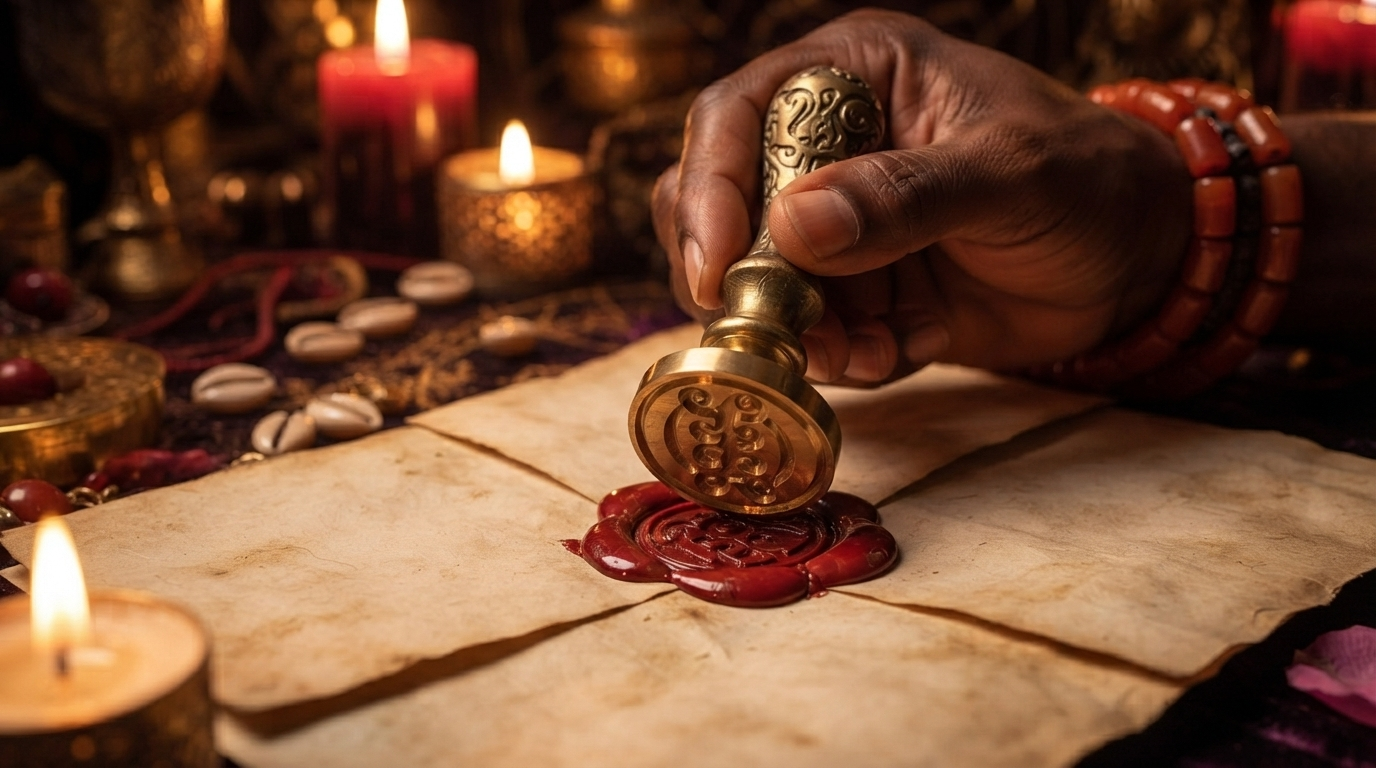
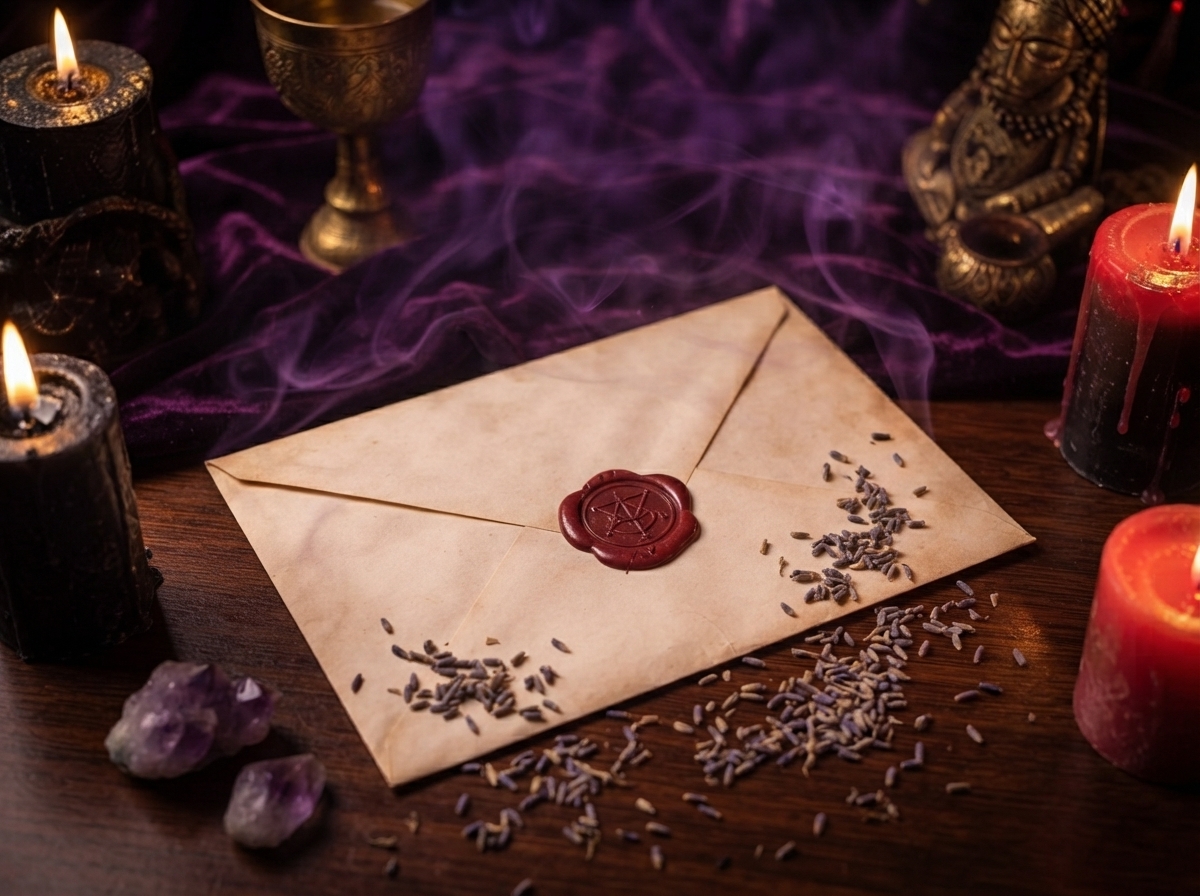
Protection rituals usually involve protective symbols and substances, such as salt, candles, herbs, oils, stones, cords or written petitions, along with prayers or spoken intentions. The stated aim is to shield a marriage from harm, envy, interference and bad influence.
What a ritual can realistically do is help the people performing it. Norton and Gino, in a 2014 paper in the Journal of Experimental Psychology, found that performing rituals helped people feel more in control and less anxious after a loss. A couple that performs a protective ritual together also gets a moment of agreement, a shared statement that the marriage matters and that they’ll guard it. That can change behaviour: people who’ve said it aloud are more likely to act on it.
What it can’t do is change another person’s conduct, detect an affair, stop gossip or reverse a financial problem. Treat promises of “total protection” or “an impenetrable shield” as marketing. No ritual makes a marriage immune to trouble, and the page on binding spells for marriage explains how claims of that kind can slide from protection into control.
How protection rituals developed
Protective customs around marriage are old and widespread. Across the Mediterranean and the Middle East, charms against the evil eye, which is the belief that envy can harm, have been hung in homes and worn on the body for centuries. In many Christian traditions, couples seek a blessing on the wedding, the rings and the home, and pray for protection on their marriage. Folk practices in Europe, Africa, the Caribbean and the American South use salt, herbs, oils, cloth and candles to mark and guard a threshold or a household.
These traditions share a belief in the power of intention, symbol and community. Some also carry real social wisdom: the custom of blessing a newlywed home announced to friends and family that this was a couple under community support, and the evil eye belief discourages boasting and encourages humility, which tends to protect friendships. You can respect the tradition and still be clear-eyed about what it does.
When a seller says your marriage is cursed
This deserves its own section, because it’s the most common way people in this niche are hurt. The pattern is consistent. You describe a problem, perhaps an argument, a run of bad luck or a spouse who has gone quiet. The seller tells you a curse, a jealous rival, dark energy or a blocked aura is responsible, and offers to remove it for a fee. Then, when nothing changes, they say the force was stronger than expected and ask for more. If every channel is closed, read what to do when your ex blocked you.
The script works because fear is persuasive and because any bad patch in a marriage can be fitted to it. There’s no way to test a claim of a curse, which is why sellers like it. A trustworthy practitioner doesn’t need to frighten you to help. If someone tells you that you’re in danger and that only they can fix it, slow down, ask what exactly is being claimed, what the service costs and what happens if nothing changes, and talk to someone you trust before paying a cent.

The real outside threats to a marriage
Most of the pressure that damages marriages from outside is ordinary and human. It includes relatives who criticise or take sides, friends who complain about their own partners and normalise dissatisfaction, colleagues or acquaintances who become emotionally close to one spouse, social media comparisons and contact with former partners, money stress from debt, job loss or cost of living, and work demands that push out time together.
None of these needs a curse to explain it. Each can be handled with a mix of communication and boundaries. If you work out which of them is actually at play in your marriage, you’ll have something concrete to act on. You can then decide whether a ritual would help you stay steady while you do.
Emotional closeness with someone else
Affairs often begin not with a physical act but with emotional closeness: long conversations, confiding in someone else about marriage troubles, secrecy about messages and a growing sense that this person understands you better than your spouse. It can start innocently, with a colleague, a gym friend or an old acquaintance online.
Protection here is about habits. Keep friendships where your spouse is welcome and knows about the contact. Avoid confiding in someone of the opposite sex, or anyone you feel a spark with, about problems in your marriage. Be wary of hiding messages or deleting conversations. Take problems to your spouse or a counsellor first. If you notice yourself looking forward to seeing someone more than your spouse, treat it as a signal to reconnect at home, not as something to pursue.
If you’re worried about your spouse, ask calmly and directly rather than monitoring their phone. “I’ve noticed you’ve been close to a colleague, and it’s making me feel insecure. Can we talk about it?” invites honesty. Snooping tends to damage trust whether or not it finds anything.
In-laws and family interference
Extended family can be the biggest outside pressure on a marriage. The principle that works best is that you and your spouse are a team, and each of you handles your own family. If your mother criticises your wife, it’s your job to address it, kindly and firmly, not your wife’s. Agree in private on limits: how often visits happen, what’s off-limits to comment on, how decisions about children and money are made. If you are still married but your wife feels distant, read about a love spell for your wife.
Then present those limits together, calmly. “We love seeing you, and we’ve decided to handle this ourselves” is clear and loving. If a relative keeps crossing the line, reduce contact or change the setting, such as shorter visits or meetings in neutral places, and keep your spouse informed of everything. Silence and secrecy between spouses about family conflict is what lets it do damage.
Gossip, envy and social media
Envy and gossip are real. Some people are uncomfortable with other people’s happiness, and some enjoy stirring. The old advice is sound: don’t broadcast every detail of your marriage, be discreet about problems and choose confidants carefully. A person who complains about their spouse to a wide circle often finds that the complaints come back, and that friends begin to see the spouse through that lens.
Social media raises the stakes. Posting only the good parts of your marriage creates pressure and comparison, and venting online invites opinions. Agree together on what you share, and keep disagreements offline. Be cautious about contact with former partners. If something online upsets you, raise it with your spouse instead of with followers. Good digital habits protect a marriage as well as any talisman.
Money and work pressures
Money stress is one of the most damaging outside pressures, because it touches security, trust and freedom. Protect your marriage by making money a shared, regular conversation rather than a source of secrets. Review income, spending, debts and goals together, and agree on limits for spending each of you can do without asking.
Work pressure is similar. Long hours, travel and FIFO rosters strain closeness. Plan for it: agree on regular contact, protect time together when you’re both home and be honest about what you need. If one of you is under severe strain, such as job loss or burnout, treat it as a shared problem rather than one person’s failure. The page on FIFO relationships and reconnecting after time apart deals with the practical side of rotating rosters.

A protection spell for marriage you can do at home
If you’d like a ritual, here’s a gentle one you can do at home. Choose a time when you and your spouse are both there, if possible. Start by tidying the main rooms, since a clear space makes a calmer mood. Open the windows and let fresh air through.
Walk through the house together, room by room, and say aloud what you’d like to be true there: rest in the bedroom, kindness in the kitchen, honesty in the living room, welcome at the front door. Some traditions place a small dish of salt near the entrance or sprinkle a line of salt across a threshold, then sweep it away afterwards. If you do this, keep salt away from gardens and plants, which it can damage, and away from pets. Others light a candle in each main room, or hang a blessing or charm by the door.
Finish by sitting together with a single candle. Each of you says one thing you’re grateful for in the marriage and one thing you’ll do to protect it, such as “I’ll tell you if something is bothering me” or “I’ll keep our time together.” Let the candle burn for a while, under supervision. The real protection is in those spoken promises, which is why this ritual works best when it’s done together.
A protective reaffirmation for two
A second ritual is simpler still and can be done in ten minutes. Sit facing each other. Each of you writes, on a small piece of paper, three things you’ll do to look after the marriage over the next year. Read them aloud. Fold the papers together and keep them in a safe place, perhaps with your wedding photos or rings. On your anniversary, take them out, read them again and write new ones.
It’s modest, and it does the job of a protective ritual: it sets a shared boundary around the marriage and names what each person will do. The guide to marriage spell candles describes candle colours and their traditional meanings if you want a symbolic layer, and the page on spells for a happy marriage covers rituals for a calmer household.
Protecting yourself inside the marriage
Protection also means looking after your own boundaries. A healthy marriage has room for each person’s friendships, interests and privacy. You don’t owe your spouse access to every thought, and they don’t owe you theirs, but you do owe each other honesty about things that affect the marriage.
Notice whether you feel safe to speak, to disagree and to say no. If one of you controls the other’s money, movements, friendships or phone, that’s a serious problem, and it isn’t fixed by a ritual. Coercive control is a criminal offence in some Australian states, and it can happen alongside love and apology. If it’s happening to you, or you’re the one doing it, get help. 1800RESPECT (1800 737 732) offers confidential support, and in an emergency you should call 000.
When the threat is inside the marriage
Sometimes the thing a couple wants protection from isn’t outside at all. A pattern of criticism, withdrawal, lying or resentment can be as damaging as any rival, and it can be easier to blame outside forces than to face it. A ritual for protection from outside harm won’t help if the harm is coming from inside.
A quiet look at your own patterns can help. Are you both defensive? Have you stopped listening? Is one of you carrying a secret? If so, the protection you need is honest conversation, repair and probably counselling. Relationships Australia (1300 364 277) and the Family Relationship Advice Line (1800 050 321) are good first calls. Spiritual practice can sit beside that work and steady you, but it doesn’t replace it.

If a third person is already involved
If an affair has already started, protection from outside is too late, and the question becomes what you want to do. That’s for you and your spouse, ideally with support from a counsellor and, where needed, a lawyer. A ritual can’t end an affair, and services offering to “remove” or target the other person are asking you to spend money on an outcome they can’t control. Be cautious about anything that aims at a third party who hasn’t agreed to it.
What you can do is look after your health, get clear on what you want, and decide what boundaries you need. In Australia, a divorce generally requires 12 months of separation, and couples can separate under the same roof, so there’s no need to rush a decision. Seek independent legal advice before signing anything. If outside interference is part of your situation, the page on third party removal spells describes how that work is framed on this site.
Starting a conversation with Baba Ali
If you’d like a practitioner’s help, the first step is to describe your situation through the secure form on the contact page. Baba Ali reads it and then talks with you about your marriage and what worries you. From that conversation he advises whether spiritual work fits, and what it would involve. The how it works page lists the stages: consultation, preparation of the ritual materials, the ritual itself, then updates through a private client portal.
Before you agree to anything, ask what each stage includes and what it costs, and expect to hear plainly that no outcome can be promised. A consultation is a conversation and a piece of spiritual work, and it isn’t a contract for a result. The page on a love spell caster in Australia explains how remote sessions are run for clients around the country.
Counselling as protection
One of the best protections a marriage can have is a counsellor, used early. Relationships Australia offers counselling and family services, and the Family Relationship Advice Line gives free information and referrals. Your GP can discuss mental health support, including whether a treatment plan might apply. In the UK, Relate offers couples counselling.
A first session is mostly listening. A counsellor will ask what brought you in, what each of you wants and what’s been tried, and will often suggest small tasks, such as a weekly check-in or a new way to handle a recurring argument. It doesn’t conflict with spiritual or religious practice, and many couples use both. If your spouse isn’t ready, going alone still helps, because changing your own patterns changes the marriage.
Mistakes that leave a marriage less protected
A few habits do more harm than any outside force. Keeping secrets from each other, even small ones, teaches you both to hide. Venting to friends or family about your spouse hardens opinions and invites interference. Letting resentment build without raising it makes it explode later.
Relying on a ritual while avoiding a hard conversation is another. So is doing a protective ritual aimed at your spouse’s behaviour without their knowledge, or using their belongings. It undermines the honesty that protects a marriage. The alternative is plain: talk early, set limits together and keep showing up for each other.
Fear-based selling and how to recognise it
Beyond the curse claim, fear-based selling takes a few forms. There’s the countdown: “your husband will leave within days unless you act now.” There’s escalation: “the first ritual only worked partly, you need a stronger one.” There’s secrecy: “don’t tell anyone or the spell will fail.” And there’s dependency: “only I can protect you, and you must keep paying.” If your husband has left but you are still married, read about a love spell to get your husband back.
A good practitioner does the opposite. They explain what they do, let you ask questions, tell you what can’t be promised and never pressure you to decide on the spot. If you feel frightened after speaking to someone, rather than steadier, that’s worth noticing.
In Australia, Scamwatch, which is run by the ACCC, publishes current scam information and takes reports, and your bank can sometimes assist if you move quickly. The guide to spell caster scams in Australia lists the red flags. Before paying, write down what you’ve been promised, what it costs and what happens if nothing changes.
If you live in the UK or elsewhere in Europe
Protective customs have deep roots in Europe, from blessings on a home and a marriage in church to folk charms hung above doorways. In Mediterranean countries, the evil eye tradition remains part of everyday life, and many couples choose a blessing on their wedding or anniversary. These are cultural practices with real meaning, and there’s no need to choose between them and practical care.
Support services differ by country. In the UK, Relate offers counselling, and Samaritans (116 123) is there for anyone struggling. Elsewhere in Europe, family and relationship services are often available through public health systems, so your GP or local authority is a good starting point. Remote consultations work across time zones, so distance is no barrier.
Keeping a marriage protected over time
Protection isn’t a one-off. The habits that keep a marriage safe are ordinary ones: regular time together, open talk about money, a shared view of how you handle family and friends, honesty about temptations and a willingness to go to counselling early. Hold a yearly check-in on the marriage, and revisit your agreements as life changes.
If you like the symbolism, repeat a simple ritual each year on your anniversary: walk through the house, light a candle, say what you’re grateful for and renew your promises. Keep it short and sincere. The goal is to keep reminding yourselves that you’ve chosen each other and that you’ll look after what you have.
Frequently asked questions
Does a protection spell for marriage really work?
A ritual can steady you and mark a shared commitment, which can change how you behave. It can’t control other people or guarantee your marriage won’t face trouble. Real protection comes from boundaries, honesty and habits.
Can someone put a curse on my marriage?
Nobody can prove or disprove that, which is why sellers use the claim. If someone tells you a curse is on your marriage and charges to remove it, treat that as a warning sign. Look for ordinary explanations first, and talk to a counsellor or someone you trust.
Should my spouse know I’m doing a protection ritual?
Ideally, yes, and ideally they’d take part. A private ritual for your own calm is one thing, but avoid anything aimed at your spouse without their knowledge or involving their belongings.
How do I protect my marriage from an in-law?
Agree on limits with your spouse first, then deal with your own family yourself, calmly and kindly. Reduce contact if needed, and don’t let disagreements with relatives become a wedge between you.
How can I tell if someone is an affair risk?
Watch for secrecy, growing emotional closeness with someone else, and confiding in them about marriage problems. If you’re worried, ask your spouse calmly instead of monitoring them, and consider counselling.
Is salt safe to use in a home ritual?
A small dish of salt indoors is fine, but don’t scatter it on gardens, plants or soil, and keep it away from pets. Always supervise candles and never leave them burning unattended.
Should we try counselling as well?
Yes. Counselling doesn’t conflict with spiritual practice, and it’s one of the most effective protections a marriage can have. If your spouse won’t attend, going alone still helps.
Your next step
If you’d like to talk through your marriage in private, you can start a confidential consultation through the contact page. You can also browse the other services, or read how the site writes and checks its guides in the editorial standards. A protection spell for marriage is best understood as a marker of commitment, not a shield against every trouble. If you’re struggling, call Lifeline on 13 11 14 in Australia or Samaritans on 116 123 in the UK.