Moon phases love rituals deserves a clear answer: spiritual practice may support reflection and calmer choices, but it cannot guarantee another person’s feelings or decisions.
Moon phases love rituals: the direct answer
When people search for moon phases love rituals, they usually need clarity about consent, timing, safety, cost and the practical steps that remain within their control.
Most guides to lunar timing for love rituals are written from the Northern Hemisphere. They talk about the moon’s shape as seen from London or New York, name full moons after northern seasons, and give dates in northern time zones. If you live in Australia, much of that advice needs translating. The phases happen at the same moment everywhere on Earth, but the moon looks different from down here, the seasons are reversed, and the calendar date of a phase can shift once you convert to AEST, ACST or AWST.
This guide explains how the lunar cycle works from an Australian point of view, what each phase is traditionally associated with in love work, and how Baba Ali times rituals for clients across Australia. It is practical rather than mystical: by the end you should be able to look up at the sky from Sydney, Perth or Darwin and know where you are in the cycle.
The lunar cycle in brief: moon phases love rituals
The moon takes about 29.5 days to go from one new moon to the next. During that time it moves through eight commonly named phases:
- New moon. The moon sits between the Earth and the Sun and is almost invisible.
- Waxing crescent. A thin sliver appears in the evening sky after sunset.
- First quarter. Half the visible disc is lit.
- Waxing gibbous. More than half lit, growing toward full.
- Full moon. The whole visible face is lit, rising around sunset.
- Waning gibbous. Starting to shrink.
- Last quarter. Half lit again, on the opposite side.
- Waning crescent. A thin sliver in the early morning sky before dawn.
“Waxing” means growing and “waning” means shrinking. That growth and shrinking is at the heart of how many traditions, including the one Baba Ali trained in, think about the timing of spiritual work.
Why the moon looks upside down in Australia
If you have ever travelled between hemispheres and felt the moon looked odd, you were right. From the Southern Hemisphere, the moon appears rotated compared with the view from the north. The practical result is that the lit side appears reversed.
In the Northern Hemisphere, a waxing moon is lit on the right, and a common memory aid is “DOC”: a waxing moon looks like a D, full moon like an O, and waning moon like a C. In Australia it is the other way round. A waxing moon is lit on the left and looks like a C, and a waning moon is lit on the right and looks like a D. Some Australians remember it as “COD”.
This matters if you read northern guides that tell you to look for a crescent “curving to the right” before starting growth-focused work. From Australia, the growing crescent curves the other way. The phase is the same; only the view is different.
Why the date can change when you convert time zones
Each phase happens at a precise instant, and that instant is the same everywhere. But the date and time you see depend on your time zone. A full moon that happens late in the evening in London may fall on the following morning in Sydney. Australia also spans several time zones, and daylight saving shifts the picture further for part of the year.
- AEST (UTC+10): Queensland all year, and New South Wales, Victoria, the ACT and Tasmania outside daylight saving.
- AEDT (UTC+11): New South Wales, Victoria, the ACT and Tasmania from early October to early April.
- ACST / ACDT (UTC+9:30 / +10:30): South Australia, which observes daylight saving, and the Northern Territory, which does not.
- AWST (UTC+8): Western Australia, with no daylight saving.
So a full moon at 1:30am AEDT in Sydney might be 11:30pm the previous evening in Perth. If a ritual is being timed to a phase, that difference can matter. Geoscience Australia publishes moon phase times, and it is worth checking a source that uses Australian time rather than a northern calendar.
Reversed seasons and full moon names: moon phases love rituals
Many popular full moon names come from Northern Hemisphere traditions: the Harvest Moon, the Hunter’s Moon, the Wolf Moon, the Snow Moon. They are tied to northern seasons. In Australia, the seasons are reversed, so the names do not line up with what is happening around you. The northern Harvest Moon falls near the September equinox, when northern crops are gathered. In the south, the equivalent is the full moon nearest the March equinox, as autumn begins.
For love work, the seasonal names matter less than the phase itself, but some practitioners like to match the feel of the season. Spring in Australia, from September to November, is often associated with new beginnings and fresh attraction. Autumn, from March to May, suits reflection and letting go. Summer suits celebration and commitment; winter suits patience and deep inner work. Baba Ali takes the local season into account alongside the phase.
Aboriginal and Torres Strait Islander knowledge of the moon
Long before any European calendar arrived, Aboriginal and Torres Strait Islander peoples were observing the moon across this continent, and many communities hold deep knowledge linking the moon to tides, seasons, and the timing of food gathering. Yolŋu people in north-east Arnhem Land, for example, have long connected the moon to the rise and fall of the tides. This knowledge belongs to the communities who hold it, and it is not ours to borrow for ritual purposes. It is worth acknowledging, though, that careful attention to the moon has deep roots in Australia.
Traditional associations of each phase in love work
Across many traditions, including Baba Ali’s, the phases carry broad associations. These are guides, not rules, and every situation is considered individually.
New moon: setting intentions: moon phases love rituals
The dark of the moon is traditionally a time for quiet planning: getting clear on what you want and why. For someone hoping to reconcile, it is a good time for honest reflection rather than action.
Waxing crescent to waxing gibbous: growth and attraction
As the moon grows, many traditions favour work that builds and draws closer: rekindling warmth, attracting renewed contact, strengthening a bond. Baba Ali often prepares reconciliation rituals, such as the bring back lost lover ritual or the rekindle ritual, during the waxing phase.
Full moon: culmination and commitment
The full moon is associated with completion and with strong emotions. It is often chosen for commitment and binding work between couples who are already together, such as the love binding ritual or the commitment ritual.
Waning gibbous to waning crescent: release and clearing: moon phases love rituals
As the moon shrinks, traditions favour work that removes or releases: clearing interference, easing resentment, cutting ties that no longer serve. The third-party removal ritual and cleansing work are often prepared in the waning phase. It is also a natural time for rituals of letting go when a relationship has truly ended.
Supermoons, blue moons and eclipses
A supermoon is a full moon that happens when the moon is near its closest point to Earth, so it looks slightly larger and brighter than usual. A blue moon, in the popular sense, is the second full moon in a single calendar month, which happens every two or three years. Neither is essential for love work, but some people find them meaningful times to set or renew intentions.
A lunar eclipse happens when the Earth’s shadow falls across a full moon, and the moon can take on a deep red colour. Many traditions treat eclipses with caution, as times of disruption rather than steady growth. Baba Ali generally avoids preparing new reconciliation work during an eclipse, preferring to wait for a settled phase.
How Baba Ali times rituals for Australian clients
When a client in Australia asks for a ritual, Baba Ali considers several things together. The first is the situation itself: what needs to happen, whether that is drawing closer, strengthening a bond or clearing interference. The second is the phase: waxing, full or waning, as described above. However, the third is local timing: he works out when the relevant phase falls in the client’s own time zone, including daylight saving where it applies. And the fourth is practical: the rhythm of the client’s life, such as a FIFO roster, school holidays or an upcoming family event.
Sometimes the ideal phase is a week or two away. In that case, he explains why he recommends waiting, and what the client can do in the meantime. Sometimes a situation is urgent, such as an ex about to move interstate, and he will talk through how to work with the phase that is available. He never uses timing as a reason to rush anyone into a decision.
A simple moon practice you can do yourself: moon phases love rituals
You do not need a practitioner to use the moon as a guide for your own reflection. Many people find a simple monthly practice helpful after a breakup.
At the new moon
Sit quietly for fifteen minutes. Write down what you want for yourself in the coming month, not only regarding your ex but for your own life: your health, your friendships, your peace of mind. Keep it somewhere safe.
As the moon grows
Each evening, if you can see the moon, take a moment to notice it and remind yourself of your intentions. Do one small thing each day that moves you toward them.
At the full moon: moon phases love rituals
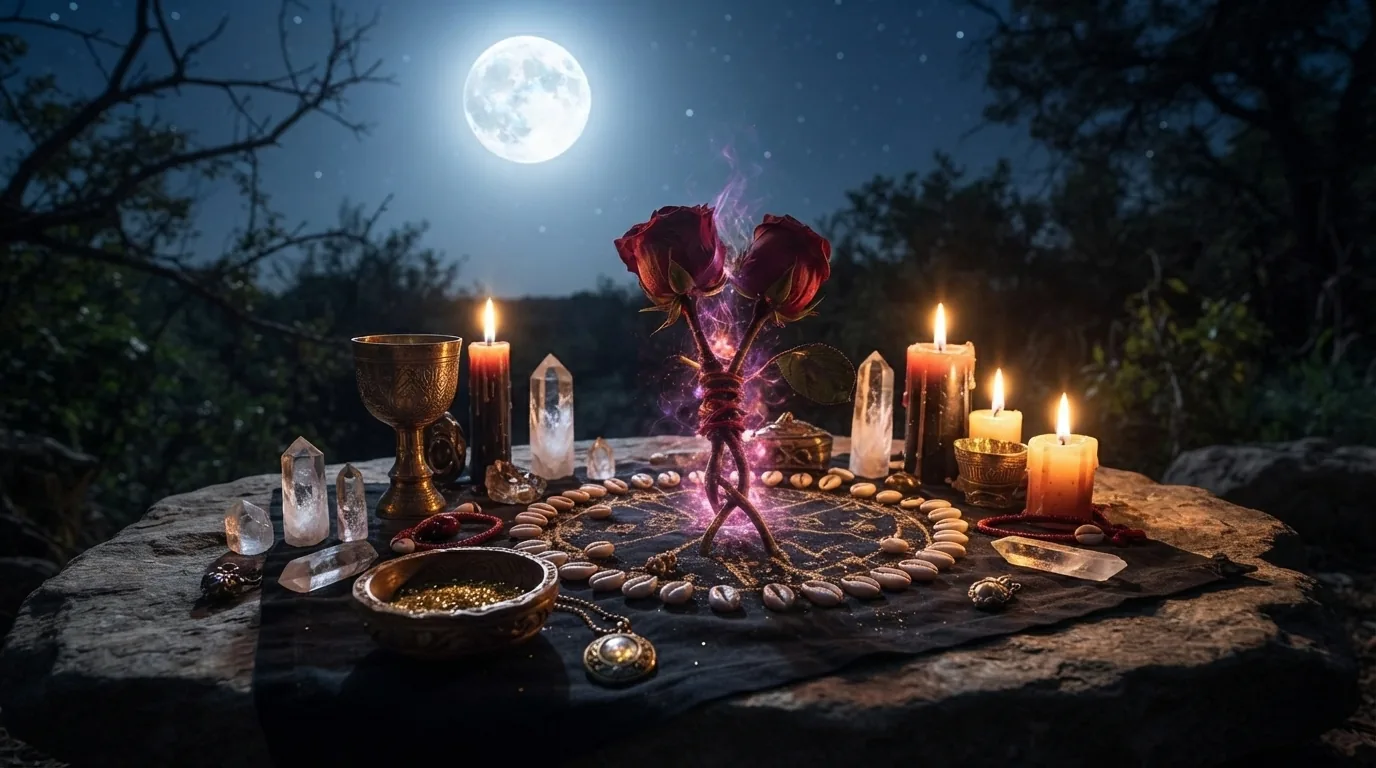
Read back what you wrote at the new moon. Notice what has changed. Light a candle if that is part of your practice, and give thanks for any progress, however small.
As the moon wanes
Write down one thing you are ready to let go of, such as a resentment, a habit of checking their social media, or a fear. Fold the paper and keep it, or safely burn it if that feels right. Let the shrinking moon remind you that letting go is part of the cycle.
This practice is not a spell. It is a way of giving the long, uncertain weeks after a breakup some shape, and of keeping your own healing at the centre.
Looking at the moon from different parts of Australia
Where you are in Australia changes the experience of watching the moon. In Darwin and the tropical north, the moon rides high and the nights are warm year round. In Hobart and southern Tasmania, winter full moons rise over cold, clear skies and set late into the morning. In addition, in the outback, far from city lights, even a thin crescent is striking, and the whole sky feels closer. On the coasts, many people notice the link between the moon and the tides, with bigger tides around the new and full moons.
Wherever you are, the moon you see is the same moon your ex sees, whether they are across town or across the country. Many clients find that thought comforting in itself.
Common questions about moon timing: moon phases love rituals
Does the moon phase really matter for a ritual?
Within the tradition Baba Ali practises, timing is one of several factors that shape a ritual. It is not the only factor, and a well-timed ritual still depends on an honest assessment of the situation.
Should I wait for the right phase before contacting my ex?
Contact is about the relationship, not the calendar. Choose a calm moment when you are both likely to be open. If you want to use the moon, the waxing phase is traditionally associated with drawing closer.
What if my ex lives overseas or in another time zone?: moon phases love rituals
The phase happens at the same moment for both of you. Baba Ali works from the client’s local time, and takes both locations into account where it matters.
Is the full moon a good time to reach out?
Emotions often run high around the full moon, which can make conversations more intense. Some people find that helpful; others prefer the calmer days either side.
Moon timing across a year in Australia
It can help to picture how the lunar cycle sits across the Australian year. Each season has roughly three full moons, and each carries its own atmosphere.
Summer: December to February: moon phases love rituals
Long evenings, holidays and family gatherings. Full moons rise late in the day during daylight saving on the east coast. Many couples reconnect over the Christmas and New Year break, when routines loosen and people reflect on the year. It is a natural season for commitment and celebration work.
Autumn: March to May
The first full moon after the March equinox is the Southern Hemisphere’s harvest moon. Autumn is traditionally a time for gathering in what has grown and releasing what has not. Reflection, cleansing and letting go suit this season.
Winter: June to August
Long nights and clear skies in much of the south make winter full moons especially bright. Winter suits patient, inward work: healing old hurts, understanding what went wrong, and preparing the ground for spring.
Spring: September to November: moon phases love rituals
New growth, lengthening days, and the return of daylight saving in the south-east. Spring is traditionally associated with new beginnings and renewed attraction, and many reconciliation rituals are prepared during waxing moons in this season.
Moon timing and the no-contact period
Many people follow a period of no contact after a breakup, often 30 to 60 days. A lunar cycle is about 29.5 days, so one full cycle maps neatly onto the shorter version of that period. Some clients find it helpful to use the moon as a gentle calendar: start no contact at the new moon, use the waxing weeks to work on themselves, reflect at the full moon, and use the waning weeks to release the urge to chase. By the next new moon, they are in a calmer place to decide whether to reach out. Our guide to how long no contact should last covers the practical side in more detail.
What moon timing cannot do
It is worth being clear about the limits. The moon is a guide for timing within a tradition; it is not a switch that makes someone return. No phase overrides another person’s free will, and no well-timed ritual replaces the honest, practical work of repairing a relationship. Be very wary of anyone who says your ex will come back “on the next full moon” or who demands payment to catch a “rare lunar window” before it closes. Those are sales tactics, not spiritual guidance. Our guide to spotting a fake love spell caster explains how these pressures are used.
How Baba Ali talks about results: moon phases love rituals
Baba Ali reports a 95% success rate across his practice, and many clients see first signs within 3–7 days of a ritual, such as a dream, renewed contact or a warmer tone in conversation. Those are practitioner-reported figures, and every situation is different. He is always clear that timing, including lunar timing, supports the work but cannot guarantee another person’s choice. If he thinks the phase is wrong for your situation, he will say so and explain what he would suggest instead.
Working with Baba Ali from Australia
Baba Ali works remotely with clients in every Australian state and territory, by WhatsApp, phone and email, 24/7. When you get in touch, include your city or town so he can work out your local time zone, and a brief description of your situation. He will ask follow-up questions, tell you honestly whether a ritual suits your situation, and explain what the materials would cost before preparation starts. You can ask for the figure in Australian dollars.
Read more about consultations for Australian clients, or about timing love spells more generally.
Candles, colours and the moon
In the tradition Baba Ali practises, candles are often chosen to match both the purpose of the work and the phase of the moon. During the waxing phase, warm colours such as red, pink and gold are common, associated with attraction, warmth and renewal. At the full moon, white and gold candles are often used for commitment and blessing. During the waning phase, darker or cleansing colours may be chosen for clearing and release.
If you light candles as part of your own reflection practice, there is no need to follow any strict colour system. Choose what feels meaningful to you. Always follow basic fire safety: never leave a candle unattended, keep it away from curtains and paper, and be especially careful during Australian summers and total fire ban days, when some areas restrict open flames outdoors.
Watching the moon as a daily habit: moon phases love rituals
One of the simplest and most calming practices after a breakup is to step outside each evening and look for the moon. It takes a minute. It gets you out of the house and off your phone. And over a few weeks, you start to feel the rhythm of the cycle: the thin evening crescent, the half moon high at dusk, the bright full moon rising in the east, the late-rising waning moon you only catch if you are up early.
That rhythm has comforted people through grief for as long as there have been people. It is a reminder that things change, that darkness passes, and that growth comes back around. Whatever happens with your relationship, that is worth holding on to.
More questions Australian clients ask
Which way should I face when doing a moon practice?
Traditions differ, and there is no single right answer. Many people simply face the moon if they can see it. The moon rises in the east and sets in the west, as the Sun does.
Can I use a moon app?: moon phases love rituals
Yes, but check that it is set to your Australian time zone and hemisphere. Some apps show the Northern Hemisphere view by default, which will show the lit side reversed.
Does cloud cover matter?
No. The phase is the same whether or not you can see the moon. Cloudy nights are common in Melbourne and Hobart winters, and they do not change anything about timing.
What if the ideal phase is weeks away and I feel desperate?
That feeling is common, and it is worth talking about with someone you trust. Waiting a few weeks often helps the situation calm down. If you feel overwhelmed, Lifeline is available on 13 11 14 at any hour.
The moon and your own emotional cycle: moon phases love rituals
Many people notice that their feelings about a breakup rise and fall in waves rather than fading steadily. Some find those waves loosely follow the moon; others find no connection at all. Either way, it can help to track your mood alongside the lunar calendar for a couple of months. Note each day how you feel, from calm to overwhelmed, and mark the phase. Patterns sometimes appear: a harder few days around the full moon, a calmer stretch as the moon wanes. Knowing your own pattern lets you plan kindly around it, scheduling difficult conversations for calmer days and planning extra support for harder ones.
Timing a first message after no contact
If you have been in no contact and are thinking of reaching out, some clients like to time that first message to the waxing moon, the traditional season of drawing closer. If you do, remember that the content and tone of the message matter far more than the date. Keep it short and warm, acknowledge the time apart, and leave room for them to reply or not. A kind message sent on an ordinary Tuesday will always do better than a pressured one sent on the perfect night.
A reminder about balance
Lunar timing is one tool among many. It can bring structure and meaning to a difficult time, and within Baba Ali’s tradition it plays a real part in how rituals are prepared. But the foundations of any reconciliation are the same everywhere: honesty, patience, respect for the other person’s choices, and care for your own wellbeing. Let the moon remind you of those foundations rather than distract you from them.
Independent Australian support
For independent relationship support, contact Relationships Australia. For consumer concerns about online payments or pressure tactics, review Scamwatch and keep copies of messages, invoices and payment records.
Quick reference for Australian readers
- Waxing moon in Australia: lit on the left, looks like a C. Traditionally for drawing closer and attraction.
- Full moon: fully lit, rising around sunset. Traditionally for commitment and blessing.
- Waning moon in Australia: lit on the right, looks like a D. Traditionally for release and clearing.
- New moon: dark. Traditionally for reflection and setting intentions.
- Check your time zone: AEST, AEDT, ACST, ACDT or AWST, and whether daylight saving applies.
- Use Australian sources: northern calendars may show a different date for the same phase.
Keep this list handy, and next time you step outside at dusk, see if you can tell which way the moon is heading.
Whether you use the moon as a spiritual guide, a calendar for your own healing, or simply a reason to step outside and breathe each evening, it has a steady, patient rhythm that is worth borrowing during an unsettled time. It keeps turning, whatever happens, and so will you.
If you would like help timing a ritual for your own situation, Baba Ali is available at any hour. Tell him where you live in Australia, and he will do the rest.